Thanks for the comments. It has been a ton of work but quite rewarding to see it come together.
Onto the controls side of things:
One of the major selling features of this mill was the fact that it came with a full set of manuals. Exploded mechanical drawings, full electrical diagrams including pinouts, ladder logic, and the user and maintenance guides. These were critical in getting the machine to work and it would have added at least a month of tracing the wiring to figure most of it out. Some aspects I would not have gotten working without the manuals as I would have no idea what they were supposed to do. I don't think I would tackle another conversion if at least the electrical manual was not available.
As mentioned previously, the machine came with the SeicosII control. As this machine was built in 1986 or 87 the control was based on an 8086 processor and was very limited in program space. It came with paper tape reader as it's primary input method.
After testing as much as I could with the original control running I found the following:
1) X,Y, and Z servo drives were good and working well when tested without the control.
2) X,Y, and Z servo motors and encoders were working well.
3) The X axis could not be controlled as the motion control board output was stuck at -15V.
4) The Yaskawa spindle drive was dead with a "FU" code being displayed and no signs of life
5) Multiple solid-state relays to control the hydraulic solenoids were burnt out and that is why the tool changer didn't work
The servo drives and motors being good was a big relief as they could be re-used. They are +/-10V input velocity mode drives so easy to run with LinuxCNC. The X axis fault being with the controller was also good news.
The spindle drive failure was a big disappointment. It was claimed to be working "just before you got here" when I inspected the mill. After getting a quote on repair or replacement of $5000 and $10000 from Yaskawa I decided I would go with a VFD. This will be a topic for a post by itself as there were quite a few issues getting this to work.
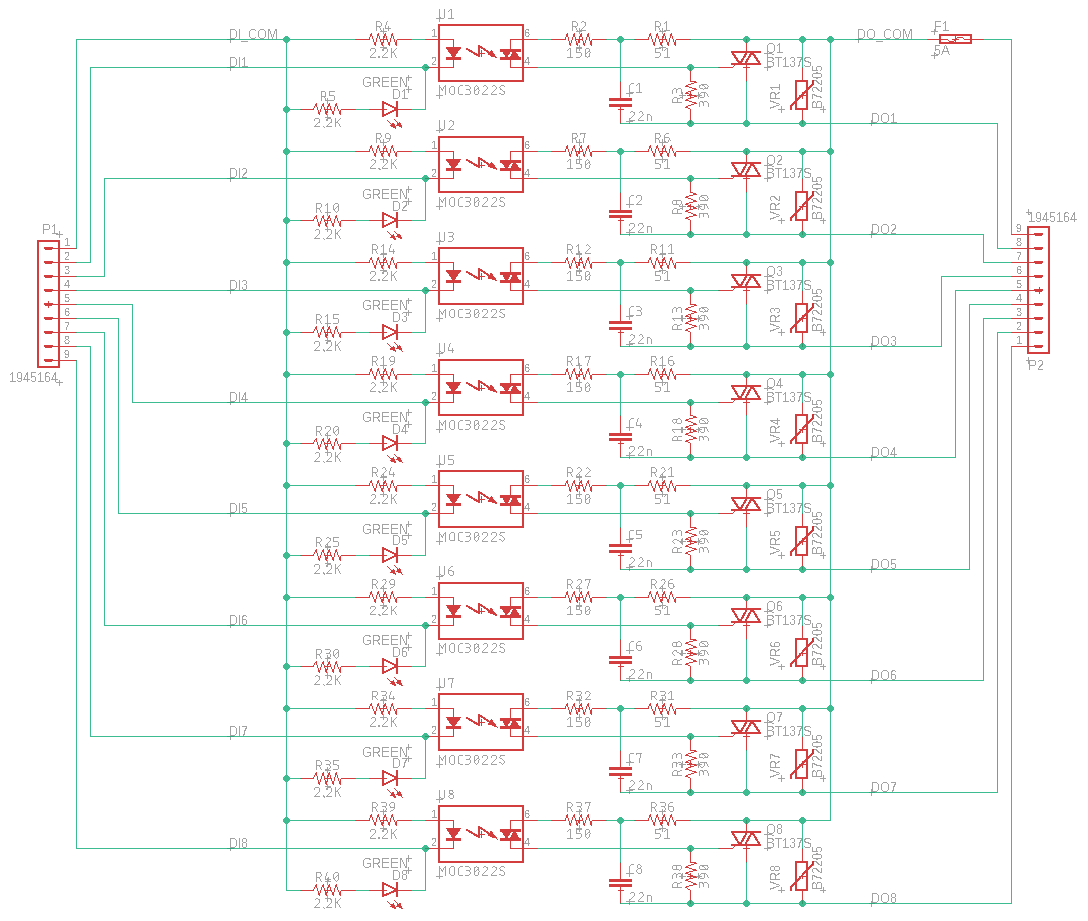
I was hoping to re-use the solid state relay boards that came with the mill. The Seicos system uses a rs485 like serial bus to control IO boards that are part of its PLC system. I was going to reverse engineer the protocol and build a translator but that would have been a significant effort. The fact that the few replacement SSRs I could find were $50 each and I needed around 16 of them put re-use out of the picture.
In the end I ended up mostly gutting the controls and re-doing everything with Mesa cards. On the keep list: servo drives, contactors for hydraulic pump, coolant pump, chip conveyor, and the 200V to 100V control transformer. And the music generator board that drives the alarm speaker because I liked it

Everything else was removed:
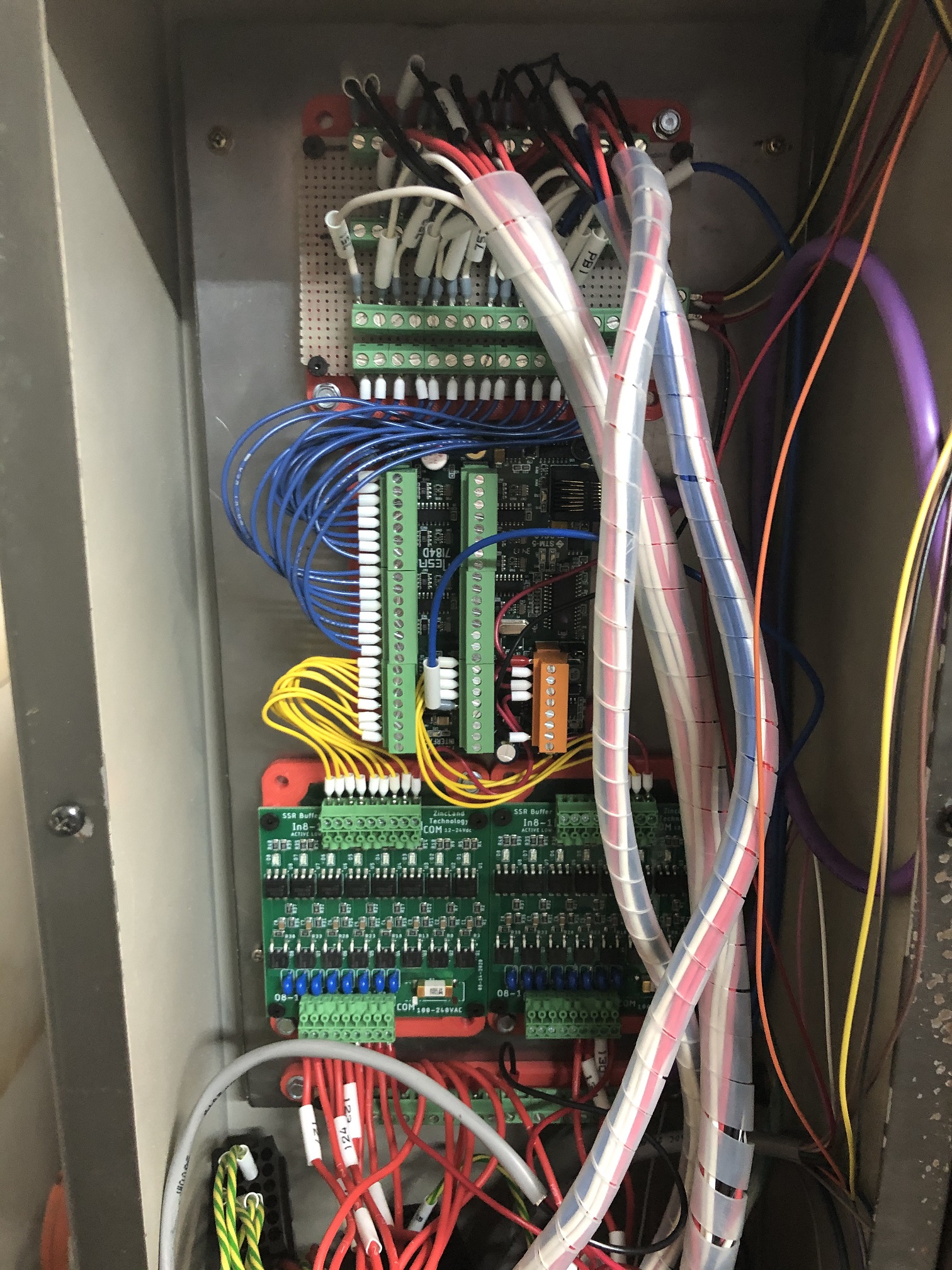
The Mesa boards I ended up using were the 7i98 ethernet FPGA card, 7i77D analog servo card, 2x 7i84 isolated IO cards, 1x 7i73 pendant interface card, and the 7i74 8 channel serial breakout. The 7i77 did not have enough IO on its own so the 7i84s were used to expand. One 7i84 was located in the main control cabinet and the other is located in the tool changer control box. This is pretty much exactly the same as the control scheme for the Seicos system. The 7i84s are great cards as you just need a single cat5 cable and field power wires to get 32 inputs and 16 outputs.
Main control cabinet:
Still needs some tiding up. The cable channels did not have covers when I got the machine and I haven't gotten around to finding the right size to replace them.
Tool changer control box:
I have a spreadsheet that documents all of the connections so I can figure out what I did later. It would be too much work to create a schematic of everything and it is pretty simple with most connections just being from point A to B.