Hello all,
I have taken on a 2.2-ton heavy problem and started a new project: a CNC lathe from WEMAS, or Kovosvit MAS, built in 2000. So, it’s a 25-year-old German-Czech machine.
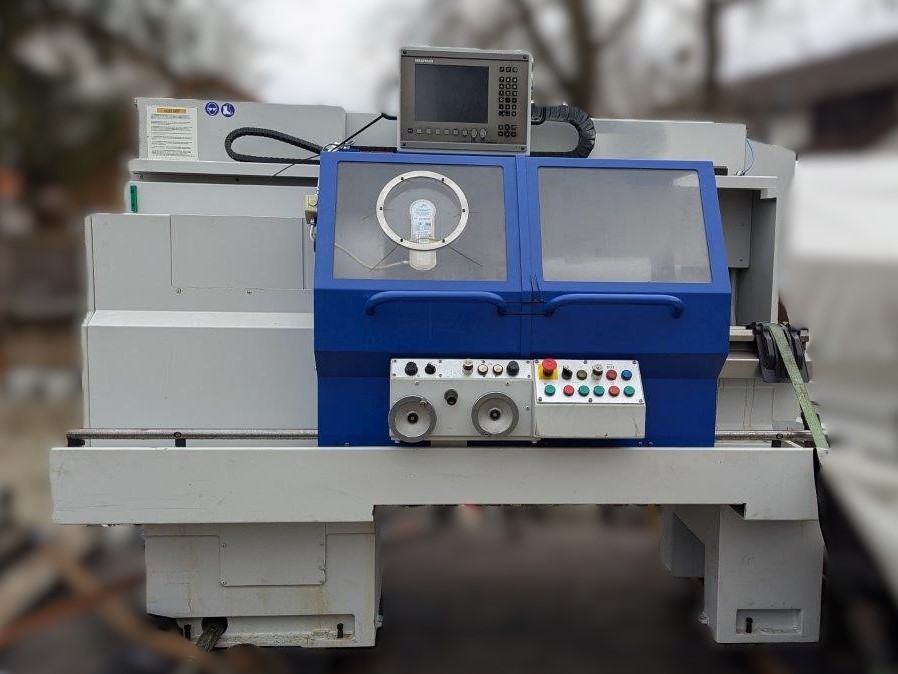
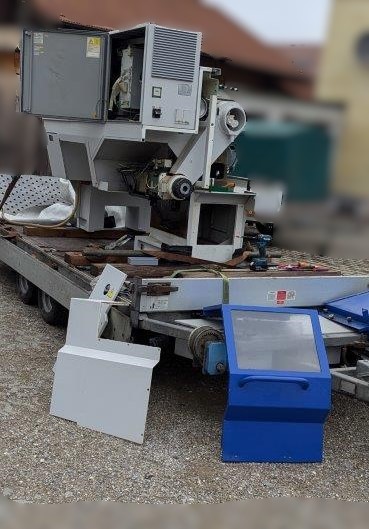
History of the machine: This machine was purchased by a larger company in 2000 and was used in prototype production until around 2004. Then, it encountered an issue with the electronics. After an internal move—after which it was never repaired—it was slated for scrapping. But that was far too good of a machine to throw away! Luckily, a dear friend stepped in to prevent that and played a significant role in getting it to me (thanks again, you know who you are!). To summarize: 2.2 tons, incredibly top-heavy, difficult to move, barely liftable, and broken... why would anyone take this on? Fortunately, I had professional help from my family for the (not-so-simple) transport, and it was soon safely at home. We disassembled it while it was still on the trailer to make it more manageable. It’s a massive cabinet made of robust 3mm steel sheet—very sturdy and maintenance-friendly, but it takes up a lot of space and isn’t exactly hobbyist-friendly. Plus, the weather wasn’t on my side, so I had to make it smaller quickly despite various challenges.
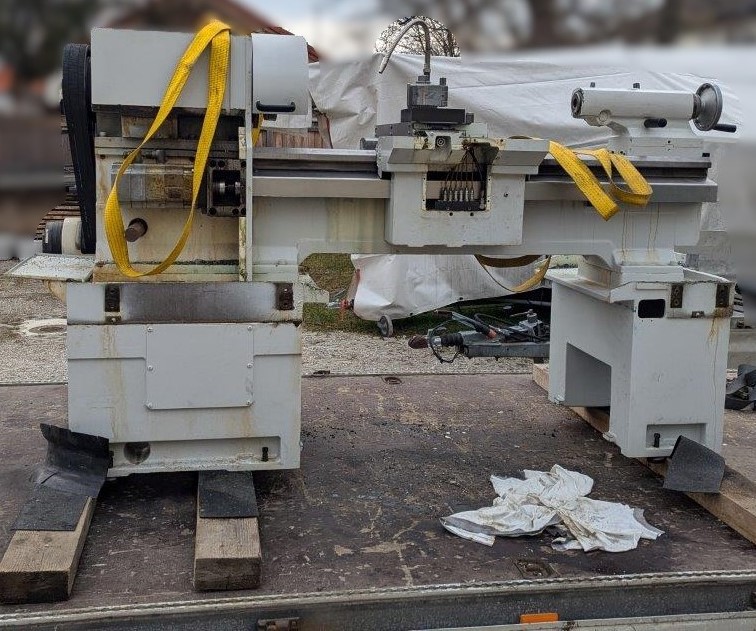
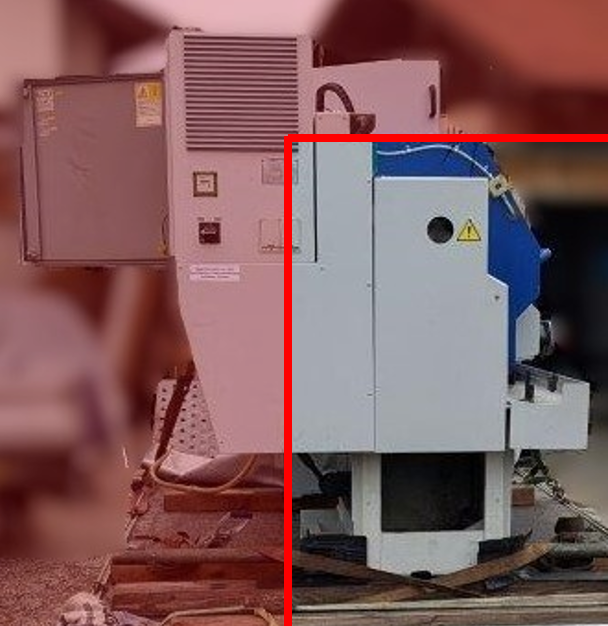
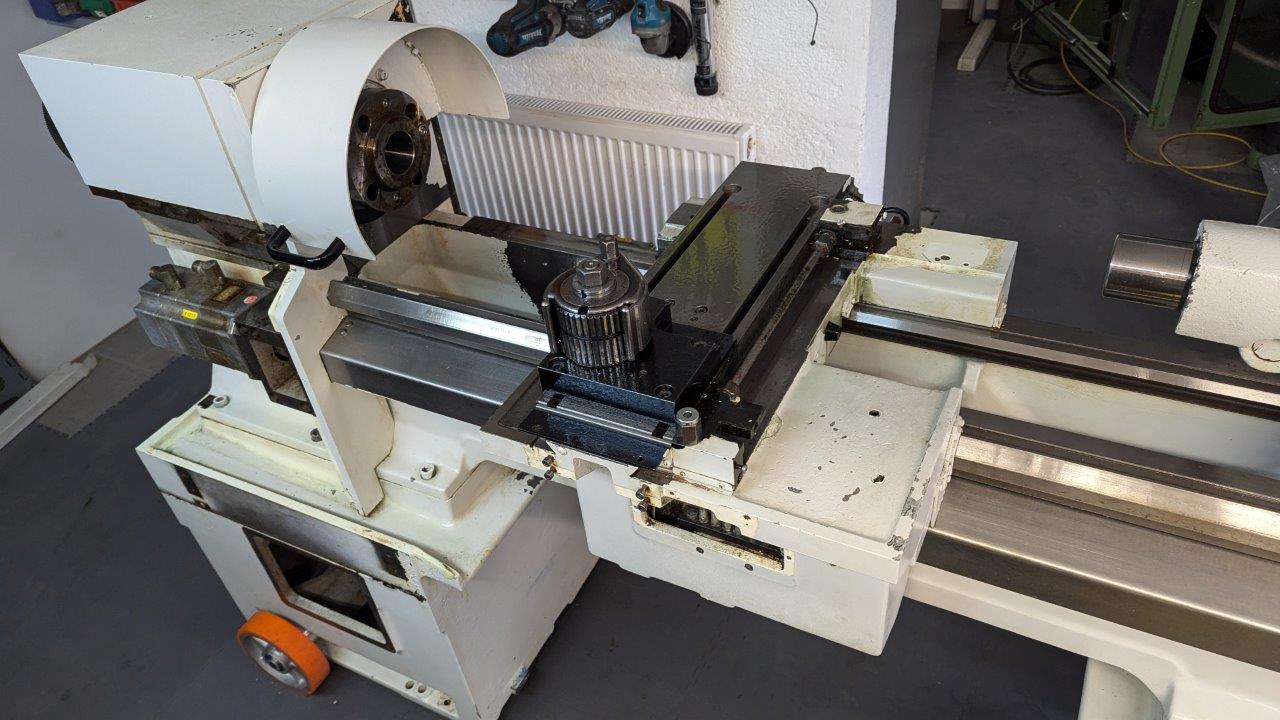
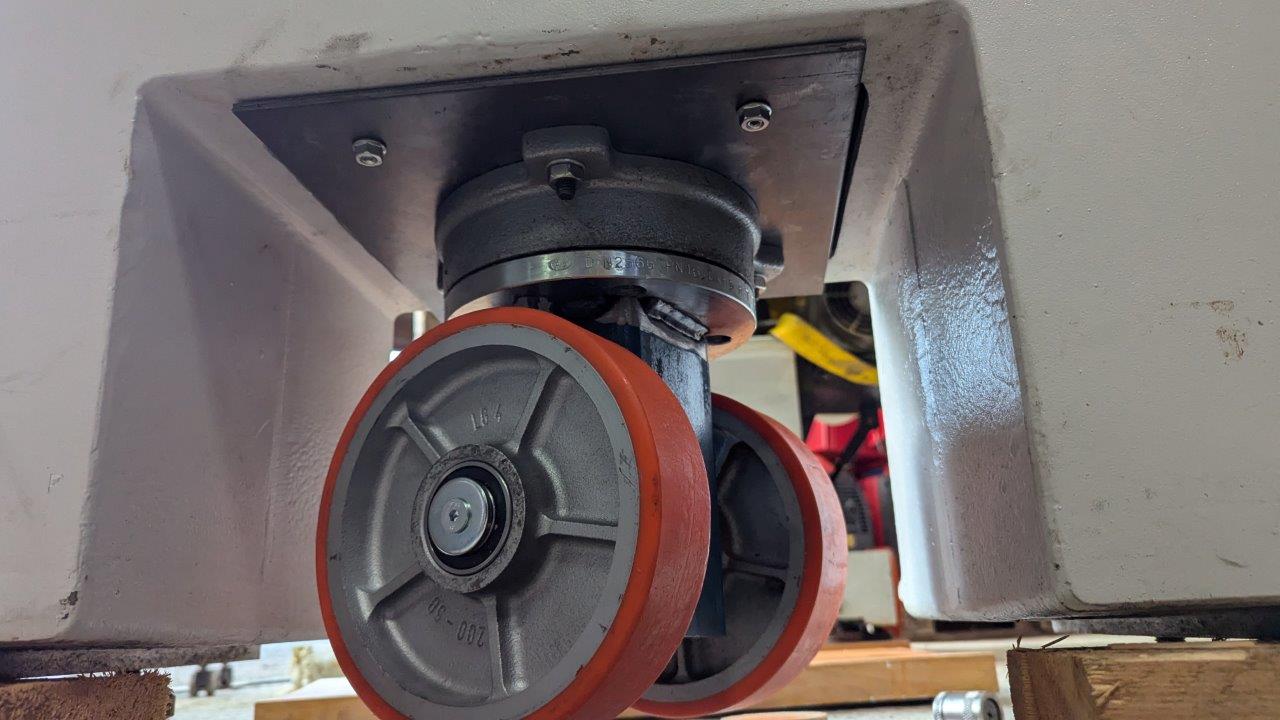
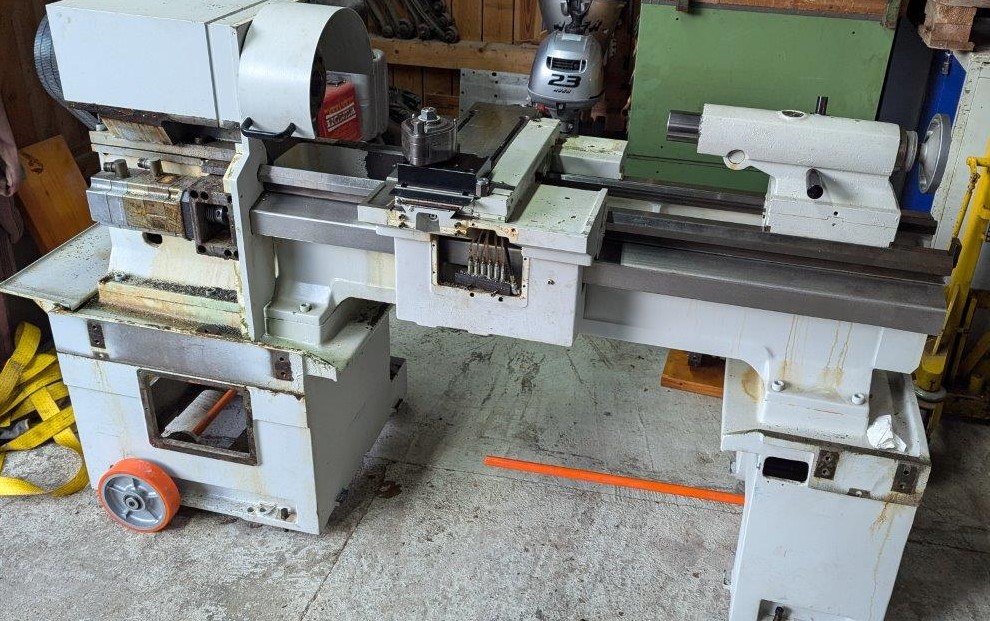
Here’s a first look at its inner beauty. It stands there nearly smallish without the cabinet (I’d compare it roughly to a Weiler B Condor). To move it without hydraulics or a crane, I built a chassis from scrap parts (a broken flange and the lower part of a vice plate) using some hardware and heavy-duty wheels.With this setup, it can be maneuvered easily and very precisely with one person. it’s now flexible enough for the casing modifications. I’ve also given it a bit of a clean.
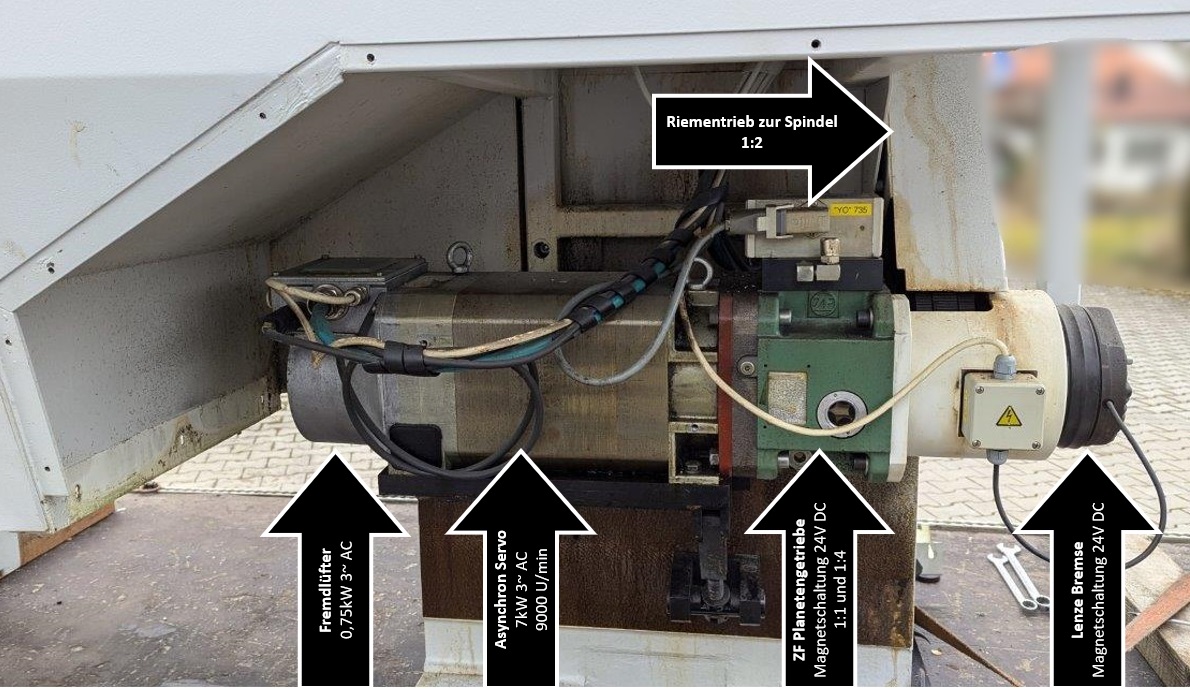
Next step is planning and buying hardware for the conversion to LinuxCNC. I’d like to continue using the servo motors, as I believe they are definitely worth preserving. In particular, the spindle drive is fantastic. It’s a SIEMENS asynchronous servo motor with an external fan, brake, and a two-speed planetary gearbox. The motor can reach up to about 9000 RPM. Through the belt drive, I have spindle speeds of 0 to 1000 and 0 to 4000 RPM. Given the well-designed bearings and the belt in between, I’m hoping for excellent Surface-results.
Unfortunately, the large motor is both a blessing and a curse. The Heidenhain compact inverter is actually brilliantly small designed and should still work fine. However, it seems that the folks in Traunreut have turned it into a complex project, and it looks like you can only connect this thing to HH controllers. Documentation on this is almost non-existent, which is frustrating. So, finding a suitable (small) inverter for the spindle servo is not easy, and it’s not cheap either. The best option might be to go with a SIEMENS S120. However, the software, namely TIA Portal, is a significant hurdle for me.
I’ve been mulling over this for a few weeks now; if it weren’t for these issues, the machine would probably already be moving. I might even take the plunge into EtherCAT. That way, it could be easier to buy new motors and drivers for the X and Z axes directly (with absolute encoders and position feedback).
Finding a suitable driver for the large SIEMENS 1PH7105 servo is quite challenging. Perhaps something from Beckhoff, like an AX51? Or again a SIEMENS S120, which can sometimes be found very cheaply on eBay, although it’s primarily designed for ProfiBUS. There is an EtherCAT adapter available, but I fear that no one has tried it with LinuxCNC yet, and I don’t have the skills to tackle that.
Unfortunately, LinuxCNC and EtherCAT are still a bit of a mystery to me. I’m looking forward to hearing your thoughts and tips!
Best regards,
Tom