
Repair servodrive yaskawa CACR
- nikopoli@live.it
- Offline
- New Member
-

Less
More
- Posts: 4
- Thank you received: 2
26 Sep 2025 20:07 - 26 Sep 2025 20:10 #335466
by nikopoli@live.it
Repair servodrive yaskawa CACR was created by nikopoli@live.it
Hi everyone,
I’m working on a Yaskawa CACR-SR (BE1 series) servo drive. In general it works, but from time to time I randomly get A20 or A60 errors.
I have two identical drives, and I’ve already narrowed the issue down to the specific board shown in the photo. I was planning to replace all the electrolytic capacitors and also the film ones (I’ll probably do that anyway, given their age), but I also noticed component D20, which looks burned/blackened and has no readable marking.
I’m not an electronics engineer, but I’m quite good at soldering and I have a multimeter, so I can take measurements if needed. I’d really like to repair this drive because I have a milling machine that I only use as a hobby, and I simply can’t afford a new servo drive since I’m still young.
Could someone please help me identify exactly what D20 is (diode type and value), or point me to other likely components that could be causing these errors?
I wrote on this forum because I saw that in another topic an engineer had the same problem as me, but since it is an old topic I thought it was better to open a new one
Thanks a lot in advance for any help!
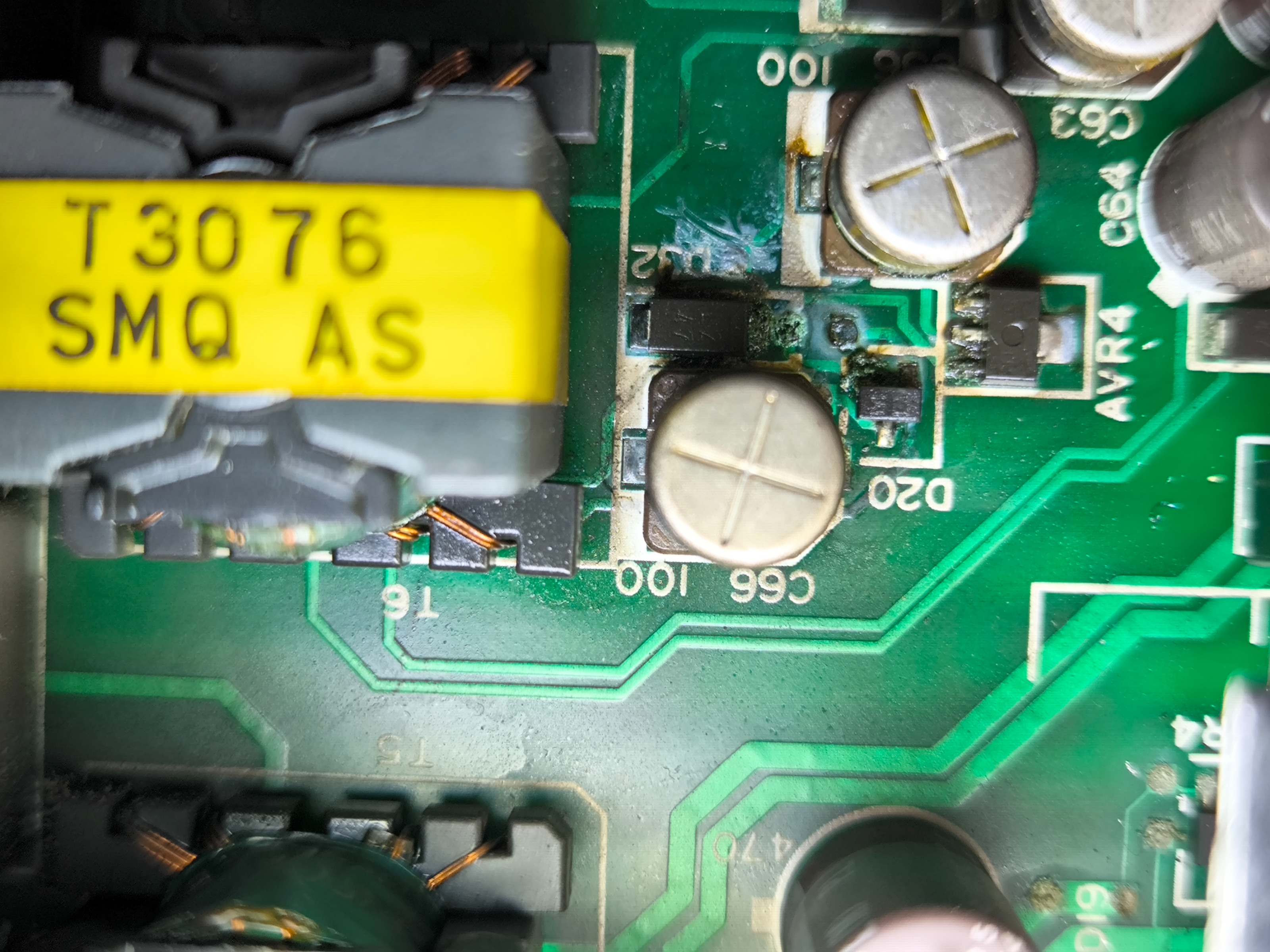
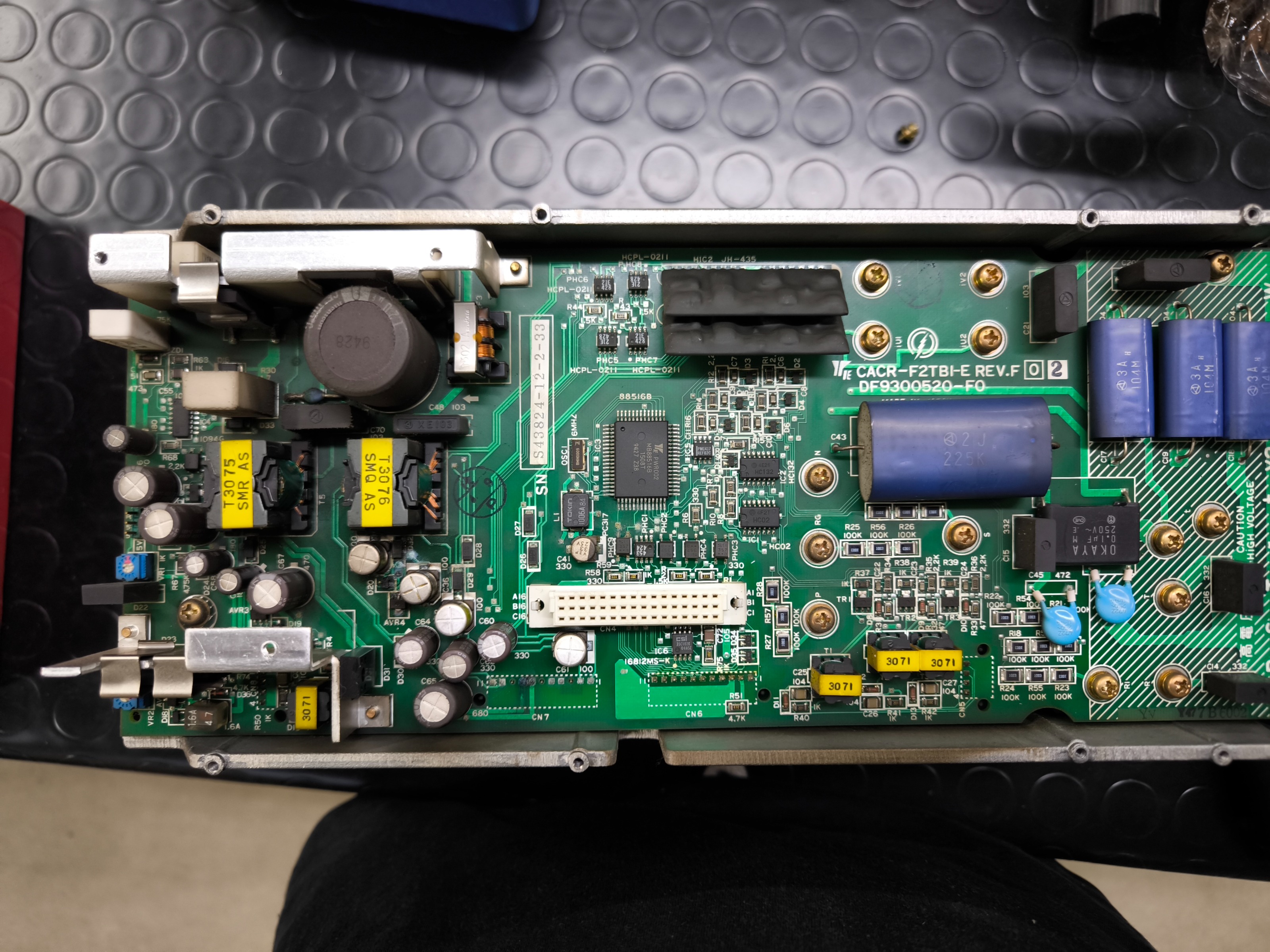
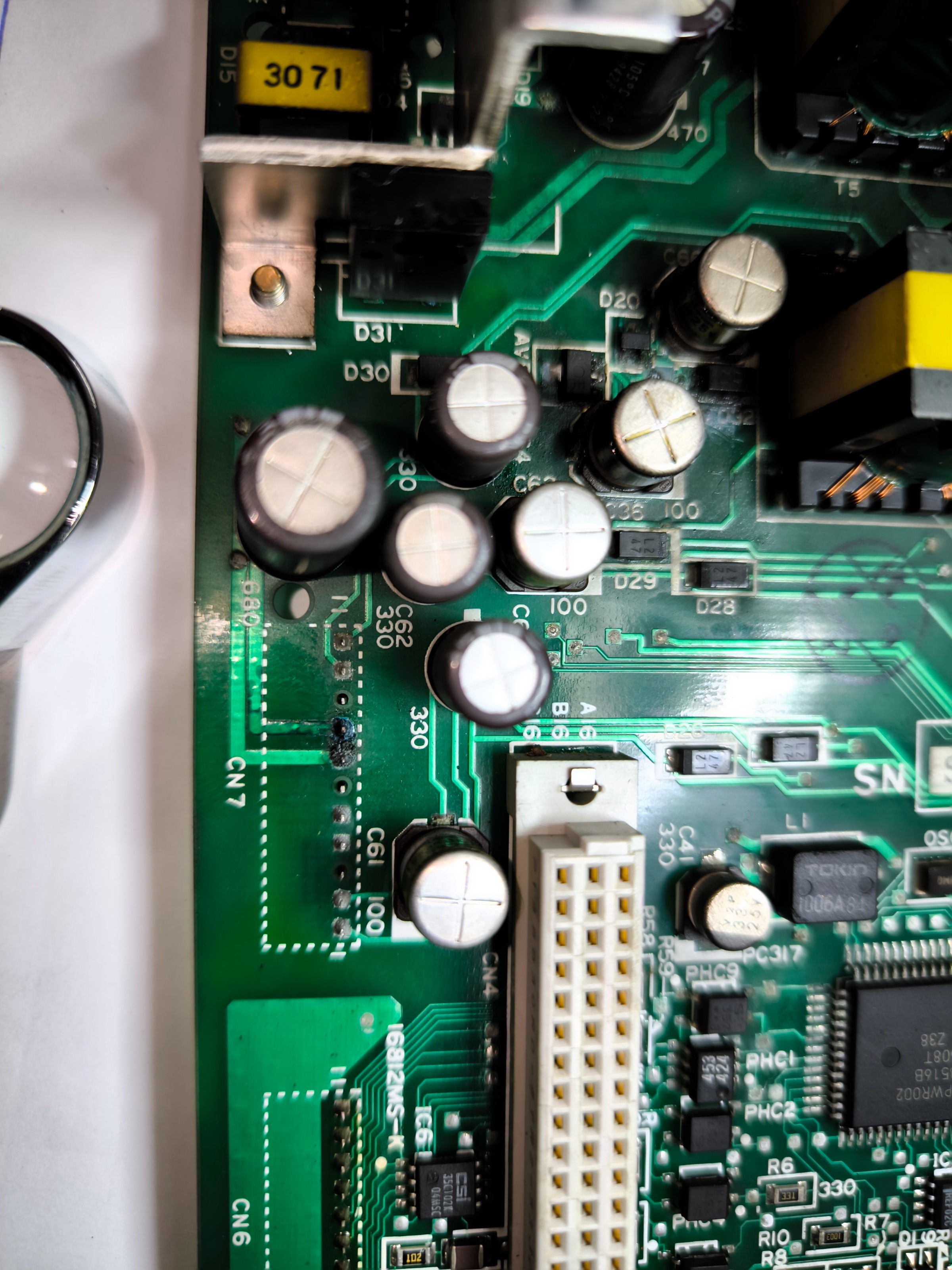
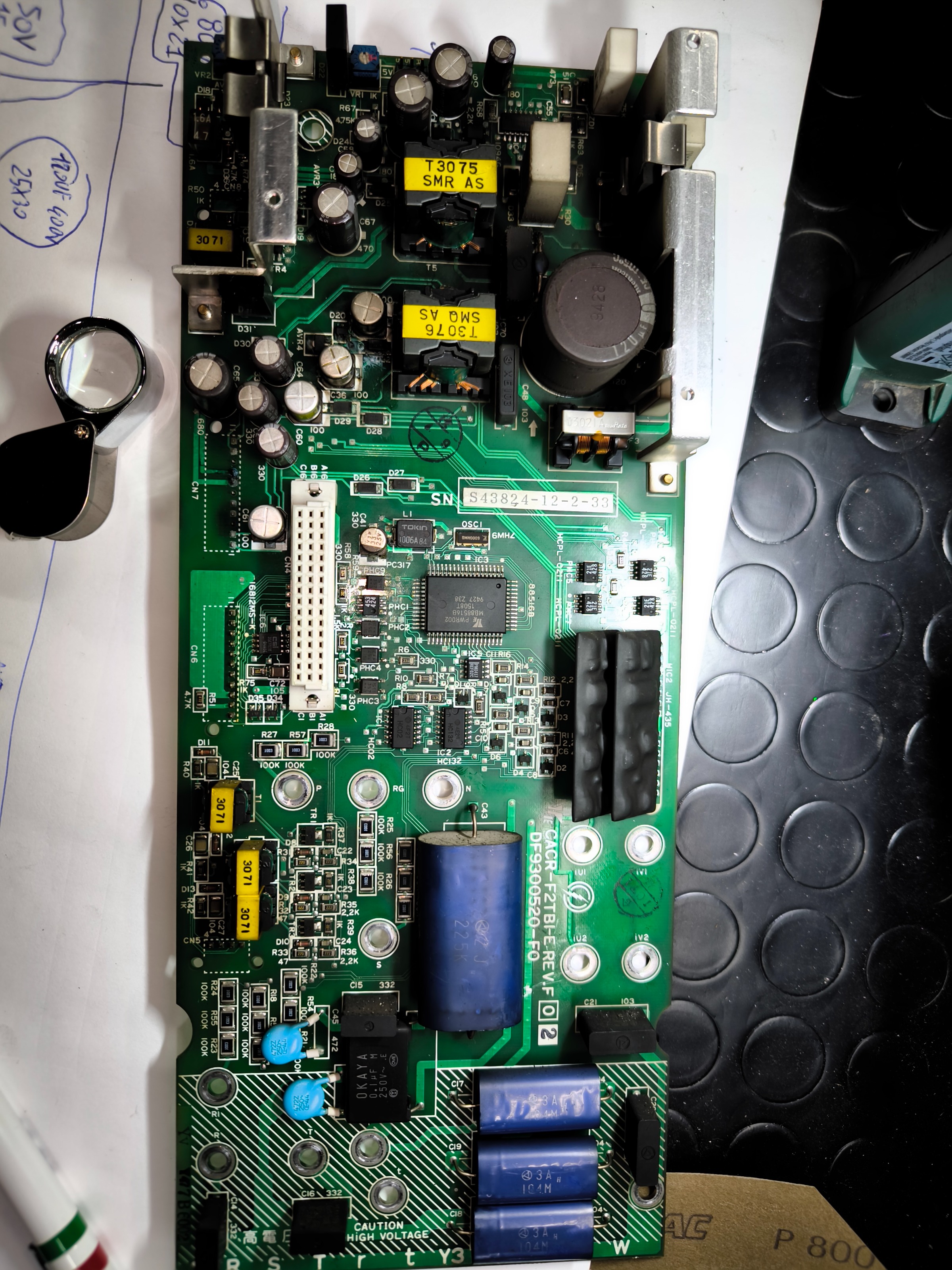
I’m working on a Yaskawa CACR-SR (BE1 series) servo drive. In general it works, but from time to time I randomly get A20 or A60 errors.
I have two identical drives, and I’ve already narrowed the issue down to the specific board shown in the photo. I was planning to replace all the electrolytic capacitors and also the film ones (I’ll probably do that anyway, given their age), but I also noticed component D20, which looks burned/blackened and has no readable marking.
I’m not an electronics engineer, but I’m quite good at soldering and I have a multimeter, so I can take measurements if needed. I’d really like to repair this drive because I have a milling machine that I only use as a hobby, and I simply can’t afford a new servo drive since I’m still young.
Could someone please help me identify exactly what D20 is (diode type and value), or point me to other likely components that could be causing these errors?
I wrote on this forum because I saw that in another topic an engineer had the same problem as me, but since it is an old topic I thought it was better to open a new one
Thanks a lot in advance for any help!
Attachments:
Last edit: 26 Sep 2025 20:10 by nikopoli@live.it.
Please Log in or Create an account to join the conversation.
- nikopoli@live.it
- Offline
- New Member
-
Less
More
- Posts: 4
- Thank you received: 2
27 Sep 2025 11:21 #335484
by nikopoli@live.it
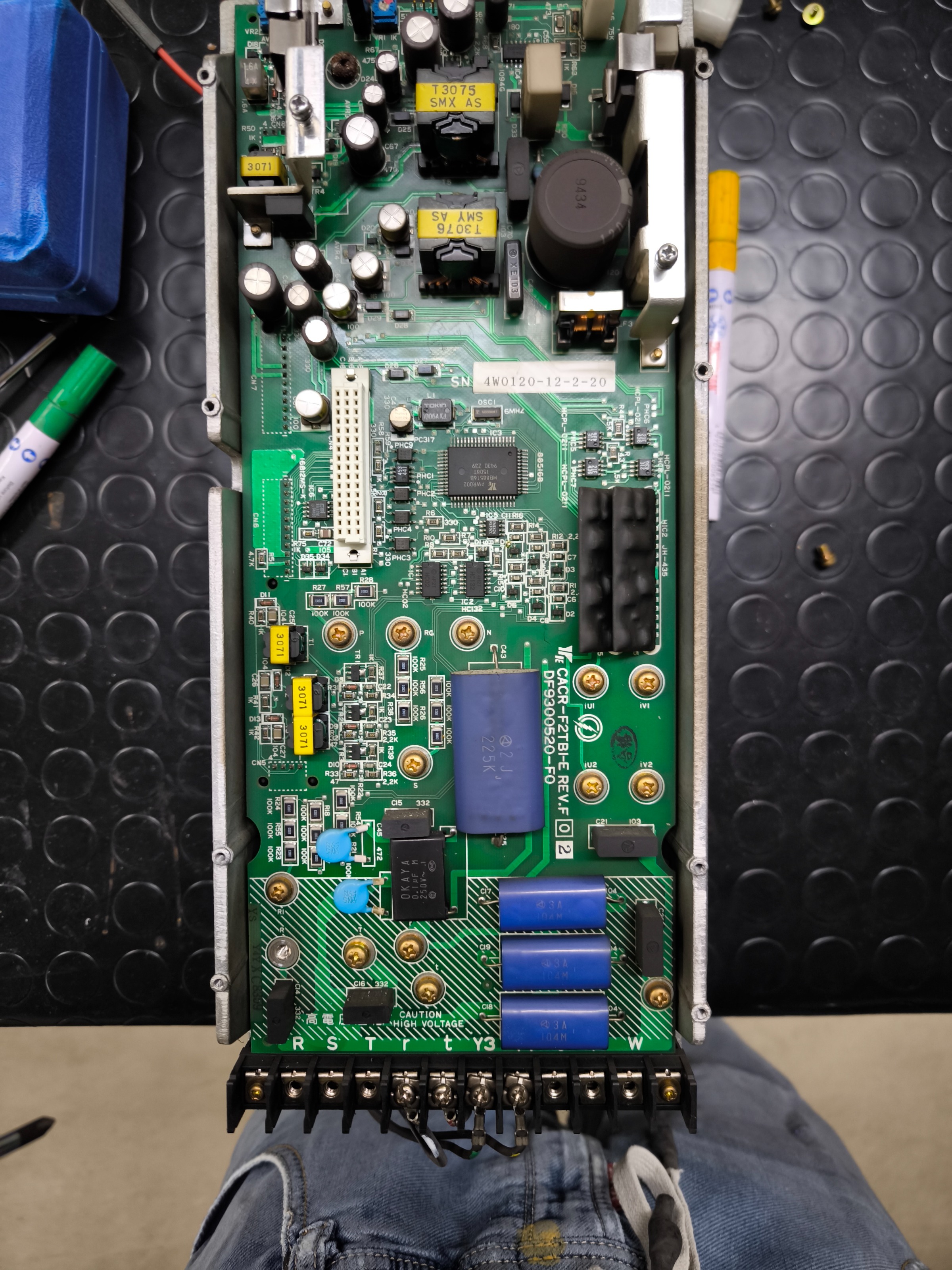 Yes of course This Is the okay board
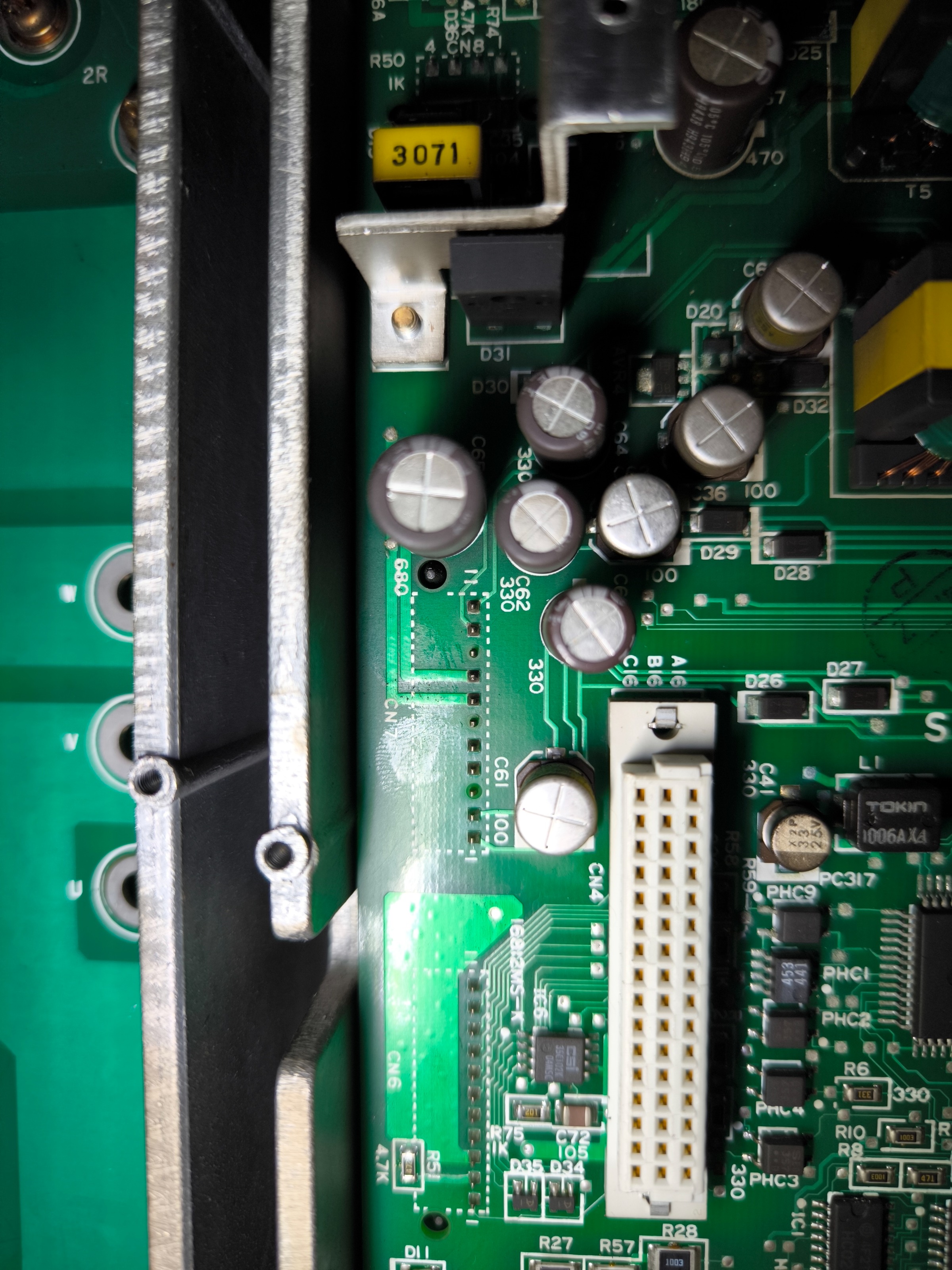
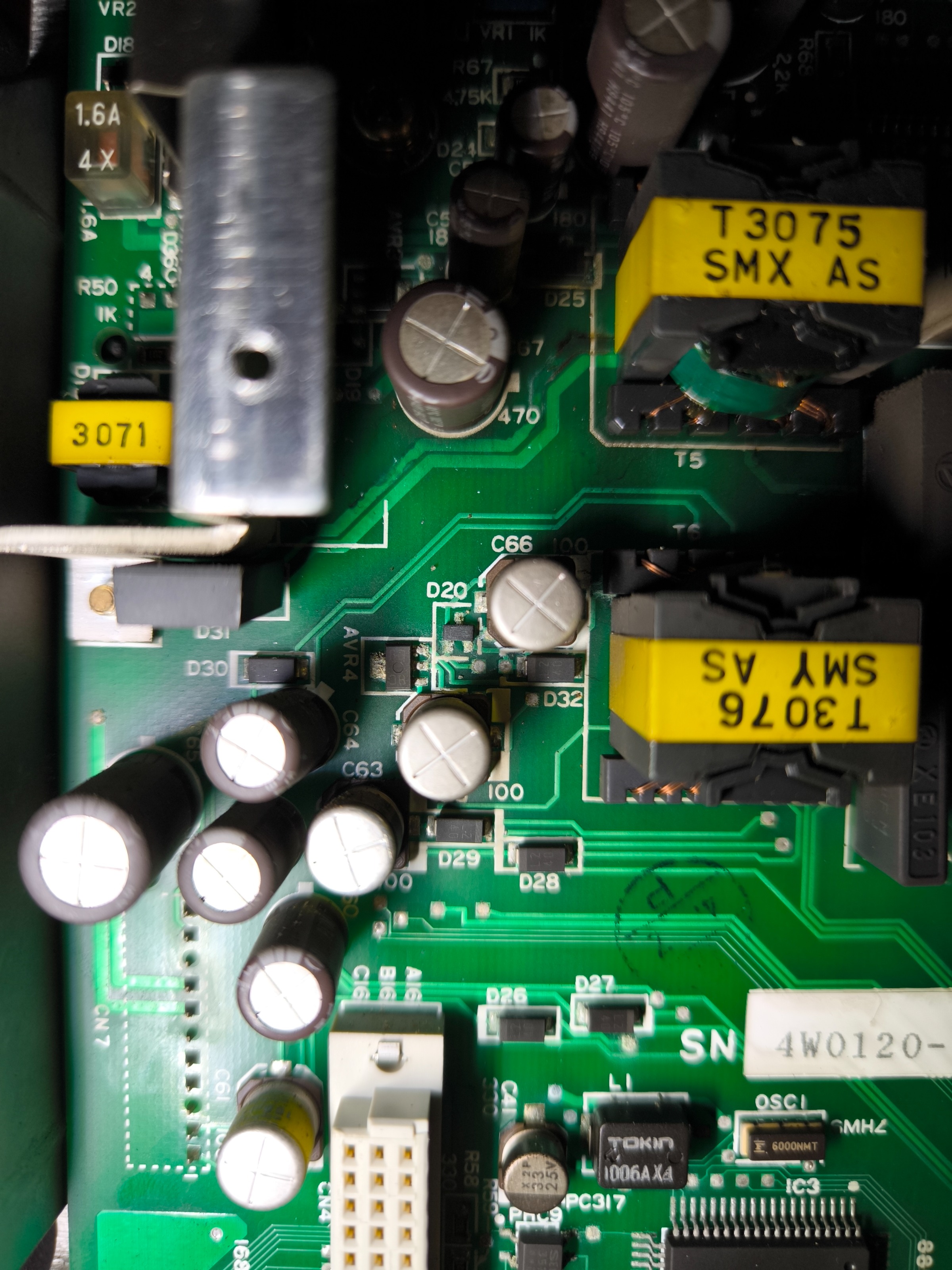
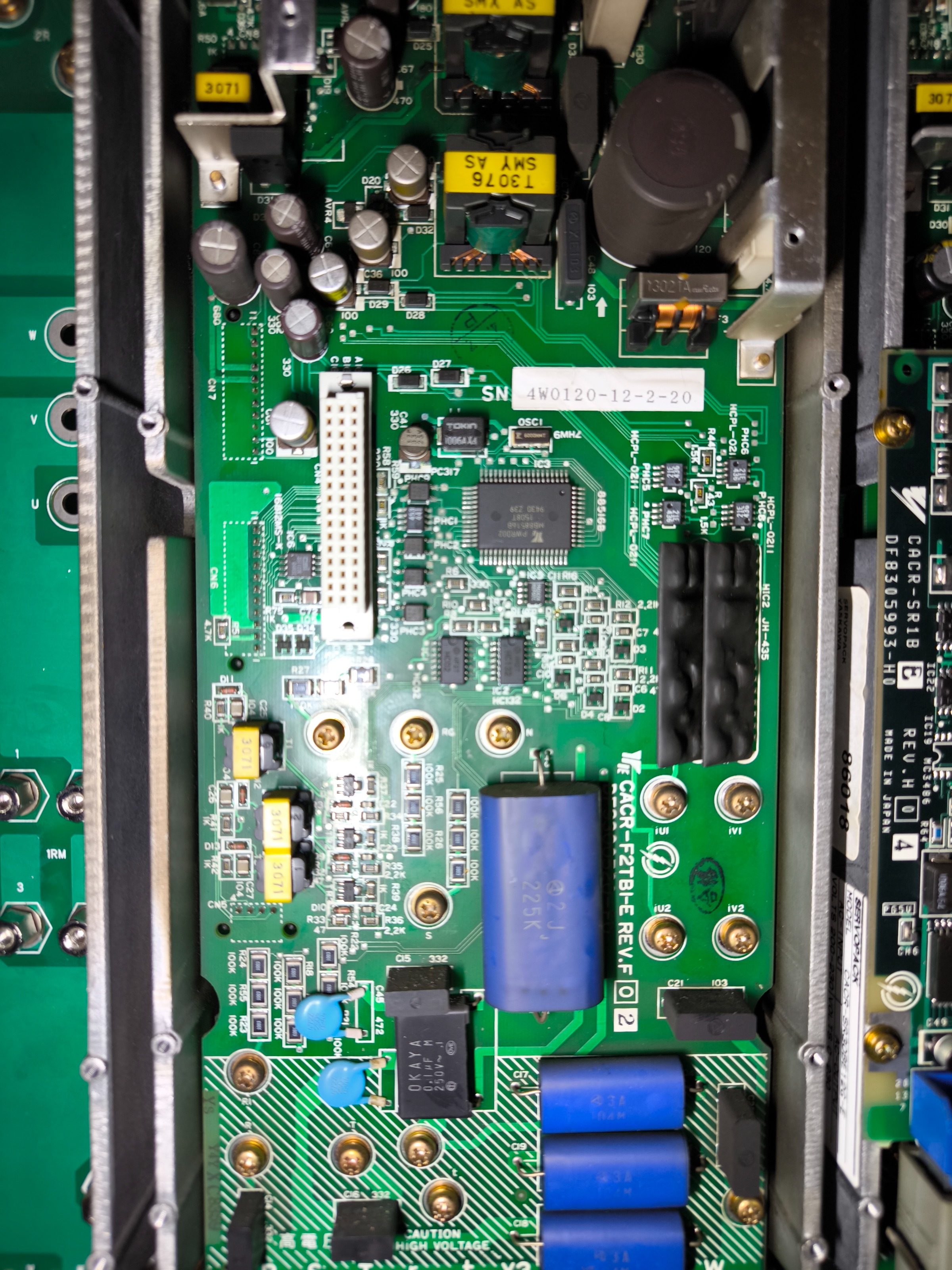
Replied by nikopoli@live.it on topic Repair servodrive yaskawa CACR
Attachments:
Please Log in or Create an account to join the conversation.
- nikopoli@live.it
- Offline
- New Member
-
Less
More
- Posts: 4
- Thank you received: 2
29 Sep 2025 06:43 #335534
by nikopoli@live.it
Replied by nikopoli@live.it on topic Repair servodrive yaskawa CACR
I understand your observations. Honestly, I don't have any way of knowing if the working drive has been repaired before, but it's a definite possibility, especially considering it could be up to 30 years old!
Regarding the corrosion near connector CN7, it's hard to say for certain if it's due to a cold solder joint or other factors. Furthermore, the pasty substance on the transistors above could indeed be solder flux (residue from the assembly process or a previous repair), or it could be liquid leakage from the nearby electrolytic capacitors, which would indicate another potential issue. Both hypotheses are plausible on electronic boards of that age.
Regarding the corrosion near connector CN7, it's hard to say for certain if it's due to a cold solder joint or other factors. Furthermore, the pasty substance on the transistors above could indeed be solder flux (residue from the assembly process or a previous repair), or it could be liquid leakage from the nearby electrolytic capacitors, which would indicate another potential issue. Both hypotheses are plausible on electronic boards of that age.
Please Log in or Create an account to join the conversation.
Time to create page: 0.808 seconds