Search Results (Searched for: )

  • unknown
04 Nov 2025 11:02
I'd either go for mesa or riocore, both types will run on a Spartan 6.

Riocore is pretty good in that it has quite a few mesa doesn't support, has also port for a number of different FGPAs. The only issue is that it needs rebuilding of the driver for each time you change to fpga config. RIO also has a Ethernet plugin that uses a w5500, as of yet no plugin for the Ethernet chip used on the Mesa boards.

Mesa is very very mature, one driver is all that is required for changes to fpga if you keep to the standard mesa set of modules. SmartSerial is a big plus as well.

I built a 7c81/7i90 clone using a spartan 6 dev board and some custom PCBs, mesa & riocore firmware both ran fine on it.

Keep up the good work.
  • Unlogic
04 Nov 2025 10:42 - 04 Nov 2025 20:55
Replied by Unlogic on topic How do I close a g-code file in Gmocapy?
I made some progress on this issue.

The following command will show all open files in Samba which have some form of lock:

smbstatus -L

Edit: Ignore the text below it gave some weird side effects after some more testing.

Adding the following lines to the configuration of the share in smb.conf allows me to overwrite the files even though they are locked.

oplocks = no
level2 oplocks = no
strict locking = no

I'm using Probe Basic and it recently received a "RELOAD PGM" button in the development version which is very welcome.

However it doesn't seem to pick up the changes if I overwrite the file on the share and press the "RELOAD PGM" button. But if I open another file and then open the first file again it picks up the changes right away.
  • vmihalca
04 Nov 2025 10:09
Replied by vmihalca on topic How do I program an 8 figure oil groove?
Yes, this is what I am talking about. I attached a picture with a few oil groove patterns among which there are the grooves I am talking about.
  • mariusl
04 Nov 2025 09:19 - 04 Nov 2025 09:22
Replied by mariusl on topic USB activity causes network error
I got this result when I ran the checkmask file. I am sure that I don't know how to use isolcpu. I want to isolate two cores with last core being 7.  SO cores 6 and 7 to be used for linuxcnc.

Cores: 8
Actual CPU Mask: ff
Desired CPU Mask: 128
IRQ: 24
Kernel command line: BOOT_IMAGE=/boot/vmlinuz-6.1.0-40-rt-amd64 root=UUID=bfdcf9b0-7caa-4c4b-b4c3-585accea347a ro quiet isolcpus=2,7
  • axemas
04 Nov 2025 09:08 - 04 Nov 2025 11:06
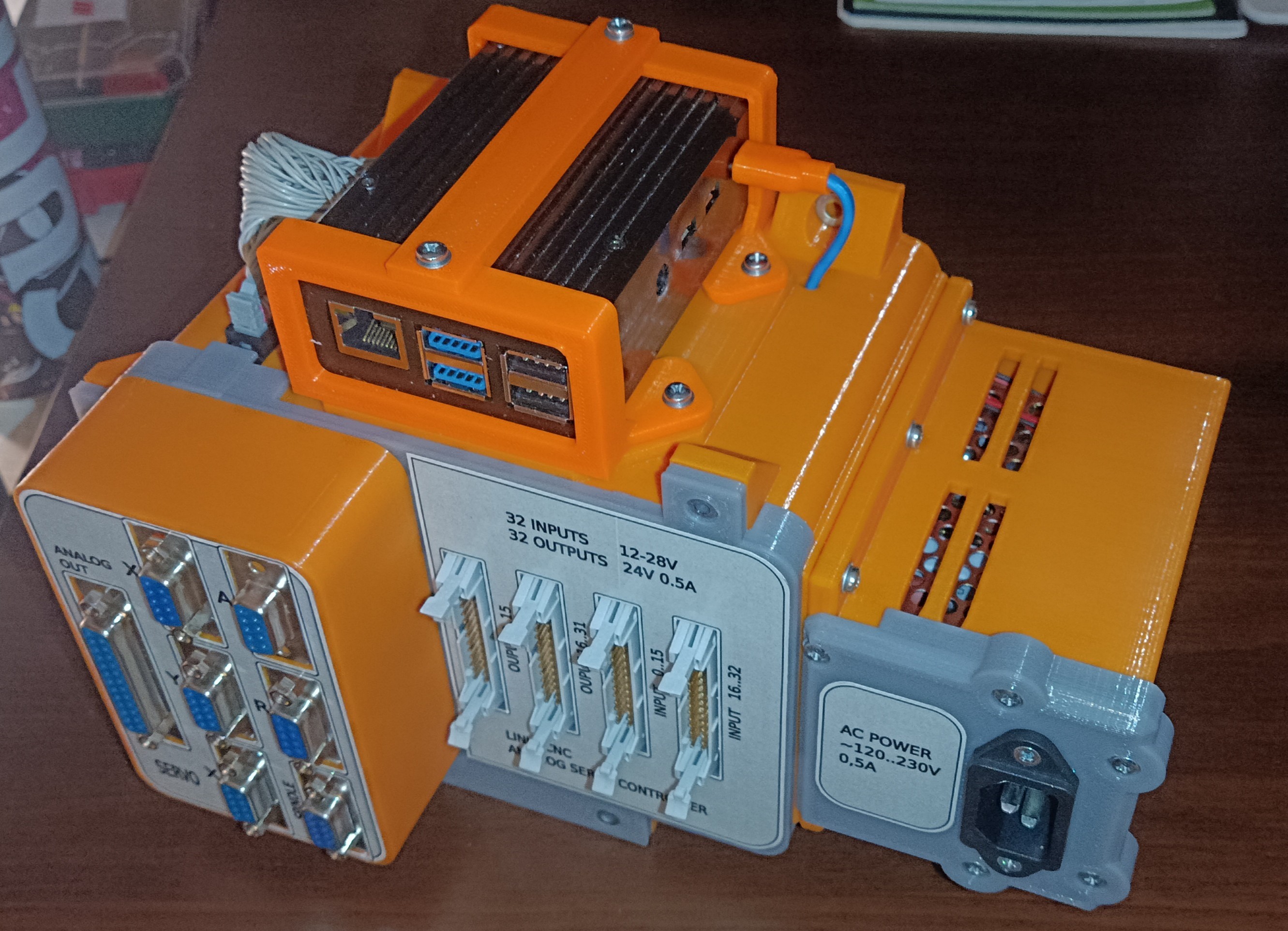
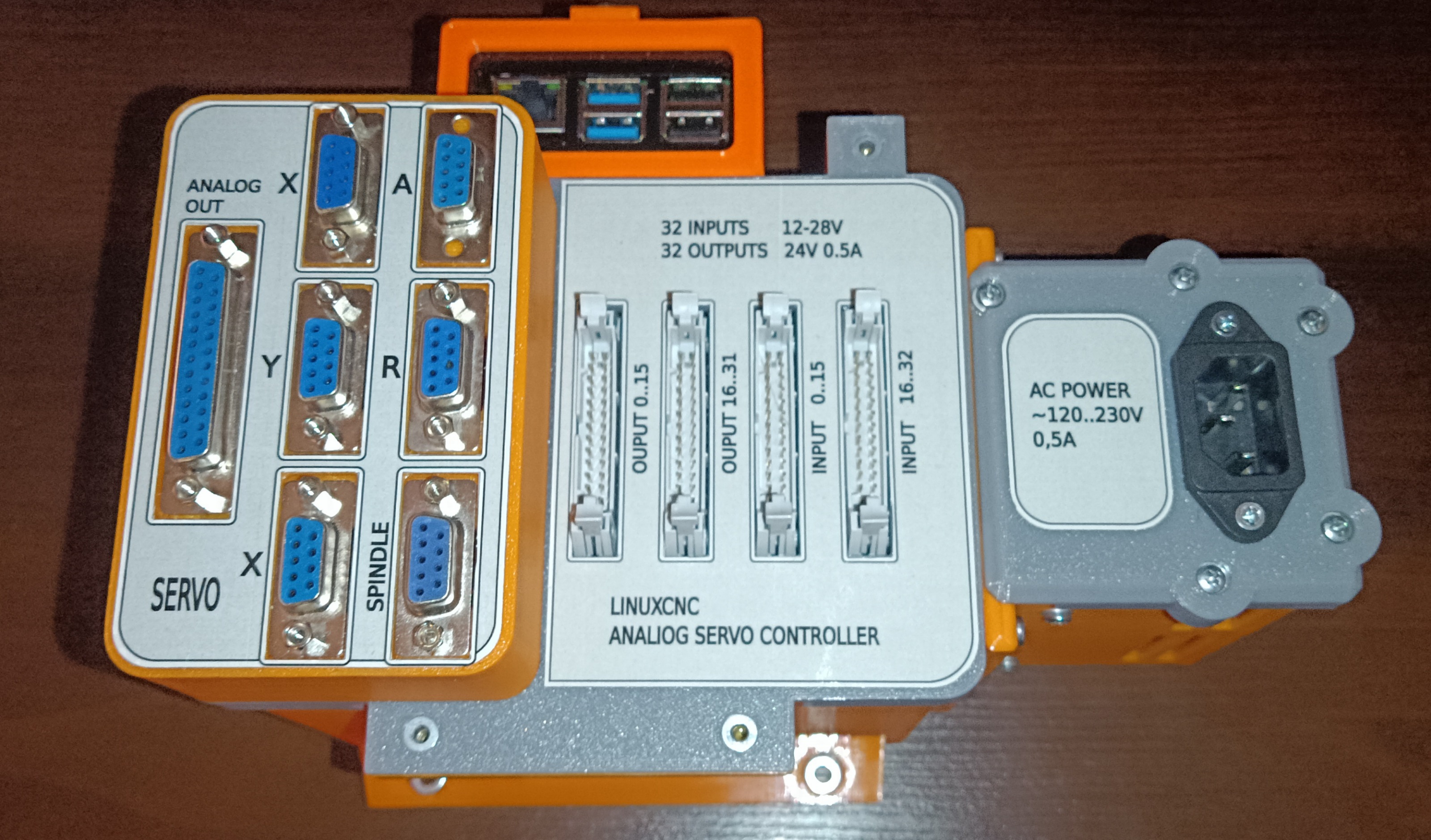
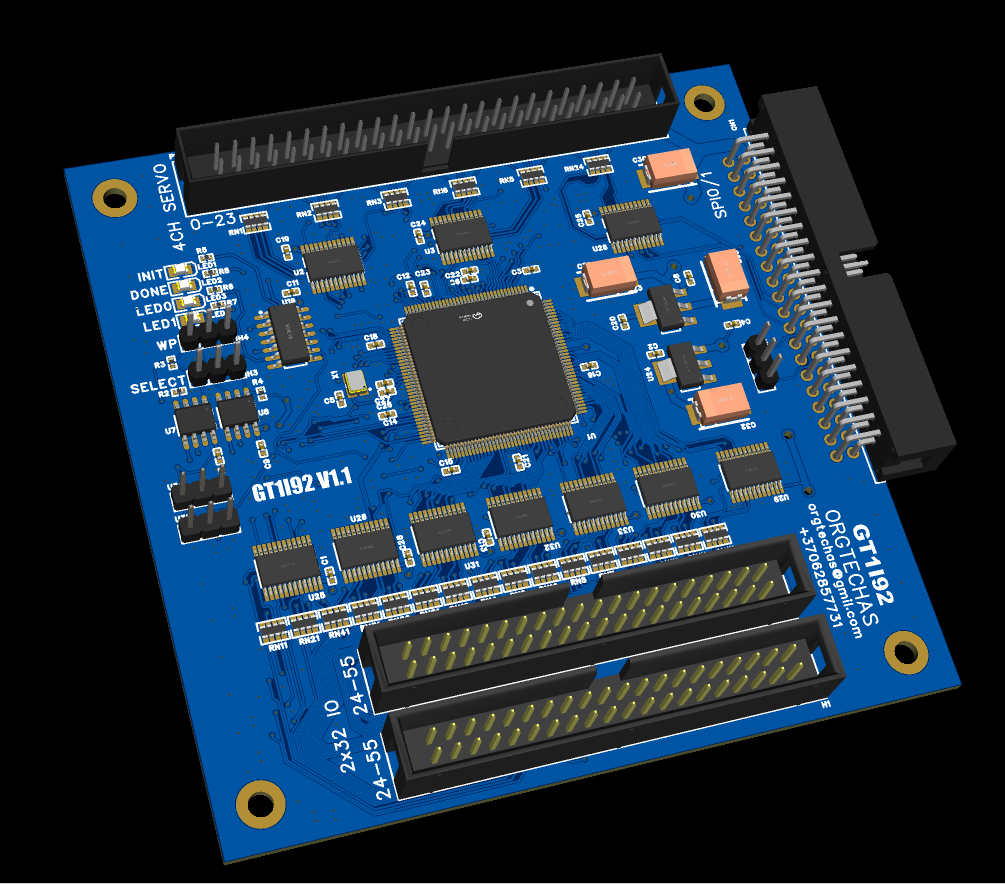
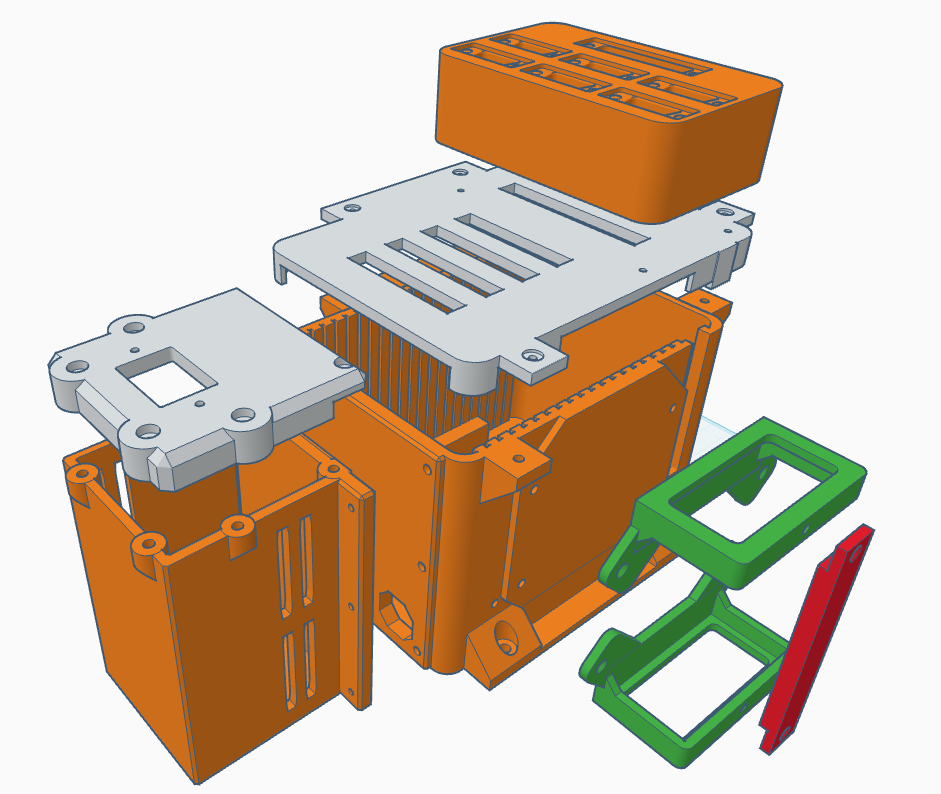
Hello, I have a few questions.I am building a complete computer with fpga and all other boards, and I have some questions:
1. What firmware should I choose, mesa, remora or, write my own?
2. I want a universal solution, so what input/output boards should I design?
3. Should I design my own case or choose a ready-made one?
Here is one of the prototypes:
-32 outputs 24v 0.5A, 32 inputs 24V, four boards
-4 analog servo -10V.. 10V outputs, 4 encoders input, one board
-Fpga 96 IO board with buffers, one board ()
-Firmware - ported and modified mesa for SPI interface.
-software driver - modified hm2 driver from source code.
-3d printed case.
-Computer Raspberry pi 5 aluminum case

all works fine and stable 
   
  • gravedigger
04 Nov 2025 09:00
ECAM 5 POST Processors was created by gravedigger
I’m just getting started with LinuxCNC and have switched over from Mach4. I’ve been using the Italian ECAM 5 software and would like to continue using it. How different is the G-code between Mach and LinuxCNC? What are the main differences?
  • Jamanji
04 Nov 2025 08:11
issues with MESA to SCARA kins was created by Jamanji
Hi all,

First time poster so i hope you'll excuse if this is a simple fix. I'm attempting to make something like an ArcDroid for a uni project but I've run into a road block. I'm using a MESA 7i96s as my controller and two knock off tb6600 as my drivers. after using the Pncconfig i got both my motors spinning in the XYZ setup, but once i tried to change it to SCARAkin, it didn't work. At first it loaded but was still in the XYZ config, then once i changed enough it stopped working outright. At the moment I'm aiming for simple motion control and I'm not sure if the issue lies in something I'm doing or in my coding. I've made several attempts so i have multiple files, mostly just coping from the existing SCARA config that exists in LinuxCnC but also from consulting with ChatGPT. Any help would be greatly appreciated, functional files for something like this would be a life saver and a more direct line to someone who is happy to provide help would be out of this world.
  • Hakan
04 Nov 2025 07:31
No, this is close. It should work. But I have sometimes noticed that the ethercat master
uses old settings and not the new ones. Keep 1a00 and 1600.
Try these in order
"ethercat rescan",
if no change "sudo systemctl  restart ethercat",
and finally if no change, restart PC and drives.
See error messages in syslog when you start linuxcnc

You should also, not causing the problem with the drive, but still, change the line order in the hal file to
Code:
addf lcec.read-all servo-thread addf cia402.0.read-all servo-thread addf motion-command-handler servo-thread addf motion-controller servo-thread addf cia402.0.write-all servo-thread addf lcec.write-all servo-thread
 
  • Gartenzwerg
04 Nov 2025 07:26 - 04 Nov 2025 07:27
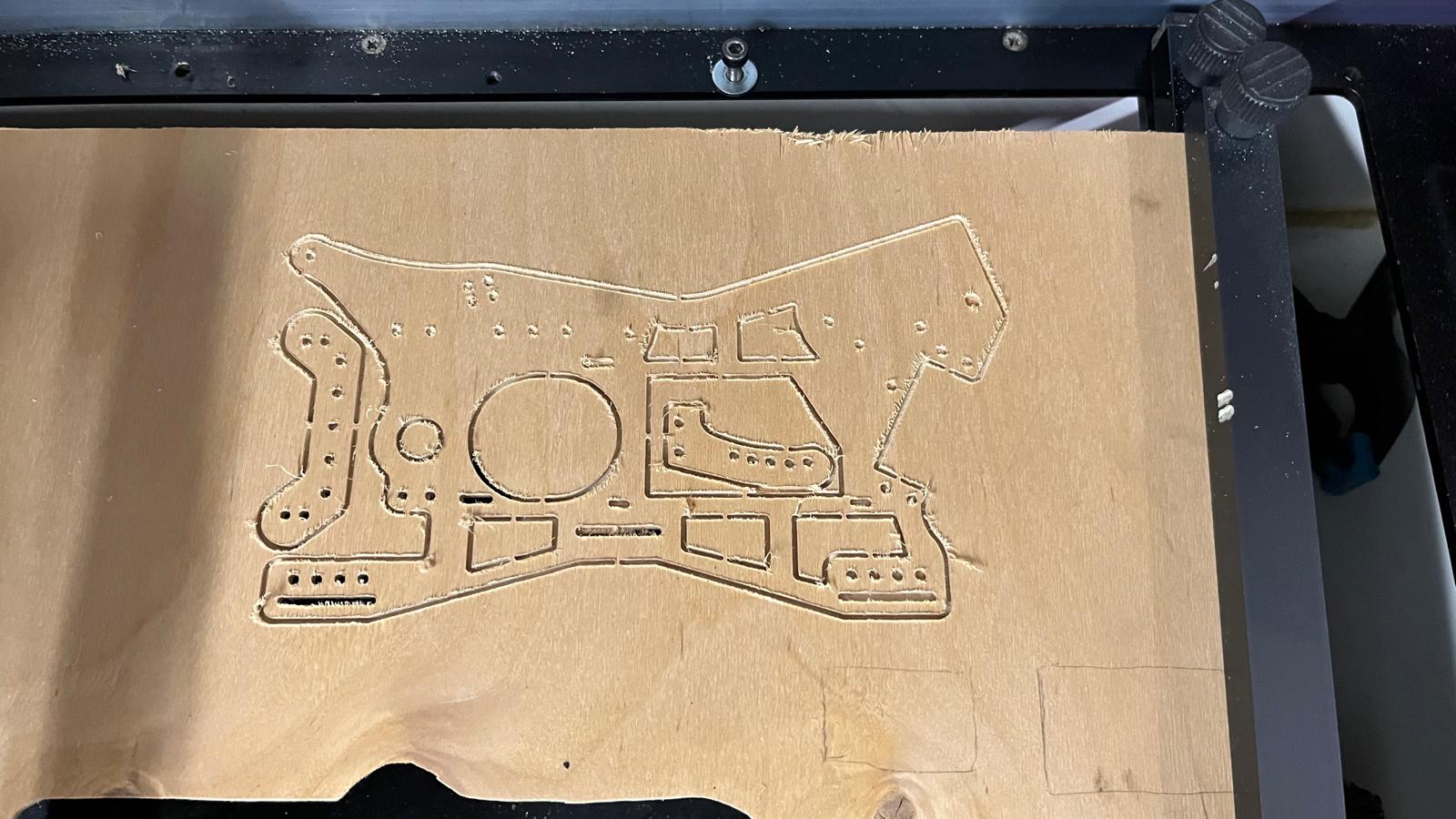
Replied by Gartenzwerg on topic Tipps für aktuelle LinuxCNC Hardware gesucht
Ihr habt natürlich recht! 
Der Stift war doch wackeliger eingespannt als gedacht.
Eine Fräsung in einem Reststück ergibt ein schönes Ergebnis - damit bin ich zufrieden!


Die Mesa-Karte ist immer noch am Weg, damit spiele ich mich vermutlich im Winter mal.

Ich bin jetzt noch am überlegen ob ich die Ansteuerung der Spindel-Drehzahl auch über LinuxCNC machen möchte, einfach um unabhängig von der eingebauten Platine zu sein.

Laut dem Blog von Entropia brauche ich die folgende Ansteuerung:
Über SPI auf den Pins 14,16 und 17 wird die Drehzahl eingestellt.
Die Datenrate ist 30 kHz; die Daten werden in 16bit-Worten (Big Endian) übertragen.
Bei einem ATMega328p mit 128 kHz Clock haben die folgenden SPI-Settings funktioniert:
SPCR = _BV(SPE) | _BV(MSTR) | _BV(SPR0) ;
SPSR = 1 << SPI2X;

Die gesendeten Werte sind linear Interpoliert zwischen:
14000 RPM in Editasc -> 2866
20000 RPM in Editasc -> 4094 (0x0FFE -- erster Nibbel soll stets 0 sein!)

man kann die Spindelgeschwindigkeit auch mit 64kHz (= 8MHz F_CPU / Divider 128) senden.

Wäre das eurer Meinung nach eher ein Fall für einen externen Arduino, oder kann das der Raspberry ebenfalls erzeugen und ausgeben?
Displaying 11881 - 11890 out of 11890 results.
Time to create page: 0.223 seconds
Powered by Kunena Forum