
Search Results (Searched for: )
- rodw
-

- rodw
-
latency-histogram --nobase --sbins 1000 --show
Also we need to know the NIC you are using
realtek needs the dkms driver, Intel needs coalescing disabling per man hm2_eth
I suspect its probably OK. IRQ affinity probably needs to be set on startup as it does not persist.
- rodw
-
In my homecomp, I have this comment
// RODW - the cia402 comp sets pos_fb = pos_cmd while internal homing to prevent following errors. This could be done here.
github.com/rodw-au/cia402_homecomp/blob/...2_homecomp.comp#L229
So not sure if its covered in Dominic's cia402.comp that you used as a base but I think it should be covered if this becomes an official comp in your ethercat repo.
- grandixximo
-

github.com/linuxcnc-ethercat/ethercat
you can also get updates if you install the repo here
github.com/linuxcnc-ethercat/apt
I will work on maintaining compatibility with vanilla ethercat, won't force users to use my ethercat, although IMO it is better

Edit:
Uploaded here, this should work with your ethercat as well
github.com/linuxcnc-ethercat/linuxcnc-et...ases#release-v1.48.0
- Rhubarb
This is my first post here, so a quick introduction. I'm Ruben, a web developer from Melbourne, Australia, who loves building CNC machines. I've been reading this forum for a while as I plan and build my first plasma table. Along the way, I wanted to drive the machine from a touchscreen, a laptop or my phone rather than a screen bolted to the controller. So I built a web interface for QtPlasmaC, and I'd like to share it.
Important: this has not been tested in production yet. My table is still being built, so plasmaweb has only been run against a virtual LinuxCNC machine — the QtPlasmaC simulator config on LinuxCNC 2.9.4, running in a VM — not on a real machine cutting real metal. Please treat it as untested on hardware, try it on a sim config first, and keep a working QtPlasmaC config to go back to (switching back is one INI line, see below). Bug reports and feedback are very welcome.
What it is
plasmaweb replaces the QtPlasmaC screen, not your config. It runs as the LinuxCNC [DISPLAY] program: a Python backend on the controller serves a touch-friendly web UI, and you open it in a browser on the controller itself or on any other machine on your network.It is designed as a drop-in:
- It registers the same qtplasmac HAL component (same 91 pins) that QtPlasmaC does, so your existing postgui HAL files connect unchanged.
- It reads and writes the same files: <machine>.prefs, <machine>_material.cfg and the [QTPLASMAC] INI section.
- Switching over is one line in the INI (DISPLAY = plasmaweb). Setting it back to qtvcp qtplasmac returns the machine to QtPlasmaC.
Features
Plasma screens (mirroring QtPlasmaC's tabs)
- MAIN — live dashboard: arc voltage, THC state, status LEDs, cut recovery, torch pulse, height override, single cut
- PARAMETERS — the QtPlasmaC parameters, saved back to your .prefs file, with QtPlasmaC's own tooltips
- MATERIAL — materials from your _material.cfg, including the M190 material-change handshake
- CONVERSATIONAL — LinuxCNC's own plasmac shape modules, driven from a web form
- PREVIEW — toolpath preview and run-from-line
- STATISTICS — cut counts, arc time and consumable stats
- Jogging, homing, MDI, program load/run and the tool table
- Macros, HAL softkeys and external panel inputs
- Uses your machine's own QtPlasmaC colours and keyboard shortcuts from the prefs file
- Layouts for 16:9, 4:3 and portrait (9:16) screens
- English and German UI
- Open the UI from a laptop, tablet or phone on your network. Settings shows the address to type in.
- There is no authentication: anyone who can reach the port can jog the machine and fire the torch. Only use it on a network you trust, or set PLASMAWEB_HOST=127.0.0.1 to restrict it to the controller's own screen.
- When the UI loads, it checks GitHub for a new release and offers Update now / Later / Skip this version. Settings → Updates shows the installed version and has a "Check for updates" button.
- Updates are downloaded over HTTPS and checksum-verified, and are refused while a program is running. Restart LinuxCNC afterwards to use the new version.
Installing
No Node.js needed on the controller. Download the latest release tarball from GitHub and run the installer:
Then in your machine INI:tar xzf plasmaweb-<version>-linux.tar.gz
cd plasmaweb-<version>-linux
sudo ./install.sh
Full guide: installation.md[DISPLAY]
DISPLAY = plasmaweb
Releases: github.com/RubenAhlhaus/plasmaweb/releases
Source: github.com/RubenAhlhaus/plasmaweb (GPL-3.0-or-later)
Credits
This project stands on the work of others, and I want to credit them properly:
- lcncgui ( github.com/salomom/lcncgui ) — the web application plasmaweb is built on. The backend, the WebSocket layer, and the jog, DRO, MDI, program and tool-table screens all come from lcncgui. plasmaweb adds the plasma layer on top. Huge thanks to its author.
- LinuxCNC and QtPlasmaC / plasmac — the realtime plasmac component does the actual work of running a plasma table, and plasmaweb reuses QtPlasmaC's conversational shape modules, run-from-line logic and G-code handling directly from LinuxCNC rather than reimplementing them. The whole design copies QtPlasmaC's files and HAL interface so that both screens stay interchangeable. Many thanks to Phillip Carter, Gregory Carl and everyone who has contributed to QtPlasmaC and LinuxCNC.
Feedback
If you try it on a sim, or are brave enough to try it on a real table, I'd love to hear how it goes. Please report issues on GitHub or reply here. Since I can't test on hardware yet, reports from people with working tables are especially valuable.Thanks for reading, and thanks to this community for everything I've learned here.
- CNCJIM
- mwc
The main reason I've selected this module is for the Analogue Inputs, as I want to use one for a Plasma THC, and another for FRO.
I've had it connected for a while, but have been concentrating on the Lichuan drivers first, so as it stands, I've only got as far as the lcec_configgen output -
<slave idx="3" type="generic" vid="0x00000b96" pid="0x00001400" name="D4">
<!--EC1A-CORE1-->
<syncManager idx="0" dir="in"/>
<syncManager idx="1" dir="out"/>
<syncManager idx="2" dir="out">
<pdo idx="1601">
<!--Digital Output process data mapping-->
<pdoEntry idx="7010" subIdx="01" bitLen="16" halPin="mapping-ch" halType="!!type 002e!!"/>
</pdo>
<pdo idx="1603">
<!--Analog Output process data mapping-->
<pdoEntry idx="7030" subIdx="01" bitLen="16" halPin="mapping-ch0" halType="u32"/>
<pdoEntry idx="7030" subIdx="02" bitLen="16" halPin="mapping-ch1" halType="u32"/>
</pdo>
<pdo idx="1605">
<!--Modbus Master Control process data mapping-->
<pdoEntry idx="7050" subIdx="01" bitLen="32" halPin="tigger-bit" halType="!!type 002f!!"/>
<pdoEntry idx="7050" subIdx="02" bitLen="32" halPin="clear-bit" halType="!!type 002f!!"/>
<pdoEntry idx="7050" subIdx="03" bitLen="8" halPin="rs485-enable" halType="!!type 001e!!"/>
</pdo>
</syncManager>
<syncManager idx="3" dir="in">
<pdo idx="1a00">
<!--Digital Input process data mapping-->
<pdoEntry idx="6000" subIdx="01" bitLen="16" halPin="mapping-ch" halType="!!type 002e!!"/>
</pdo>
<pdo idx="1a02">
<!--Analog Input process data mapping-->
<pdoEntry idx="6020" subIdx="01" bitLen="16" halPin="mapping-ch0" halType="u32"/>
<pdoEntry idx="6020" subIdx="02" bitLen="16" halPin="mapping-ch1" halType="u32"/>
<pdoEntry idx="6020" subIdx="03" bitLen="16" halPin="ch2" halType="u32"/>
<pdoEntry idx="6020" subIdx="04" bitLen="16" halPin="ch3" halType="u32"/>
</pdo>
<pdo idx="1a04">
<!--Data process data mapping-->
<pdoEntry idx="6040" subIdx="01" bitLen="16" halPin="word0" halType="u32"/>
<pdoEntry idx="6040" subIdx="02" bitLen="16" halPin="word1" halType="u32"/>
<pdoEntry idx="6040" subIdx="03" bitLen="16" halPin="word2" halType="u32"/>
<pdoEntry idx="6040" subIdx="04" bitLen="16" halPin="word3" halType="u32"/>
<pdoEntry idx="6040" subIdx="05" bitLen="16" halPin="word4" halType="u32"/>
<pdoEntry idx="6040" subIdx="06" bitLen="16" halPin="word5" halType="u32"/>
<pdoEntry idx="6040" subIdx="07" bitLen="16" halPin="word6" halType="u32"/>
<pdoEntry idx="6040" subIdx="08" bitLen="16" halPin="word7" halType="u32"/>
</pdo>
<pdo idx="1a05">
<!--Data process data mapping-->
<pdoEntry idx="6050" subIdx="01" bitLen="8" halPin="err0" halType="s32"/>
<pdoEntry idx="6050" subIdx="02" bitLen="8" halPin="err1" halType="s32"/>
<pdoEntry idx="6050" subIdx="03" bitLen="8" halPin="err2" halType="s32"/>
<pdoEntry idx="6050" subIdx="04" bitLen="8" halPin="err3" halType="s32"/>
<pdoEntry idx="6050" subIdx="05" bitLen="8" halPin="err4" halType="s32"/>
<pdoEntry idx="6050" subIdx="06" bitLen="8" halPin="err5" halType="s32"/>
<pdoEntry idx="6050" subIdx="07" bitLen="8" halPin="err6" halType="s32"/>
<pdoEntry idx="6050" subIdx="08" bitLen="8" halPin="err7" halType="s32"/>
<pdoEntry idx="6050" subIdx="09" bitLen="8" halPin="err8" halType="s32"/>
<pdoEntry idx="6050" subIdx="0a" bitLen="8" halPin="err9" halType="s32"/>
<pdoEntry idx="6050" subIdx="0b" bitLen="8" halPin="err10" halType="s32"/>
<pdoEntry idx="6050" subIdx="0c" bitLen="8" halPin="err11" halType="s32"/>
<pdoEntry idx="6050" subIdx="0d" bitLen="8" halPin="err12" halType="s32"/>
<pdoEntry idx="6050" subIdx="0e" bitLen="8" halPin="err13" halType="s32"/>
<pdoEntry idx="6050" subIdx="0f" bitLen="8" halPin="err14" halType="s32"/>
<pdoEntry idx="6050" subIdx="10" bitLen="8" halPin="err15" halType="s32"/>
<pdoEntry idx="6050" subIdx="11" bitLen="8" halPin="err16" halType="s32"/>
<pdoEntry idx="6050" subIdx="12" bitLen="8" halPin="err17" halType="s32"/>
<pdoEntry idx="6050" subIdx="13" bitLen="8" halPin="err18" halType="s32"/>
<pdoEntry idx="6050" subIdx="14" bitLen="8" halPin="err19" halType="s32"/>
<pdoEntry idx="6050" subIdx="15" bitLen="8" halPin="err20" halType="s32"/>
<pdoEntry idx="6050" subIdx="16" bitLen="8" halPin="err21" halType="s32"/>
<pdoEntry idx="6050" subIdx="17" bitLen="8" halPin="err22" halType="s32"/>
<pdoEntry idx="6050" subIdx="18" bitLen="8" halPin="err23" halType="s32"/>
<pdoEntry idx="6050" subIdx="19" bitLen="8" halPin="err24" halType="s32"/>
<pdoEntry idx="6050" subIdx="1a" bitLen="8" halPin="err25" halType="s32"/>
<pdoEntry idx="6050" subIdx="1b" bitLen="8" halPin="err26" halType="s32"/>
<pdoEntry idx="6050" subIdx="1c" bitLen="8" halPin="err27" halType="s32"/>
<pdoEntry idx="6050" subIdx="1d" bitLen="8" halPin="err28" halType="s32"/>
<pdoEntry idx="6050" subIdx="1e" bitLen="8" halPin="err29" halType="s32"/>
<pdoEntry idx="6050" subIdx="1f" bitLen="8" halPin="err30" halType="s32"/>
<pdoEntry idx="6050" subIdx="20" bitLen="8" halPin="err31" halType="s32"/>
</pdo>
</syncManager>
</slave>
Now this obviously doesn't work, as there are a few unknown halTypes, so I'm expecting a few issues along the way to getting this working, however it's a job for tomorrow night, as I'm needing to go and get some sleep, but first step will be getting the Digital IO working.
- mwc
This configures the drive to 4000mA current, and reads the digital inputs to a halPin.<slave idx="0" type="generic" vid="00000a79" pid="00001000" configPdos="true">
<!-- Lichuan CL£-E57H -->
<dcConf assignActivate="300" sync0Cycle="*1" sync0Shift="0"/>
<sdoConfig idx="2303" subIdx="00"> <!-- Peak Current -->
<sdoDataRaw data="a0 0f" />
</sdoConfig>
<syncManager idx="0" dir="out">
</syncManager>
<syncManager idx="1" dir="in">
</syncManager>
<syncManager idx="2" dir="out">
<pdo idx="1600">
<pdoEntry idx="6040" subIdx="00" bitLen="16" halPin="cia-controlword" halType="u32"/>
<pdoEntry idx="6060" subIdx="00" bitLen="8" halPin="opmode" halType="s32"/>
<pdoEntry idx="607A" subIdx="00" bitLen="32" halPin="target-position" halType="s32"/>
<pdoEntry idx="60FF" subIdx="00" bitLen="32" halPin="target-velocity" halType="s32"/>
</pdo>
</syncManager>
<syncManager idx="3" dir="in">
<pdo idx="1a00">
<pdoEntry idx="6041" subIdx="00" bitLen="16" halPin="cia-statusword" halType="u32"/>
<pdoEntry idx="6061" subIdx="00" bitLen="8" halPin="opmode-display" halType="s32"/>
<pdoEntry idx="6064" subIdx="00" bitLen="32" halPin="actual-position" halType="s32"/>
<pdoEntry idx="606C" subIdx="00" bitLen="32" halPin="actual-velocity" halType="s32"/>
<pdoEntry idx="6077" subIdx="00" bitLen="16" halPin="actual-torque" halType="u32"/>
<pdoEntry idx="60fd" subIdx="00" bitLen="32" halPin="digital-inputs" halType="u32"/>
</pdo>
</syncManager>
</slave>
I'll likely expand on it once things are installed on the machine, as I'd like it to fully configure the drive when the machine is powered on, but this is enough to get the basics working for now.
- JT
-

JT
- gonzalovargas1.
We own two old Biesse CNC machines, a Rover 321R (1994) and a Rover 18 (1993), and we are looking to retrofit their obsolete control systems.
We need someone who could help us design, configure and, hopefully, preprogram a complete retrofit control system, preferably retaining the existing DC servo motors and SOPREL drives.
We might also need remote technical assistance, particularly if we cannot find someone locally in Bolivia with the necessary expertise to carry out the installation and commissioning.
Do you think you could help us develop this project?
If so, could you please provide an email address where we can contact you directly? Alternatively, you can reach us at gvargas@lc.com.bo.
Thank you for your time.
Best regards,
Gonzalo Vargas
- tuxcnc
I couldn't have known about this, as I didn't examine the source files; I simply used the pre-built package you provided a link to. It doesn't work and instead throws the following error:a compatible cia402 is released with the latest linuxcnc-ethercat you don't need to compile it yourself, I also rewritten it in C.
github.com/linuxcnc-ethercat/linuxcnc-et...releases/tag/v1.47.0
here is the fixed component in C if you want to take a look
github.com/linuxcnc-ethercat/linuxcnc-et.../master/src/cia402.c
On the other hand, `linuxcnc-ethercat_1.45.0+getset-1+deb12u1_amd64.deb` works, but it does not contain `cia402.so`.
Consequently, I installed version 1.45 and used the `cia402.so` file extracted from the 1.47 package.
The machine works now.
Thank for your works.
- CNCJIM
GRUB_CMDLINE_LINUX_DEFAULT="quiet splash consoleblank=0 fbcon=blank:0 nvme.io_queues=2 isolcpus=managed_irq,domain,3 nohz=on nohz_full=3 rcu_nocbs=3 processor.max_cstate=1 pcie_aspm=off rqaffinity=0,1,2 kthread_cpus=0,1,2 ipv6.disable=1 i915.enable_dc=0 i915.enable_fbc=0 i915.enable_psr=0 i915.enable_rc6=0 intel_idle.max_cstate=1 intel_pstate=disable skew_tick=1 mitigations=off nosmt nosoftlockup nowatchdog nvme_core.default_ps_max_latency_us=0 usbcore.autosuspend=-1"
GRUB_CMDLINE_LINUX=""
I did not run rt_setup.sh - because I see no history in the header about the package and its uipdate. I do not know the vintage of the file.
- hhscott
Do you know if your current version would have any issues running on a pi5 8GB machine? That's what I am using to run my full size CNC router.
HH
- dberegovoy
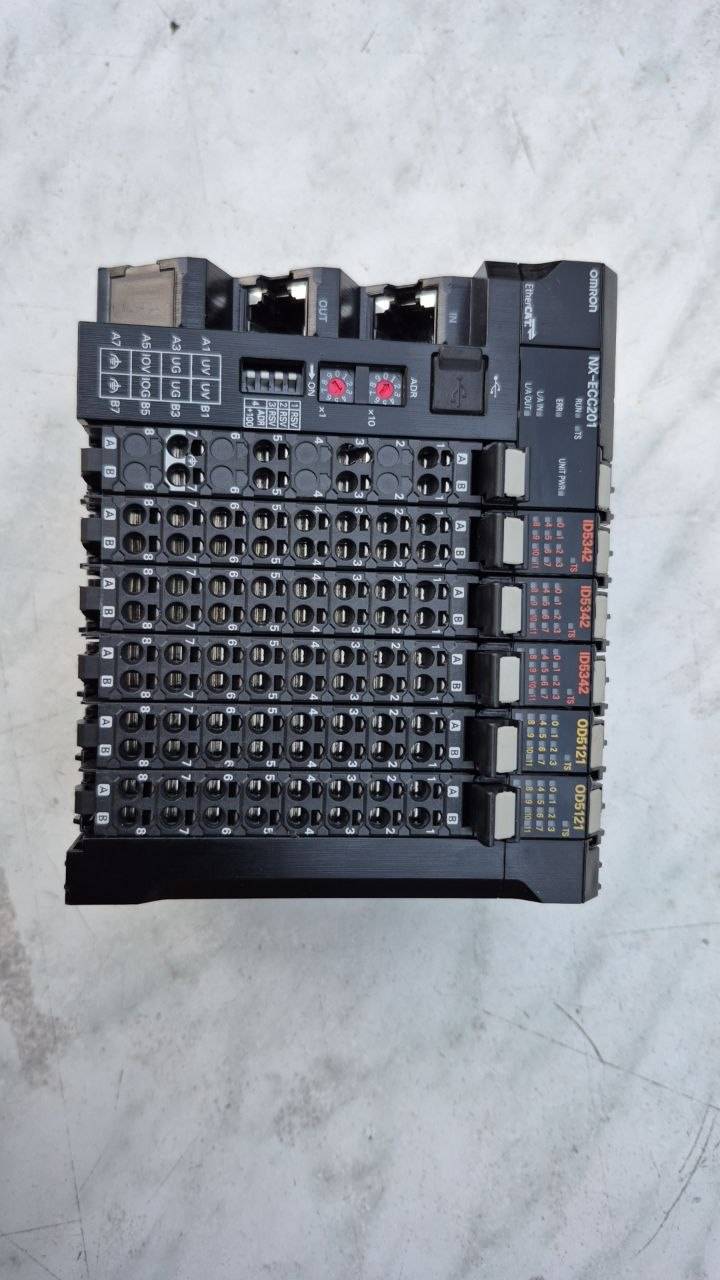
I have a few Omron NX kits available, exactly as shown in the picture. I want to trade one of these kits for an encoder module or sell it.
The kit includes:
• 1x NX-ECC201 (EtherCAT Coupler)
• 3x NX-ID5342 (High-Speed Input Modules, 16 pins each, 48 total inputs)
• 2x NX-OD5121 (High-Speed Output Modules, 16 pins each, 32 total outputs)
I have already tested the coupler and toggled the output module LEDs directly from a Linux terminal via EtherCAT. I pulled the original ESI XML files from Sysmac Studio and can provide them if needed.
What I am looking for:
• Omron NX-EC0142 or NX-EC0132 (differential encoder modules with digital inputs)
Since I am doing this to learn EtherCAT, I am flexible and open to other brands. I am also willing to trade one of my kits for a Beckhoff EtherCAT coupler combined with a differential encoder input module.
Thanks!
- dberegovoy
The NX-EC0222 and NX-EC0122 modules do not support differential signals. The correct Omron modules for a differential line driver setup are actually the NX-EC0132 or NX-EC0142.
Also, I'm interested in pairing one of these encoder modules with an NX-DA3605 analog output module to control a heavy-duty CNC lathe spindle via ±10V (both for speed and C-axis positioning), as I have an eye on one such analog module. Has anyone here tried this specific combination? Any success or failure stories with this setup?