


Hmmm, if it works, i am sure LinuxCNC can find it as parallel port, the driver in use being serial is strange if there is actually nothing serial on the board, but from experience most of those boards do show as serial and parallel or both, despite missing serial ports.the point is that Linuxcnc does not find a parallel port, it finds a port that it can use but the kernel driver defines it as serial,
Please Log in or Create an account to join the conversation.

Please Log in or Create an account to join the conversation.
Please Log in or Create an account to join the conversation.
Please Log in or Create an account to join the conversation.
Seriously dude your techno babble never ceases to amaze me.What if you try 0xD010 ?
I think a parallel port card is basically 3 latched, buffered, 8-bit shift registers attached to a very primitive MCU.
2 bidirectional shift registers.
1 Parallel in, serial out shift register.
And a CMOS not gate on 4 pins.
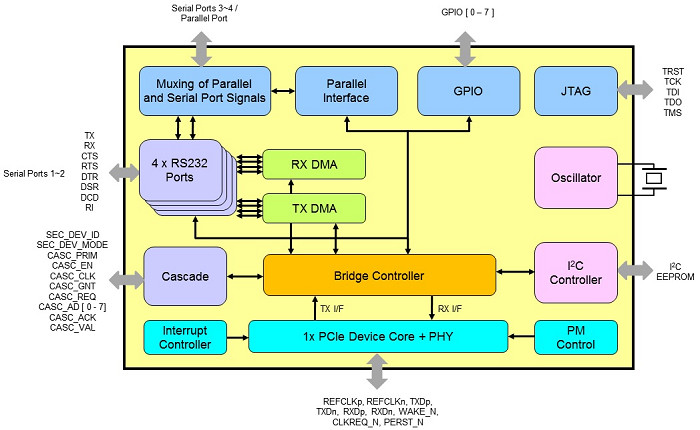
Interesting idea:
Connect one of the pins on your breakout board to a falling-edge-triggered shift register to turn one output into 8 outputs!
[/code]
Already an example of that on the wiki. Bit more involved than what you suggest.
wiki.linuxcnc.org/cgi-bin/wiki.pl?Shift_Register_Port_Expander
Please Log in or Create an account to join the conversation.
Early versions used discrete components (think XT 74LS374 according to the tomb linked below), usually these were ISA cards, 8255 sounds about right maybe some more dedicated chips later then the Super IO chips, which actually connect via LPC bus.F@king google, can not find the chip that was used as parallel port on mainboards, it was something like 665 and some other numbers...or 8255 i think, been to long, and google isn't helping at all.
Please Log in or Create an account to join the conversation.
