Advanced Search

Search Results (Searched for: )

  • Hakan
  • Hakan
Today 10:17 - Today 10:19
Replied by Hakan on topic foremkaCAD /CAM free sofware

foremkaCAD /CAM free sofware

Category: CAD CAM

It's because it is so easy to generate these kind of programs with AI help.
Several such programs have been announced here recently. This is just the beginning.
I don't know if foremka is made with AI, but most are in one way or another.

So I asked AI your question. The effort to create a CAM-program for simultaneous 4-axis milling
could take some two weeks, 1/3 of that is active part with tests, error checking and adjustments.
A couple of more weeks for 3+2 axis. With a rather skilled person that can guide AI in the right direction.
I can test if you take on that challenge. I have (only) a 4-axis mill.
  • tuxcnc
  • tuxcnc
Today 09:41
Replied by tuxcnc on topic foremkaCAD /CAM free sofware

foremkaCAD /CAM free sofware

Category: CAD CAM

It makes me wonder why so many similar projects are being created, while no one seems to tackle what is actually missing.
For instance, there is a lack of five-axis CAM software—something absent from free or low-cost programs, yet priced prohibitively high in professional-grade solutions, making it inaccessible not only to hobbyists but also to small businesses.
It’s worth remembering that there is no such thing as truly free CAD software. There is always a cost—if not in money, then in the time required to master it. Does it really make sense to learn a new program just to evaluate how it compares—for better or worse—to ten other similar ones?
  • Hakan
  • Hakan
Today 07:38
Replied by Hakan on topic New experimental ethercat layer

New experimental ethercat layer

Category: EtherCAT
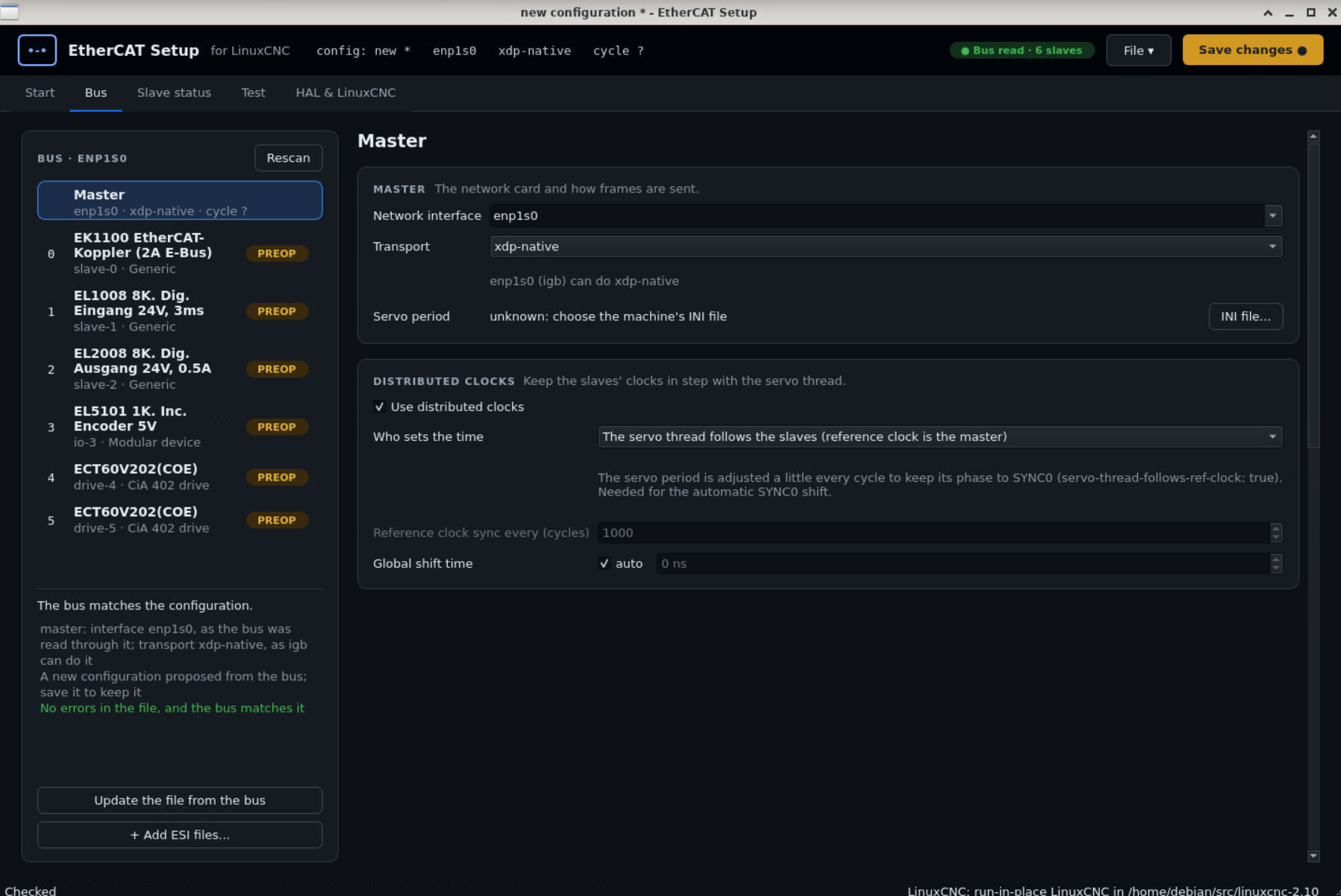
It has now, File->Appearance, saved between sessions.
Looking forward to feedback.

I didn't make a release for the dark mode change. Get it with git.

 
  • szolkaa
  • szolkaa
Today 07:35 - Today 07:40
Replied by szolkaa on topic foremkaCAD /CAM free sofware

foremkaCAD /CAM free sofware

Category: CAD CAM

I don't think so. However, if the program is missing a feature, you can click the bell icon in the top-right corner and send a message directly to the creator. The program can be updated very quickly, and the creator encourages users to submit suggestions.

There is also an option to use add-ins to extend the program's functionality or even create your own.

I know that, for example, the Sheet Metal tools subgroup was created by someone else, so if anyone feels confident enough to take on such a task, they could send an email with a proposal.
foremkacad.pl/lgpl/#en
  • tommylight
  • tommylight's Avatar
Today 06:25
Replied by tommylight on topic foremkaCAD /CAM free sofware

foremkaCAD /CAM free sofware

Category: CAD CAM

Is it Open Source ?
  • grandixximo
  • grandixximo's Avatar
Today 06:18
Replied by grandixximo on topic New experimental ethercat layer

New experimental ethercat layer

Category: EtherCAT

Thank you for working on this, looks great on the pictures, I will have to find time to test it out, one question, does it have dark mode?
  • szolkaa
  • szolkaa
Today 06:02
foremkaCAD /CAM free sofware was created by szolkaa

foremkaCAD /CAM free sofware

Category: CAD CAM

ForemkaCAD
Freshly released, really solid free CAD/CAM software, available both in the browser and as a desktop application.


foremkacad.pl/en
  • Hakan
  • Hakan
Today 03:40 - Today 03:58
Replied by Hakan on topic New experimental ethercat layer

New experimental ethercat layer

Category: EtherCAT
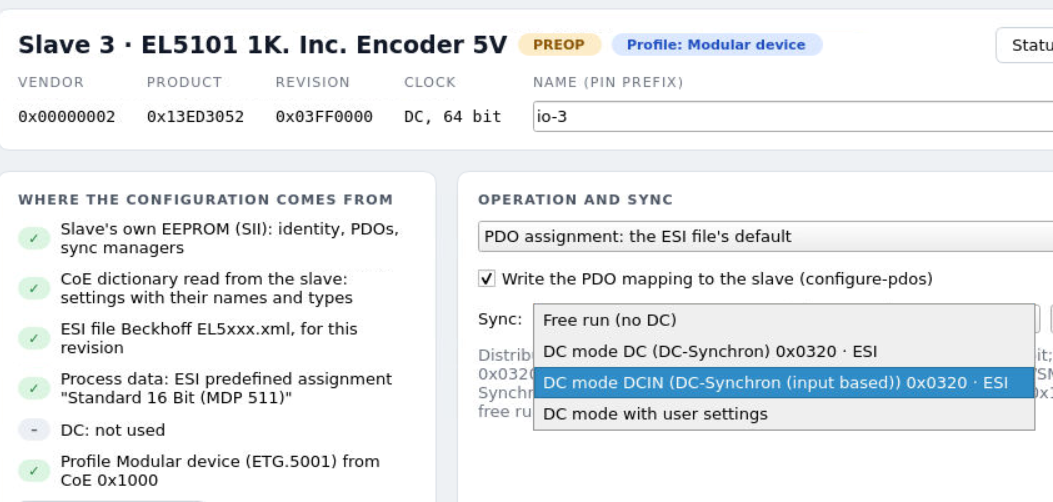
New release

- Slaves' DC settings are taken from ESI and SII and made as choices in the gui.
- Data capture of behavior incl network traffic for off-line trouble-shooting of slaves that won't go OP or misbehaves
- Better handling of messages from the master for troubleshooting
 

Capture option to the right
 
  • Dudelbert
  • Dudelbert
Today 03:09
Replied by Dudelbert on topic I Made a CAM Program for My Lathe (AI Made It)*

I Made a CAM Program for My Lathe (AI Made It)*

Category: CAD CAM

I have decent knowledge of C/C++, mostly from working with embedded systems.

It took me about two full-time weeks of development to get most of the way there, spread over a period of roughly four weeks.

I chose Python because I had heard that AI is particularly good at writing it. After working with it for a while, though, I realised that if I were to start the project again, I would probably choose C++ instead.

The project started as an experiment, so initially I essentially gave Claude a two-sentence explanation of what I wanted and told it to go ham. Needless to say, the results weren't particularly good, although I didn't expect them to be.
What worked much better was giving it a relatively detailed explanation of the idea, letting it explain back how it understood the requirements, and then refining and expanding on that through a few iterations. Once we had a shared understanding of the project, I asked it to write a specification. That approach worked quite well for me.
I created the initial CLAUDE.md file myself, but gave Claude permission to adapt and update it as the project evolved. Sometimes it makes changes that aren't quite right, so I occasionally go in and correct things manually.

Most of the development was done using a single Claude Sonnet 5.5 agent in VS Code.

Radius compensation wasn't particularly difficult. The main challenge was describing the analytical solver for the general toolpath in enough detail. Once that was properly implemented, radius compensation essentially fell out of the solution for free.

I generally use a single agent. I discuss and plan a feature with Claude, let it implement the solution, and then I go into the GUI and test it myself, checking both functionality and usability.
Based on what I find, I give Claude feedback and we iterate on the implementation. I haven't really experimented with more complex multi-agent workflows or orchestration setups yet.
  • dberegovoy
  • dberegovoy
Today 01:29

Retrofitting an old industrial CNC mill with EtherCAT components - MAHO MH400E

Category: EtherCAT

Thank you so much for sharing this information! I really enjoyed reading through your thread. Could you please let me know the exact model and specs of your Lenovo mini PC?
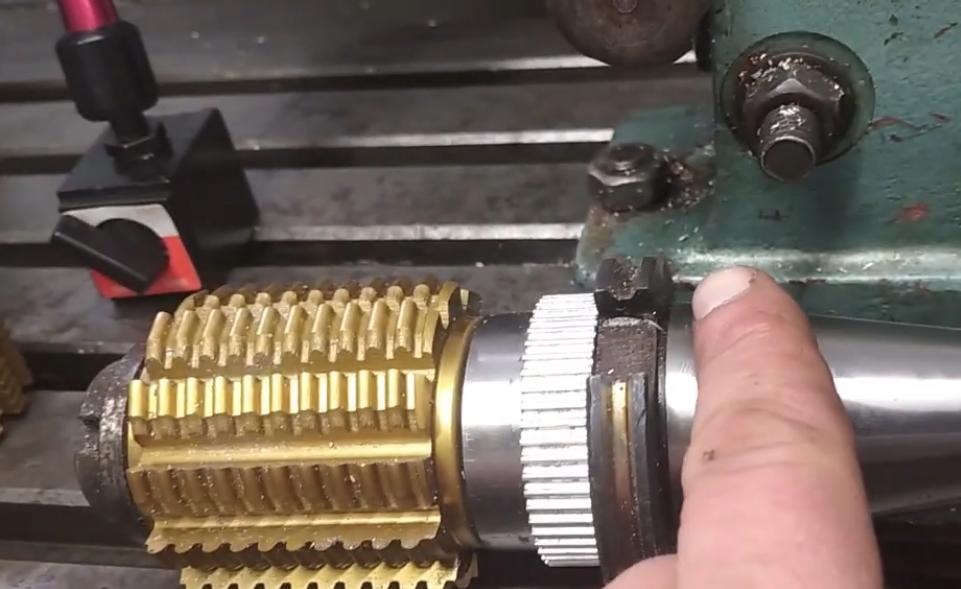
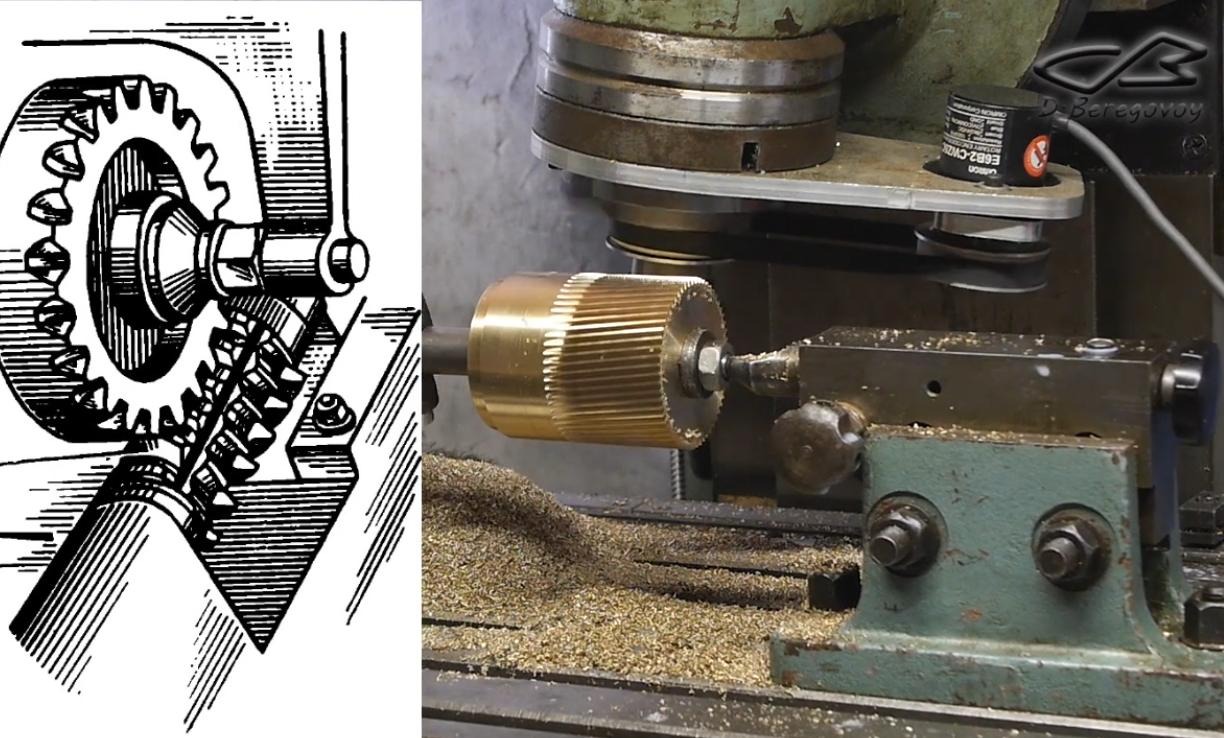
Regarding the encoder—in case anyone is interested in a quick workaround—I once built an electronic dividing head for a manual universal milling machine. The goal was to cut both spur and helical gears using gear hobs (hobbing method).
Since I didn't want the setup to be tied to one specific machine, I mounted a timing pulley directly onto an ISO40 arbor and made a temporary external bracket for the encoder. I fitted a Yaskawa servo motor onto the dividing head, fed the encoder signals straight into the servopack, and simply adjusted the servopack's electronic gearing parameters to match different gear tooth counts. Whenever I needed standard indexing/positioning mode, I just ran it through LinuxCNC.
Here are a few photos (screenshots from my old, abandoned YouTube channel) showing how it was put together:
  • NWE
  • NWE's Avatar
Yesterday 20:10

PancakeSlicer, a Self-hostable and Non-planar 3D Printer Slicer on OrcaSlicer en

Category: Additive Manufacturing

PLA 1.6KG, estimated print time: 9d20h43m, 0.16mm layer height, 0.4mm nozzle. This is with the organic 'tree shaped' supports.
If I completely disable supports it drops to 1.15KG, estimated print time: 4d18h16m.

I got some slicing success with PancakeSlicer, it suggested shorter print times than the above Prusa numbers. Didn't think to grab screenshots, and I have that pc switched off at the moment. I will be trying it out some more and reporting back.
  • andypugh
  • andypugh's Avatar
Yesterday 15:38

carousel - persisting the last state & homing - what is best practice?

Category: General LinuxCNC Questions

If the carousel really _has_ to home then it can't know which way it needs to turn. But I am surprised that a Deckel/Maho carousel doesn't have some sort of absolute position encoding?

To delay the carosel homing until after the other axes have homed, you could interlock in HAL with the homed states of the other axes.
Or, maybe just defer homing until the first programmed toolchange, which ought to be in a safe toolchange position?
  • andypugh
  • andypugh's Avatar
Yesterday 14:13 - Yesterday 14:13
Replied by andypugh on topic Glade Panel in Axis blocks arrow keys

Glade Panel in Axis blocks arrow keys

Category: AXIS

I have added this bug (and fix) to the issue tracker.
Thanks for your investigations.
github.com/LinuxCNC/linuxcnc/issues/4839
  • Hakan
  • Hakan
Yesterday 13:27
Replied by Hakan on topic New experimental ethercat layer

New experimental ethercat layer

Category: EtherCAT
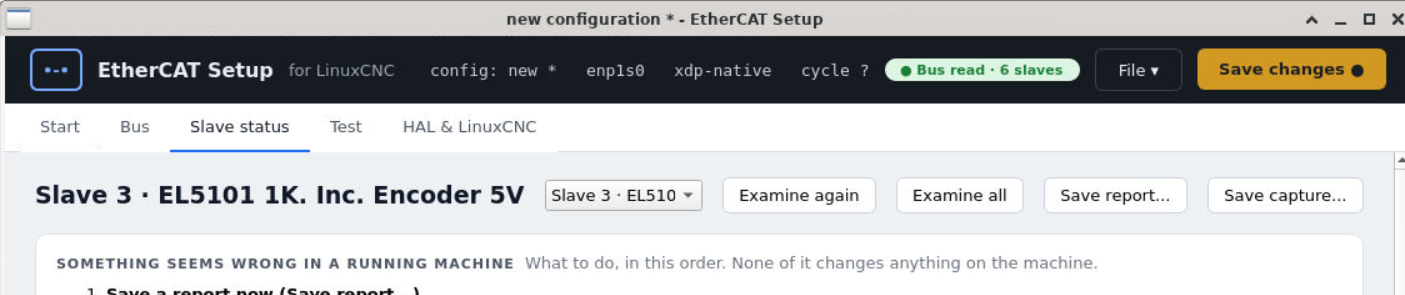
Added functionality to convert an existing lcec/ethercat-conf.xml config to ecat.
This was the missing link. It worked really good for me.

Old and new pin names were recognized and proposed, after looking through the list of affected pin names I pressed one button or maybe two and the config was updated to 2.10 run-in-place and ecat with userspace ethercat master. It started and ran fine, too.
On the way it found the old cia402 component, eliminated it for its' built-in cia402 function.

NOW it's worthwhile testing for those on 2.10.
  • tommylight
  • tommylight's Avatar
Yesterday 12:56

A mill with 3 x 750 W 230 V drive on one phase or every drive on another phase

Category: General LinuxCNC Questions

For 2.2KW of total power, it does not matter at all, single phase is still under it's limit of 3.5KW per socket.
With 3X380V in Europe, you can charge an EV at 11KW without any change to installation, at 22KW if you have an industrial socket around, again no "supercharger" or anything like it.
I can run two plasma cutter at the same time in my shop (total 42KW from two industrial 32A sockets), or another machine at 40KW from a single socket although this complains a bit, but never used for long.
Use good cable, use ferrules, tighten wiring properly, make chips.
Displaying 1 - 15 out of 11459 results.
Time to create page: 0.443 seconds
Powered by Kunena Forum