

- Posts: 133
- Thank you received: 15
LinuxCNC-RIO - RealtimeIO for LinuxCNC based on FPGA (ICE40 / ECP5)
1 year 11 months ago #314299
by mBender
Replied by mBender on topic LinuxCNC-RIO - RealtimeIO for LinuxCNC based on FPGA (ICE40 / ECP5)
Hmm, I must have made a mistake when measuring the signals. The Tang gives out a perfect 50% duty cycle. I was sure that the level shifter made the same. however they did not. The level shifters make something weird out of it. The level shifter have EL817 coupler on them. The
datasheet
shows cut off frequency fc =80khz. If I read that right I should not even be around 25% of what they should be able to do. They do have an LED, I wonder if a pulldown resistor would help???
I think @meister said, that I could connected the breakout board directly to the outputs of the Tang. I might try that.
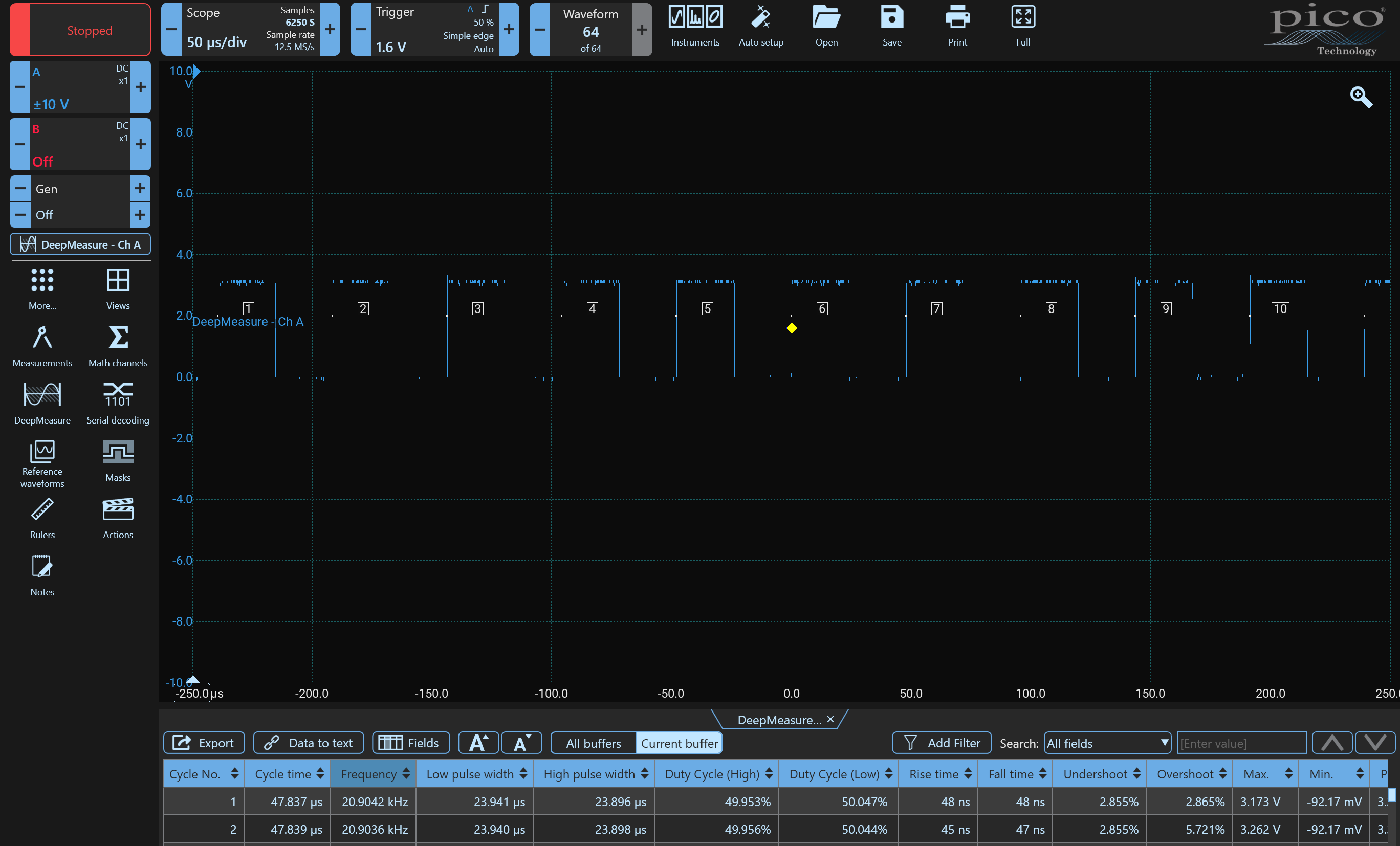
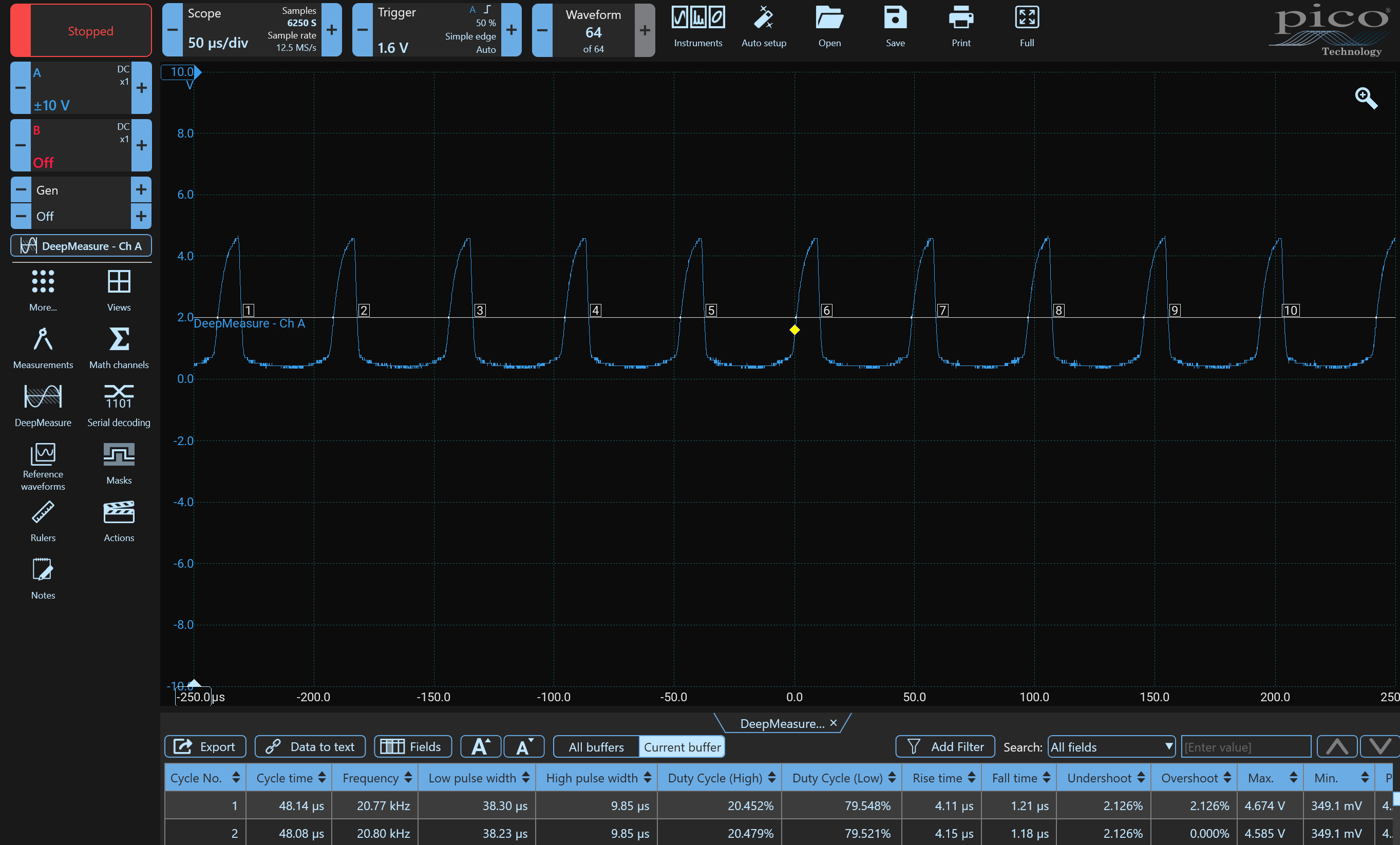
I think @meister said, that I could connected the breakout board directly to the outputs of the Tang. I might try that.
Please Log in or Create an account to join the conversation.
1 year 11 months ago #314300
by mBender
Replied by mBender on topic LinuxCNC-RIO - RealtimeIO for LinuxCNC based on FPGA (ICE40 / ECP5)
This is all kind of weird. I tested at the weekend the motors with different microsteps. If the levelshifter are the limits, with less microsteps I should have been able to run the motors faster, or? I am pretty sure that this wasn't the case. The motors stalled around 2100mm/min. I set up the machine that it would to max 1950mm/min. Tonight when I tested it again the motors stalled even at 1950mm/min.
Also I noticed that when I am not moving the axis, a stepsignal was created. The motor did not move but you could hear and see that the Tang was sending step signals. I increased the mircosteps from 10 to 16 in compare to the last time I tried the machine. Has that something to do with the set up of Linuxcnc?
I have to say that the wiring is currently breadboard style. I guess that won't help with 20khz plus signals.
Also I noticed that when I am not moving the axis, a stepsignal was created. The motor did not move but you could hear and see that the Tang was sending step signals. I increased the mircosteps from 10 to 16 in compare to the last time I tried the machine. Has that something to do with the set up of Linuxcnc?
I have to say that the wiring is currently breadboard style. I guess that won't help with 20khz plus signals.
Please Log in or Create an account to join the conversation.
1 year 11 months ago #314315
by mBender
Replied by mBender on topic LinuxCNC-RIO - RealtimeIO for LinuxCNC based on FPGA (ICE40 / ECP5)
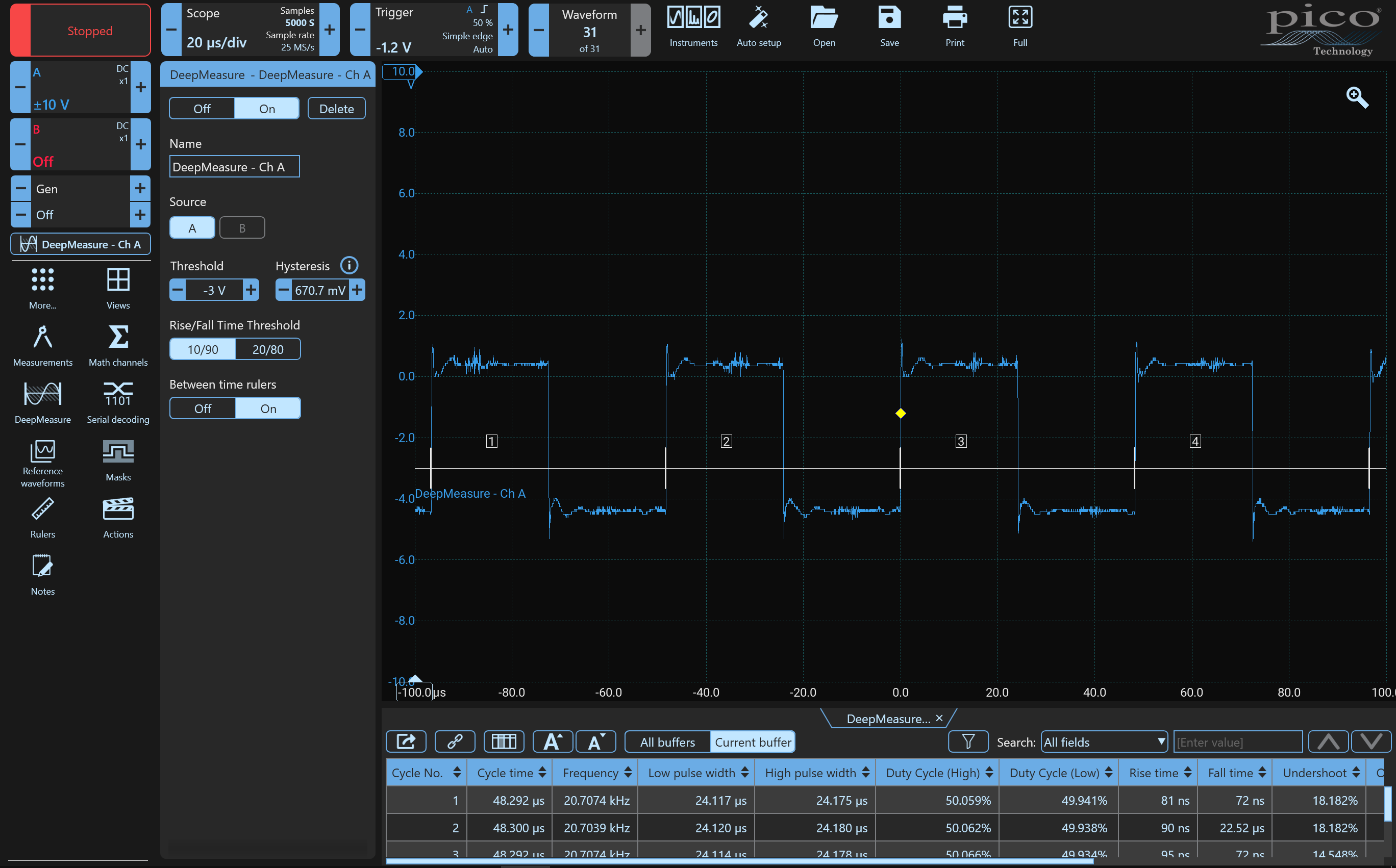
I removed the level shifter and connected the Tang directly to the Break out Board. Good news, it works. Then I measured at the drives and I get a nice 50% duty cycle. However, the motors still stall. And depending on where I stop, the Tang is sending Step Signals even without any movement. The motor just make sound.
Please Log in or Create an account to join the conversation.
- tommylight
-

- Away
- Moderator
-

1 year 11 months ago #314316
by tommylight
Replied by tommylight on topic LinuxCNC-RIO - RealtimeIO for LinuxCNC based on FPGA (ICE40 / ECP5)
Why are you getting -4V on the scope?
Are the probes reversed?
Are the probes reversed?
Please Log in or Create an account to join the conversation.
1 year 11 months ago #314321
by mBender
Replied by mBender on topic LinuxCNC-RIO - RealtimeIO for LinuxCNC based on FPGA (ICE40 / ECP5)
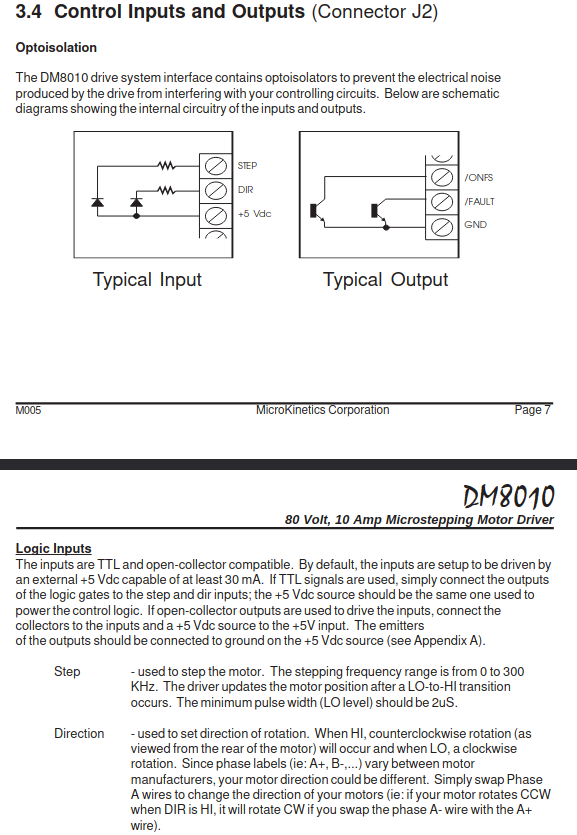
Yes, I was in a rush and was focusing more on the duty cycle. According to the
manual of my driver, EN is 5V and Step and Dir will be pulled to ground.
Please Log in or Create an account to join the conversation.
- digiex_chris
- Offline
- Senior Member
-

Less
More
- Posts: 40
- Thank you received: 11
1 year 11 months ago #314333
by digiex_chris
Replied by digiex_chris on topic LinuxCNC-RIO - RealtimeIO for LinuxCNC based on FPGA (ICE40 / ECP5)
is it maybe too high of an acceleration value? Even not connected to anything steppers need a slowish ramp up compared to servos.
Please Log in or Create an account to join the conversation.
Time to create page: 0.182 seconds