- Posts: 19311
- Thank you received: 4655

Please Log in or Create an account to join the conversation.
Please Log in or Create an account to join the conversation.
Please Log in or Create an account to join the conversation.
Please Log in or Create an account to join the conversation.
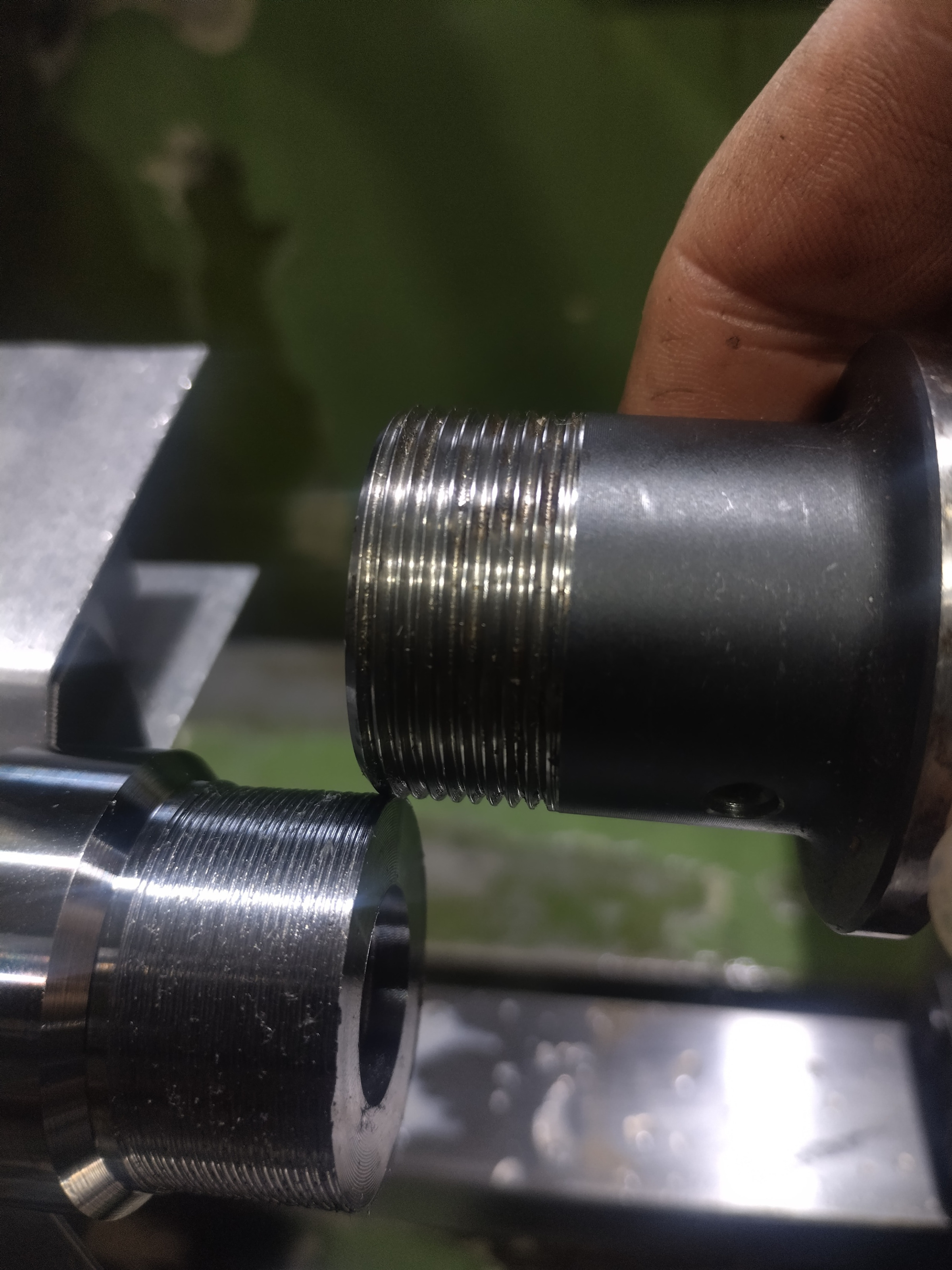
G96 D2500 ? 2500 m/min surface speed? Cutting steel with carbide is typically only 1/10 that or less.
Maybe consider G97 S500 just to remove a variable while you are getting used it it?
Please Log in or Create an account to join the conversation.
Please Log in or Create an account to join the conversation.