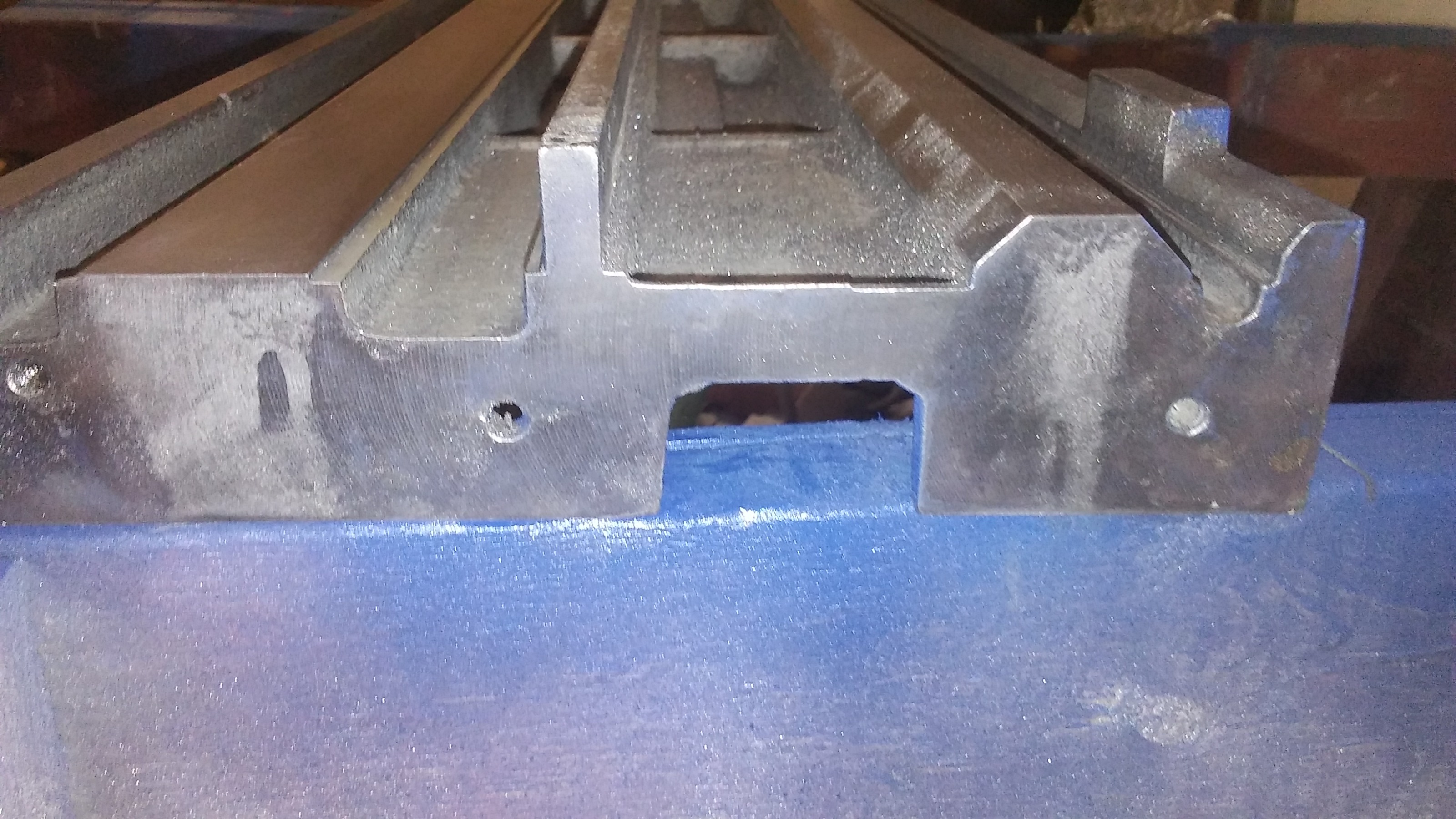
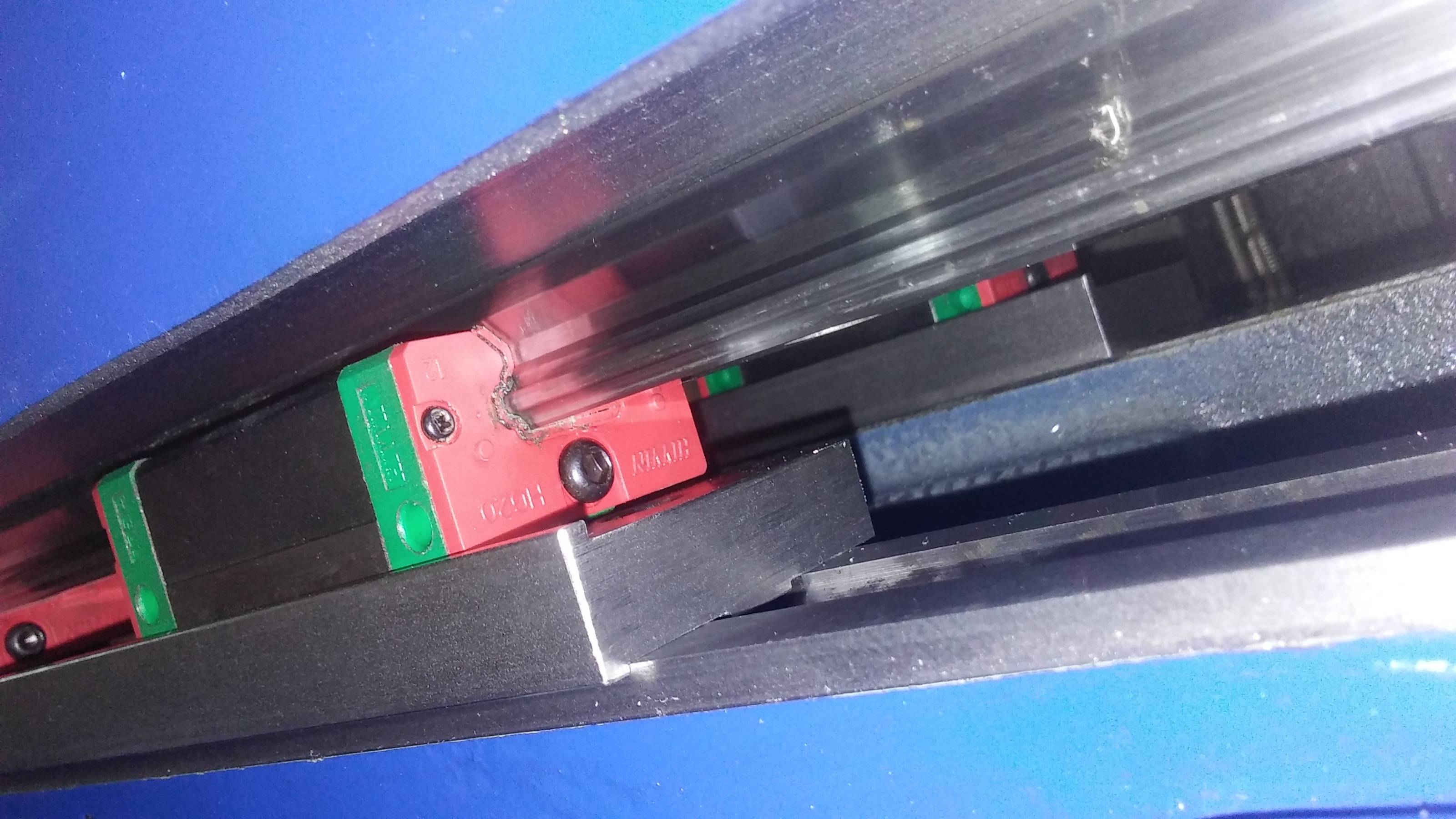
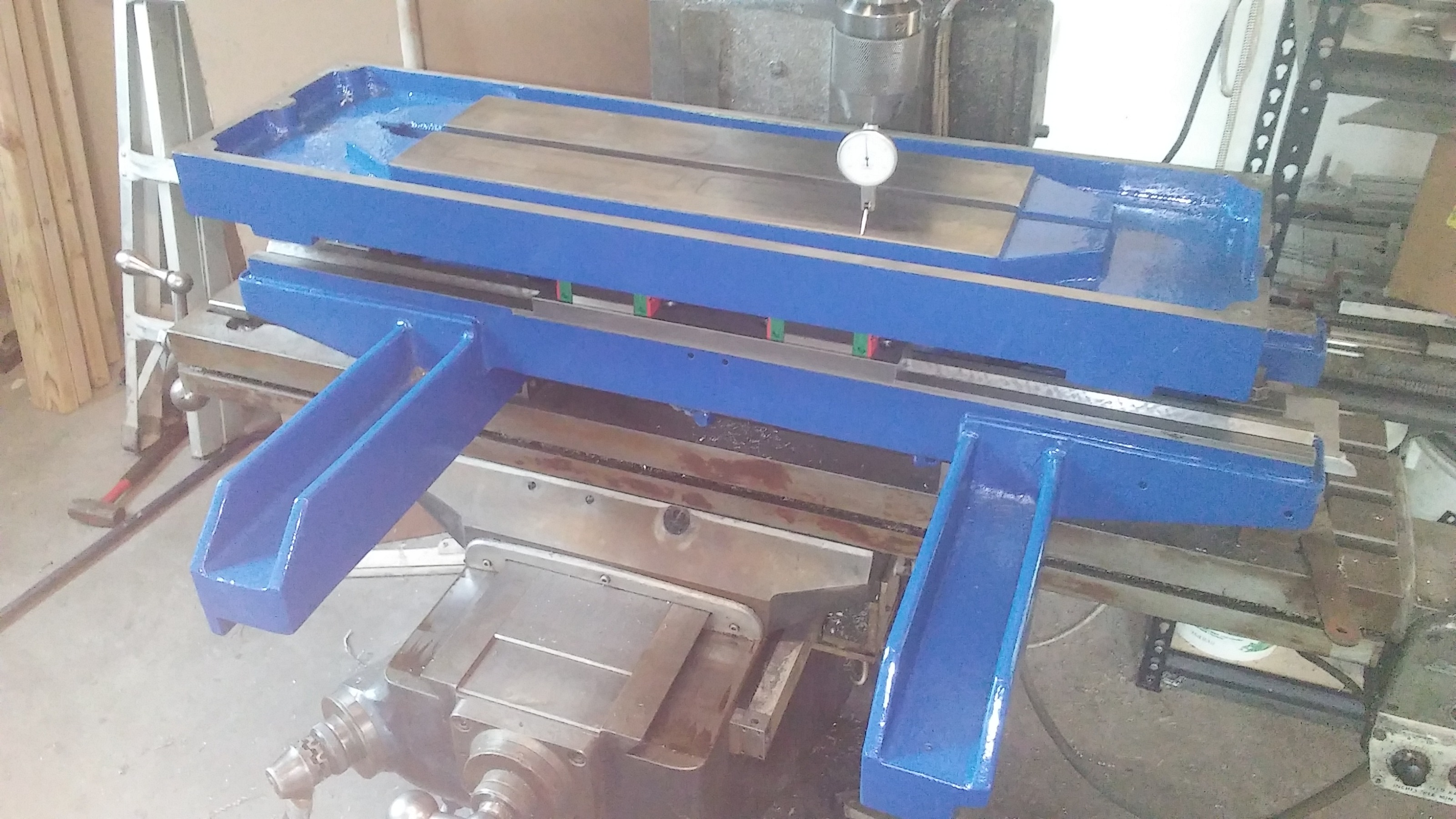
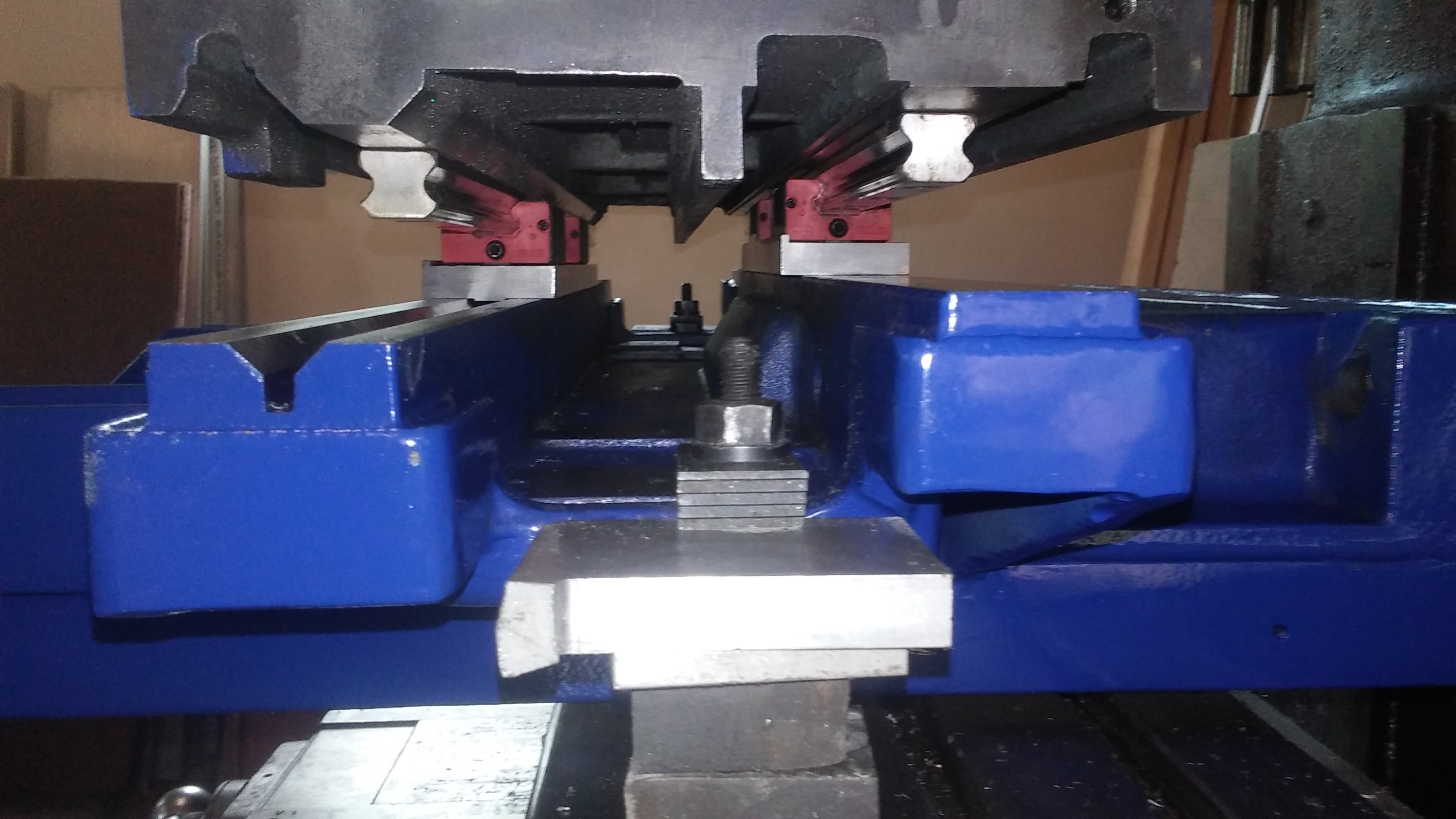
i got to starting attaching the table to the saddle and adding rails adds about 1 5/8 of a inch to the table height; i would imagine i will pick up another 1 5/8 once the ways are attached to the box ways. so some sort of way cover are probably going to have to be dreamed up for this project later on. the extra height will cut into the travel some i would think too but i never know how much until i build something

but the height is actually a good thing since once a table top is on the Y axis on a horizonal configuration would be useful to go slightly under the table top. i could see it coming in handy doing weld preps or just edge breaks. so this will be something to think about as i go.
on a plus note i did check with an indicator across the grinders table just sitting on the rails not attached and in 2 directions the surface was flat within .0007 at the most. it might get better once the rails are attached? regardless it was a good sign things are pretty flat. the spacing was based on the location of the oil ports in the casting so i may end up spreading them apart more and drilling and tapping new holes? just depends on any flex once extended? the table casting is 2" thick and i was planning on mounting a steel sub plate over top of the entire table for a 9" x 31" table top so it might be fine as is? will check to see if it deflects any once the rails are attached to the table bottom.
in case your wondering yes i'm flying by the seat of my pants on this project

seems to be a common theme for me
since this machine had a flat on flat way and a V way on the other side the two rails will not be on the same plane. so in order to get things set i had to figure out the offset height between the two. since my indicator only moved .0007 over 6" i would say i am probably about as close as i can get with a tired old Bridgeport