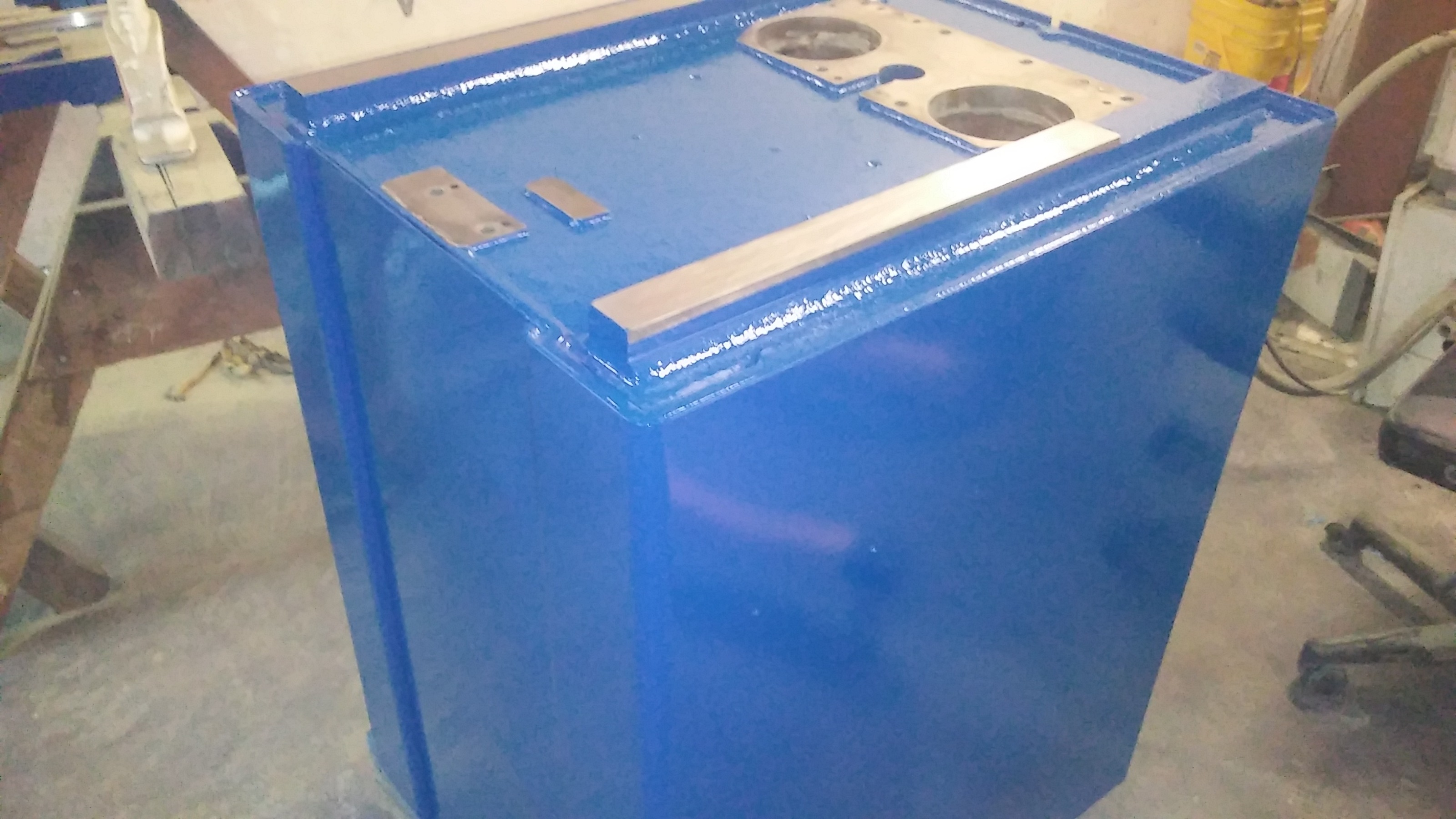
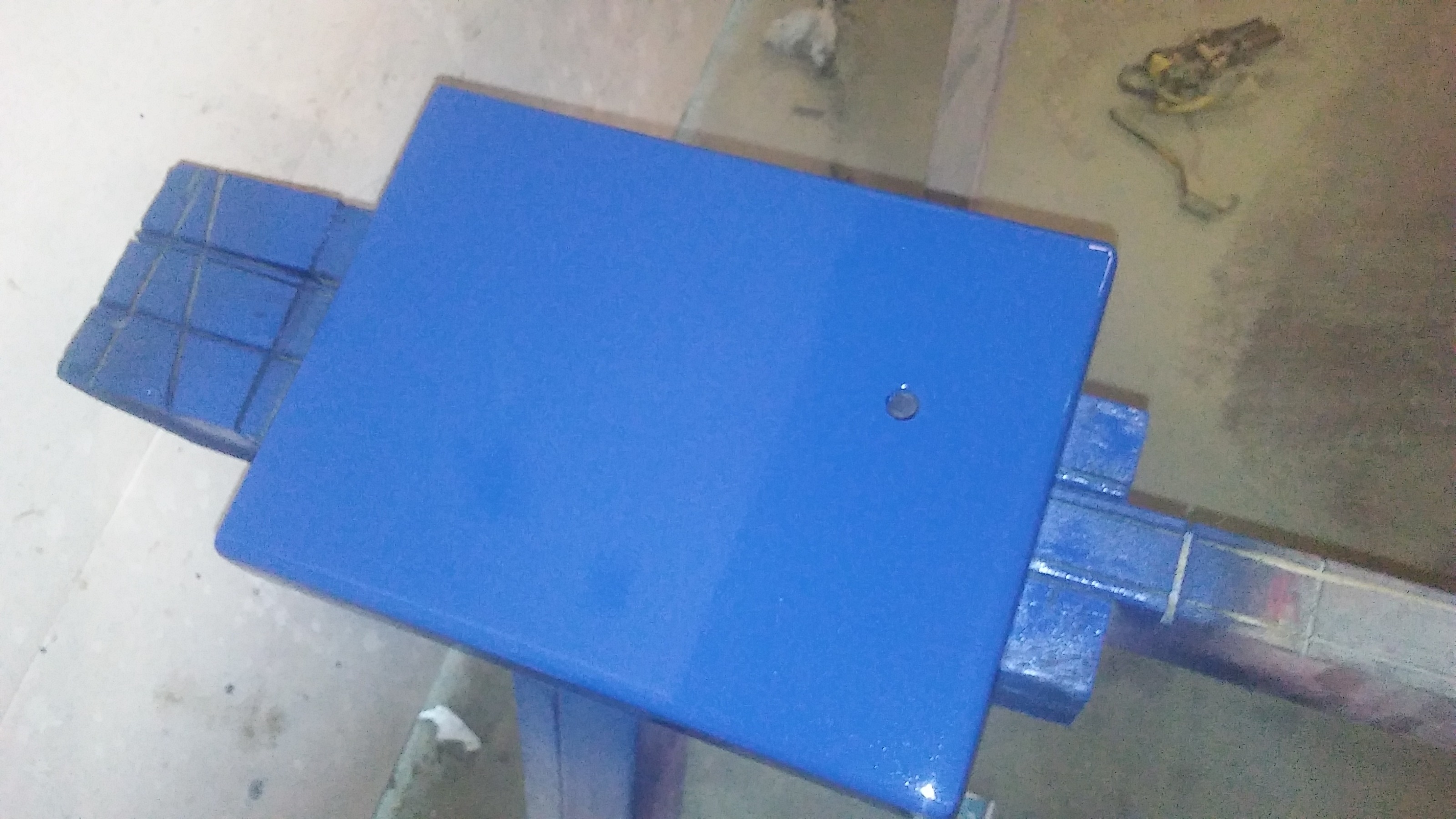
i'm pretty sure i have the covering of the ways sorted out. i had some rails that were around 8" longer than the main table section. after moving things around and seeing how things were going to work i decided to cut the extra off those rails so they are flush with the ends of the main table section. the grinder had table extensions that bolt to each end. that will add a shield to protect the moving parts from the top. by going this route i can just skirt the sides to cover the exposed area. makes things simple i like simple

i was going to try to gain some travel but i decided to pass on the messing around since the extra travel was not well supported.
so i can only get about 21" of travel max but it should be good rigid movement. the plan is to keep the motor and ball screw in the saddle so it's all covered at all times. the table ends i can probably bend some sheet up and wrap under on the ends to seal things better too. i don't have much clearance over the top of the motor and the rib that runs under the table where the original rack attached to will have to be cleared out over the motor and the other end could serve as a attaching point to drive the table.
got a idea on ball screw length and ended up going with 20mm with a 5 mm lead. i was going to try and get 25mm ball screws but they are few and far between on the cheap and length options. 20mm should work ok too i think.
once i get to the head axis going up and down that is where the fun should start since i have some serious weight there. i figure i have two options a set of gas struts or a counter weight? gas struts would probably be the simplest to counter the weight. but a counter weight would add more mass to the machine and help hinder vibrations. i'm not sure how many cycles gas struts will take before they go bad? a counter weight would probably be the best way to go for long term trouble free operation.