Category: Computers and Hardware
Hi everyone,
I'm hoping that someone can help me get my head wrapped around this, and point me in the right direction. I've spent over a dozen hours reading through threads on this forum and elsewhere - yet, I can't figure out how to proceed.
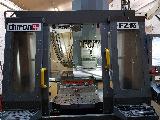
My machine is a Bridgeport Series I CNC (Boss 6) mill - and it's sitting in my shop in original condition. I'm new to CNC (having only dabbled with my Ender 3 3D printer). However, a close friend of mine who's helping me has a couple of HAAS mills and is a guru with Autodesk Fusion.
I've investigated numerous options for updating this machine. The more I study this, the more confused I've become! The simplest answer for a person like me seems to be to install an Acorn board. I'd rather not. I don't want to get vendor-locked (more than I have to). The thought of a company going under and leaving me in the position of having to gut the machine and start over is not appealing. I don't want to pay a subscription. I like the openness and configurability of LinuxCNC, and I'm a big fan and daily user of Linux (Red Hat Academy instructor).
My goals:
* Get the old Bridgeport back to making chips again.
* Have the ability to both use this machine as a CNC, and as a glorified manual machine (using LinuxCNC as a DRO).
* Not spend thousands of Dollars on this project (if possible!).
My thoughts:
* Mount a 12" touchsceen monitor in the original control panel housing for interacting with LinuxCNC.
* Hang a pendant on the side of the original control panel housing.
* Pick up a Huanyang VFD for the spindle drive (these seem to be well-supported and well regarded?).
* Replace the ancient original Bridgeport steppers with modern closed-loop NEMA 34's (1100-1200 oz in).
My questions:
* What should I run LinuxCNC on? I've got a spare RPi 4 sitting in my drawer. I've got a couple of Supermicro Intel Atom-based ITX server motherboards lying around. What's the most intelligent way to go?
* It seems that a parallel port interface is the "old-school" way of doing things. Now, it seems that most prefer an Ethernet interface. Is there a disadvantage of going one way or another?
* Since I have to replace the steppers anyway, is it foolish to go with a "traditional" setup rather than Ethercat? It seems like Ethercat will be considerably more expensive (like twice the price or more) - but is it worth the price?
* Everyone seems to agree that Mesa boards are the "gold standard." How do Pico Systems' boards compare? Jon Elson lives like 20 miles from my house. Does anyone have experience with his customer service? Is it foolish to consider anything other than a Mesa?
* If I go with a Mesa setup, which direction should I go? If I use the RPi, I could go with the 7C80 or 7C81 - I could also run an Ethernet setup. If I use the server motherboard, I could go with a parallel port setup or an Ethernet setup. Is there an advantage of going one way or another, here?
* If I go with a given Mesa board, what else will I need to buy? It seems that some of the Mesa cards (like the 7C80 and the 7I95T) will hook directly to the stepper drives, while others require a separate daughter card (BoB)?
* What hardware (if any) would I need in order to use the encoders on the steppers as a DRO? Will any of my hardware selection above affect my ability to have this feature?
* Will a cheap Amazon/Aliexpress stepper motor/drive/power supply set work, or will I need to buy the stepper drives separately? If I need a particular stepper drive, should I go with a Gecko or something else?
* If I run a touchscreen and a pendant, is there any reason why I will need a keyboard hooked up to this machine (once it is configured)?
Sorry for all of the (possibly stupid) questions. The DIY CNC and especially the LinuxCNC ecosystem is far more vast than I imagined. I really did attempt to "do my homework" before asking. There just seems to be a lot of somewhat conflicting information (possibly, due to changing technologies and best practices over the years?).
Thanks for any advice that you can provide to me!