
- Posts: 5711
- Thank you received: 2100
Hypersensing questions
- phillc54
- Offline
- Platinum Member
-

Less
More
6 years 6 months ago - 6 years 6 months ago #165021
by phillc54
Replied by phillc54 on topic Hypersensing questions
You could possibly do something similar using Ohmic Enable to initiate the probe deployment.
Edit: oops, I didn't see Rod's reply...
Edit: oops, I didn't see Rod's reply...
Last edit: 6 years 6 months ago by phillc54.
Please Log in or Create an account to join the conversation.
- rodw
- Offline
- Platinum Member
-
Less
More
- Posts: 12170
- Thank you received: 4153
6 years 6 months ago #165029
by rodw
Replied by rodw on topic Hypersensing questions
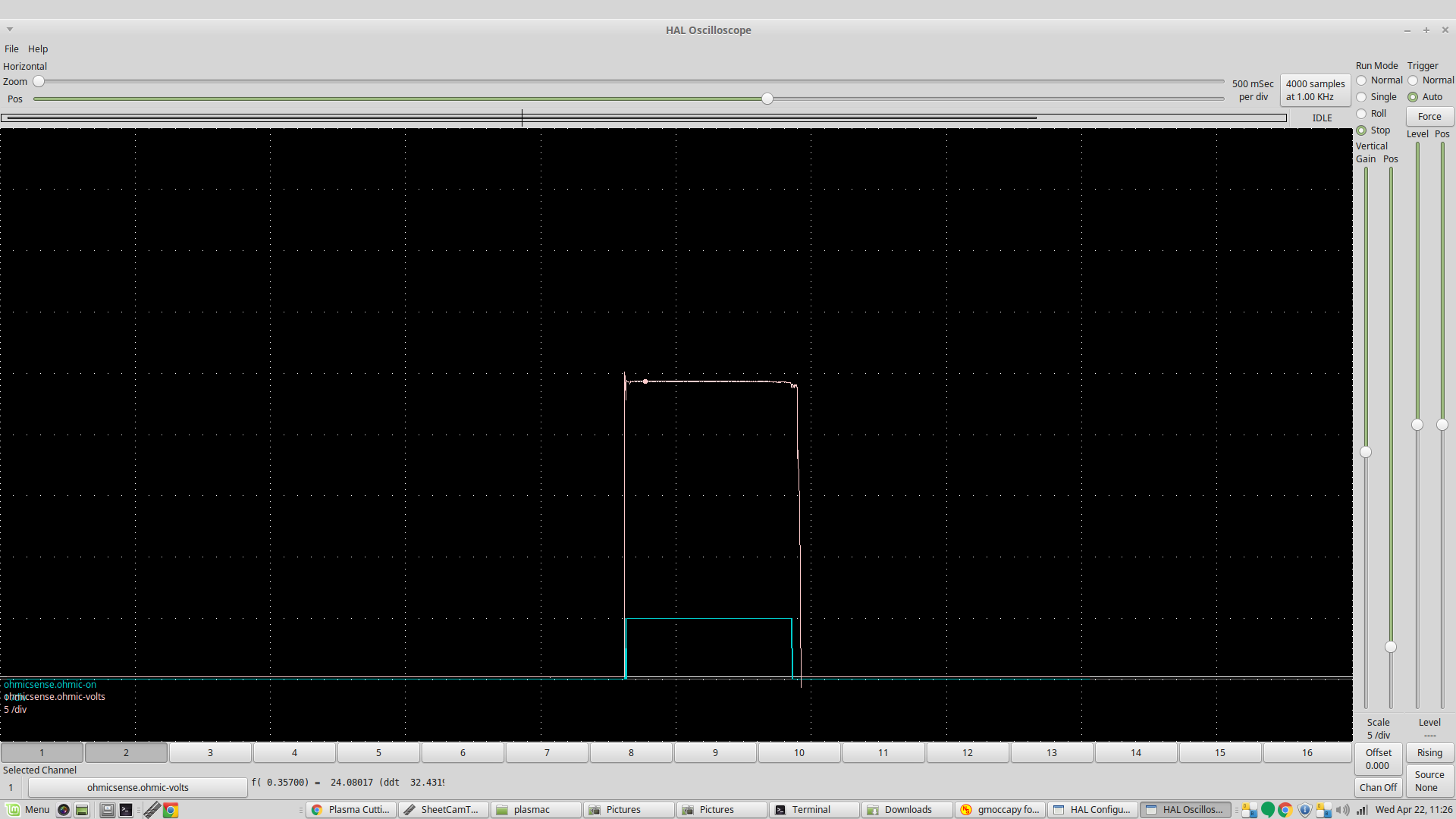
Well, it looks like this was a success. The following two plots show
Dry Torch
Wet torch
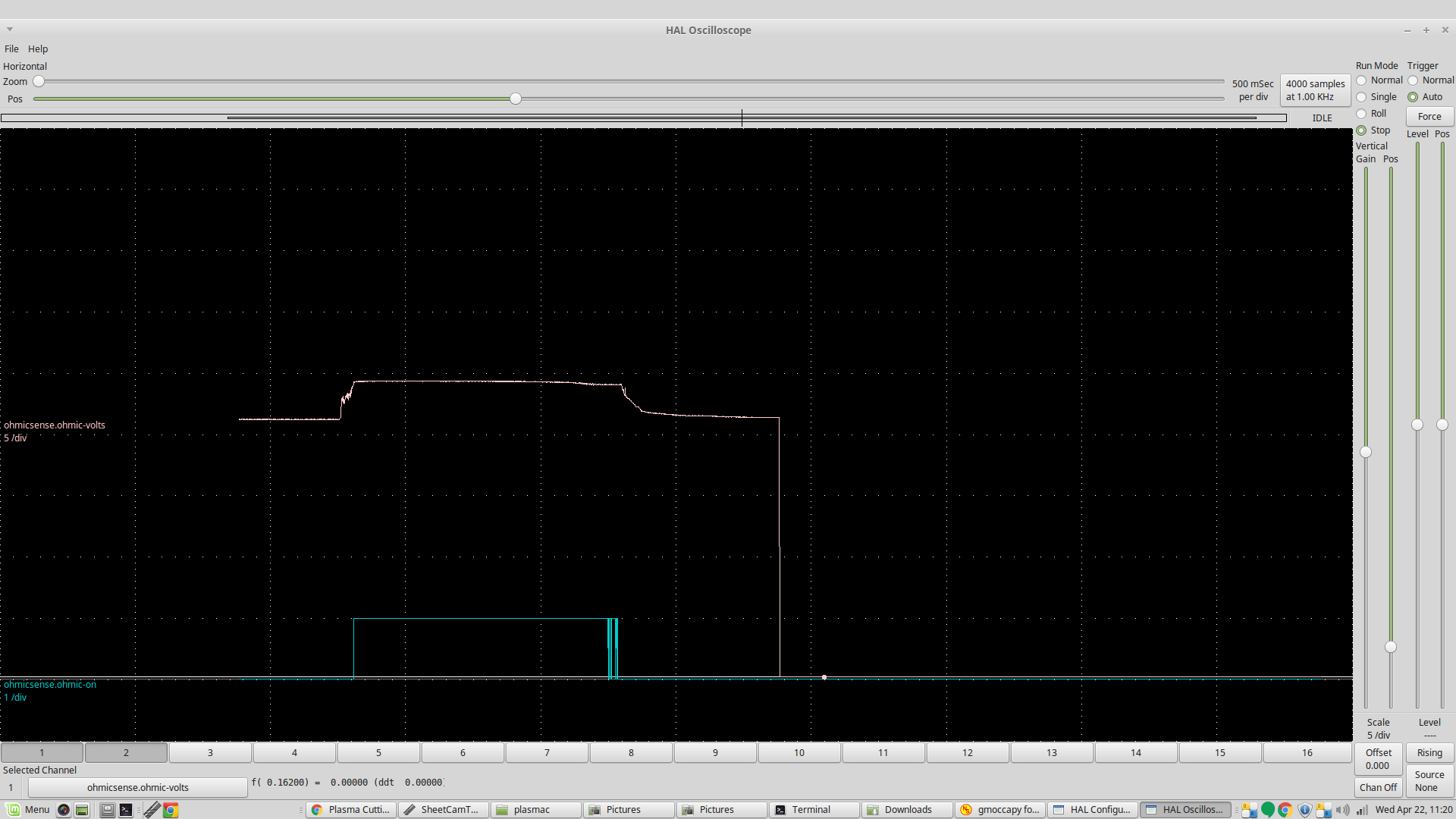
Goes from about 21 volts to 24 volts so I've set my threshold at 22 volts using mode 1 on my new component
I cut a test part with 48 probes with a wet torch and it did not falter.
Can someone suggest a pin that goes true when we start cutting? I might use that for my relay instead of the is-probing signal? The power supplies take some time to turn on and off so i would be better to turn it on at the beginning of a job.
LittleSparky, you could probably use the float switch feature of Plasmac as it give you a way to set the offsets
Cheers guys. ANd thanks to PCW for coming up with the ideas (and doing the maths!)
Dry Torch
Wet torch
Goes from about 21 volts to 24 volts so I've set my threshold at 22 volts using mode 1 on my new component
I cut a test part with 48 probes with a wet torch and it did not falter.
Can someone suggest a pin that goes true when we start cutting? I might use that for my relay instead of the is-probing signal? The power supplies take some time to turn on and off so i would be better to turn it on at the beginning of a job.
LittleSparky, you could probably use the float switch feature of Plasmac as it give you a way to set the offsets
Cheers guys. ANd thanks to PCW for coming up with the ideas (and doing the maths!)
The following user(s) said Thank You: tommylight
Please Log in or Create an account to join the conversation.
- rodw
- Offline
- Platinum Member
-
Less
More
- Posts: 12170
- Thank you received: 4153
6 years 6 months ago #165030
by rodw
Replied by rodw on topic Hypersensing questions
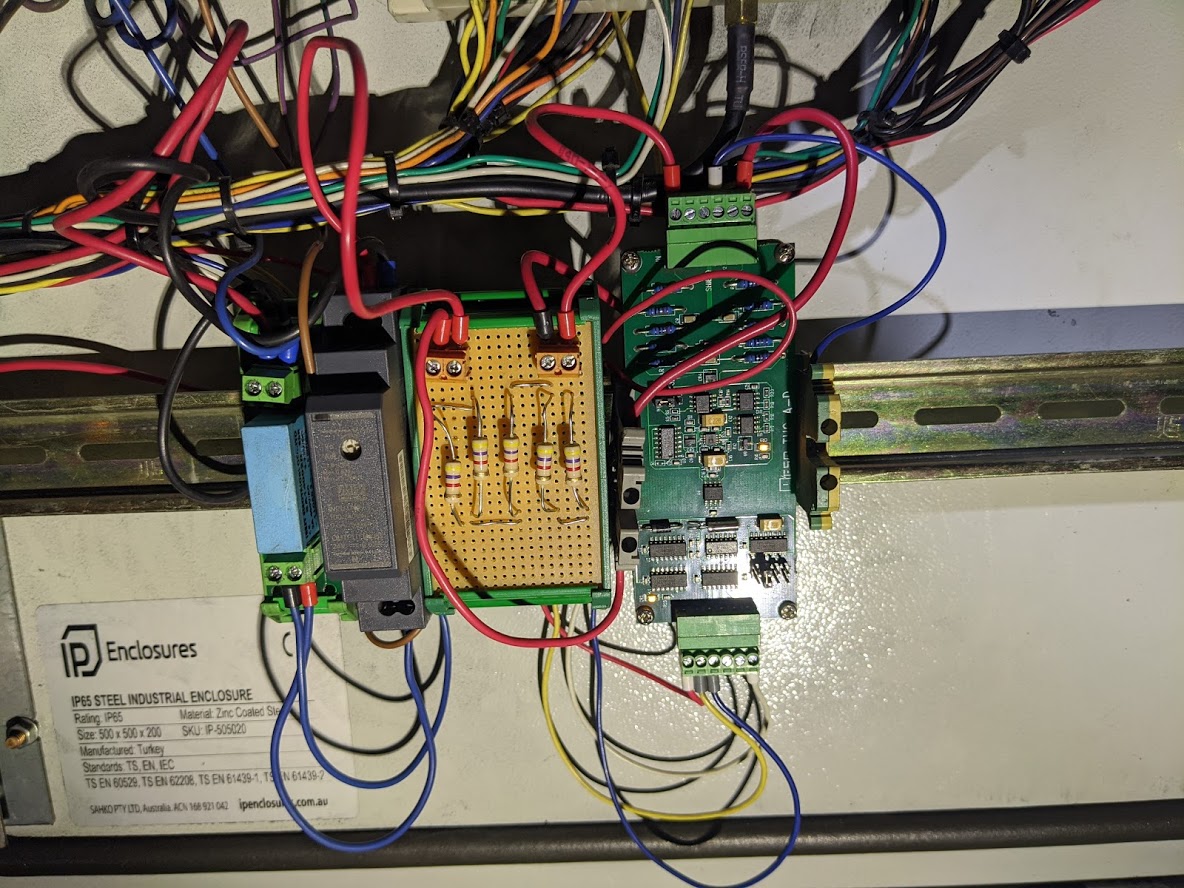
So here's what I have now in the control box. Having two terminals on each side of the resistors made it very easy to install.
Please Log in or Create an account to join the conversation.
- rodw
- Offline
- Platinum Member
-
Less
More
- Posts: 12170
- Thank you received: 4153
6 years 6 months ago #165058
by rodw
Replied by rodw on topic Hypersensing questions
Actually, looking at that plot, we are getting some rapid changes in the ohmic-on pin at the end of probing. I think I need to revise the component so when the probe turns off, it stays off until the end of the probing event. I'll wait until you guys test and report back!
Please Log in or Create an account to join the conversation.
- rodw
- Offline
- Platinum Member
-
Less
More
- Posts: 12170
- Thank you received: 4153
6 years 6 months ago - 6 years 6 months ago #165061
by rodw
Replied by rodw on topic Hypersensing questions
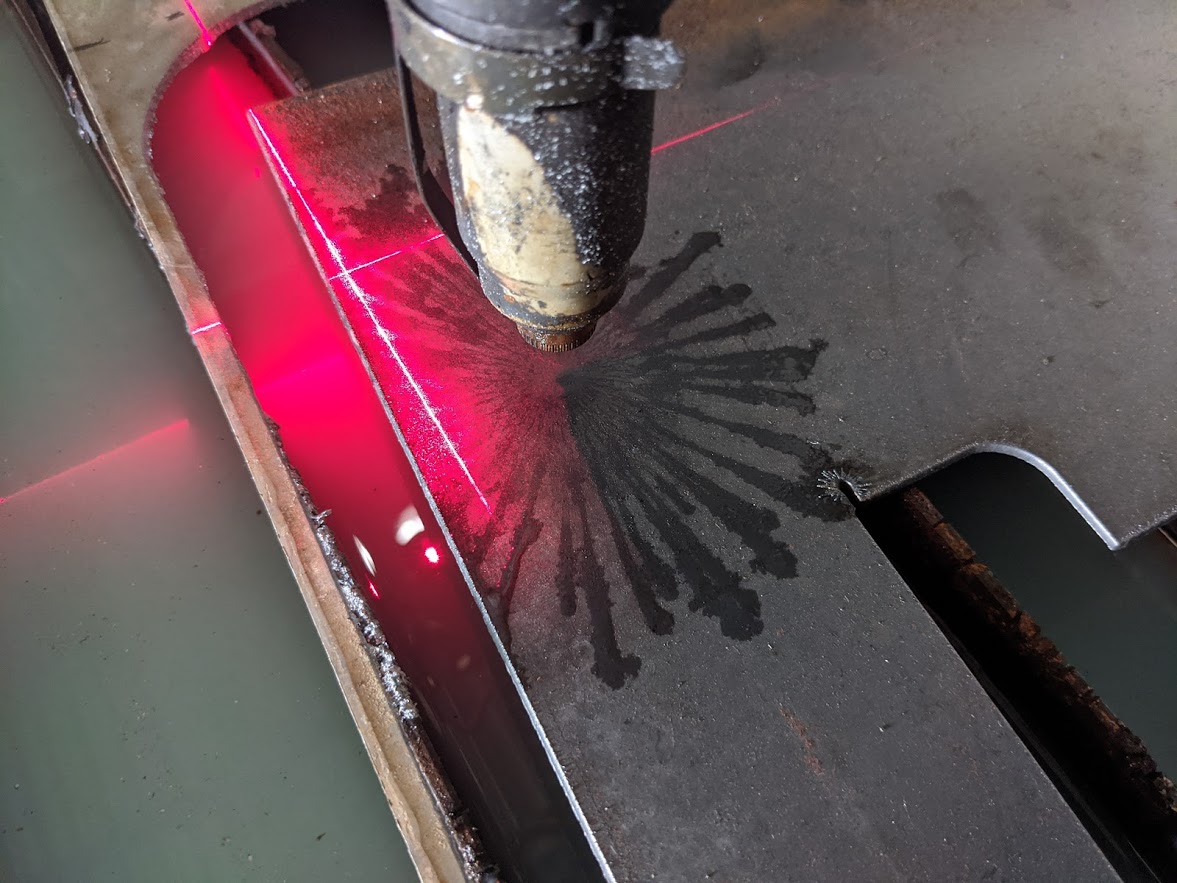
And this pic shows the amount of water expelled from the torch after pulsing it at the end of a cut
Last edit: 6 years 6 months ago by rodw.
The following user(s) said Thank You: tommylight
Please Log in or Create an account to join the conversation.
- snowgoer540
- Offline
- Moderator
-

Less
More
- Posts: 2581
- Thank you received: 907
6 years 6 months ago - 6 years 6 months ago #165067
by snowgoer540
Replied by snowgoer540 on topic Hypersensing questions
Good deal, always happy to hear good results. My resistors should arrive today, and then I can join the testing party.
Earlier in the thread, Peter did suggest we use relays to prevent electrolysis as you stated. For that reason, I ordered a nice DIN mounted SSR. I would think we want to stick with the is-probing signal, however maybe it's possible to add a small delay for the first probe? Is the time it takes to power up and produce 24V that significant? I actually thought of leaving the Power supply always powered up, and then breaking the DC circuit instead with a relay. It was suggested to me by one of my EE friends that that would probably be really hard on the power supply. I'm still willing to try it though, as in the end they are ~$20.
Without thinking about it too hard (it's 6am here), that seems like a good idea. Comes down, gets a solid trip, turns off so there are no more accidental trips, seems like a good security measure. Alternatively, maybe a longer debounce? Honestly, this is another reason I was thinking of a relay breaking the DC side of the circuit instead of the AC side, as it would be an instant off, instant on.
On that note, I think I will put my relay back into the circuit becasue a constant current in the torch tip is probably not good for consumables as some electrolysis may occur... Does anyone have thoughts on that?
Can someone suggest a pin that goes true when we start cutting? I might use that for my relay instead of the is-probing signal? The power supplies take some time to turn on and off so i would be better to turn it on at the beginning of a job.
Earlier in the thread, Peter did suggest we use relays to prevent electrolysis as you stated. For that reason, I ordered a nice DIN mounted SSR. I would think we want to stick with the is-probing signal, however maybe it's possible to add a small delay for the first probe? Is the time it takes to power up and produce 24V that significant? I actually thought of leaving the Power supply always powered up, and then breaking the DC circuit instead with a relay. It was suggested to me by one of my EE friends that that would probably be really hard on the power supply. I'm still willing to try it though, as in the end they are ~$20.
I think I need to revise the component so when the probe turns off, it stays off until the end of the probing event.
Without thinking about it too hard (it's 6am here), that seems like a good idea. Comes down, gets a solid trip, turns off so there are no more accidental trips, seems like a good security measure. Alternatively, maybe a longer debounce? Honestly, this is another reason I was thinking of a relay breaking the DC side of the circuit instead of the AC side, as it would be an instant off, instant on.
Last edit: 6 years 6 months ago by snowgoer540.
Please Log in or Create an account to join the conversation.
Moderators: snowgoer540
Time to create page: 0.469 seconds