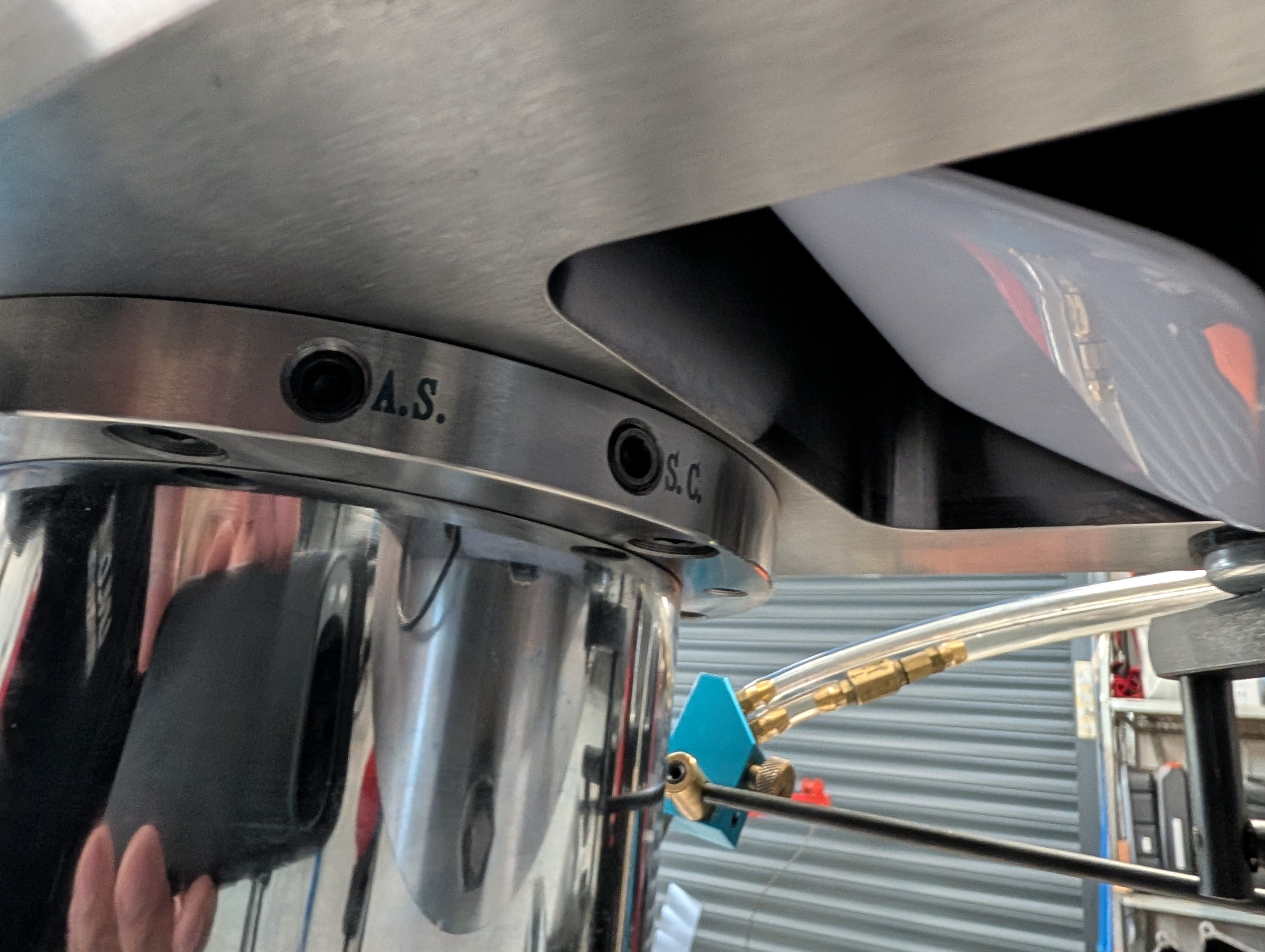
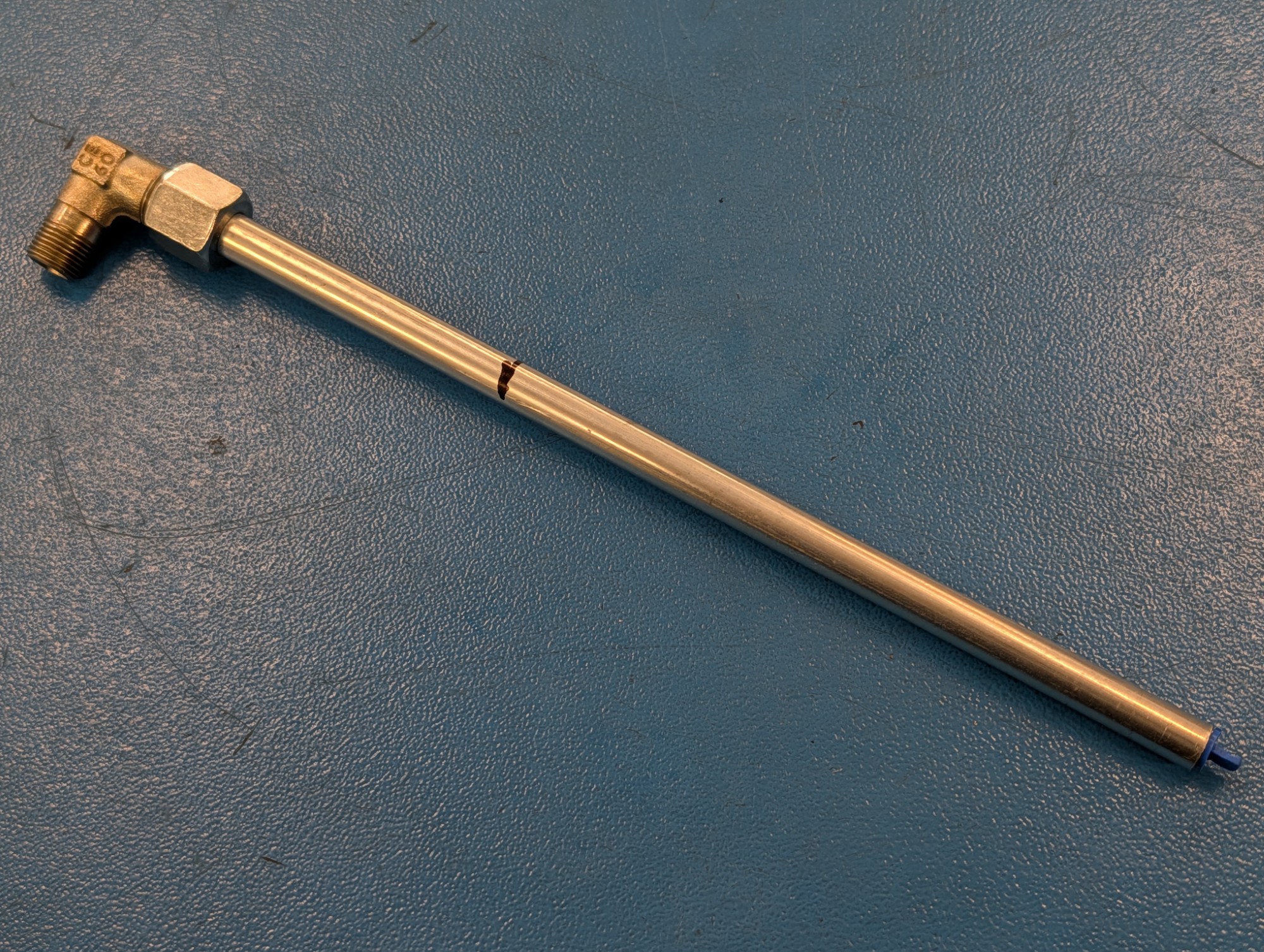
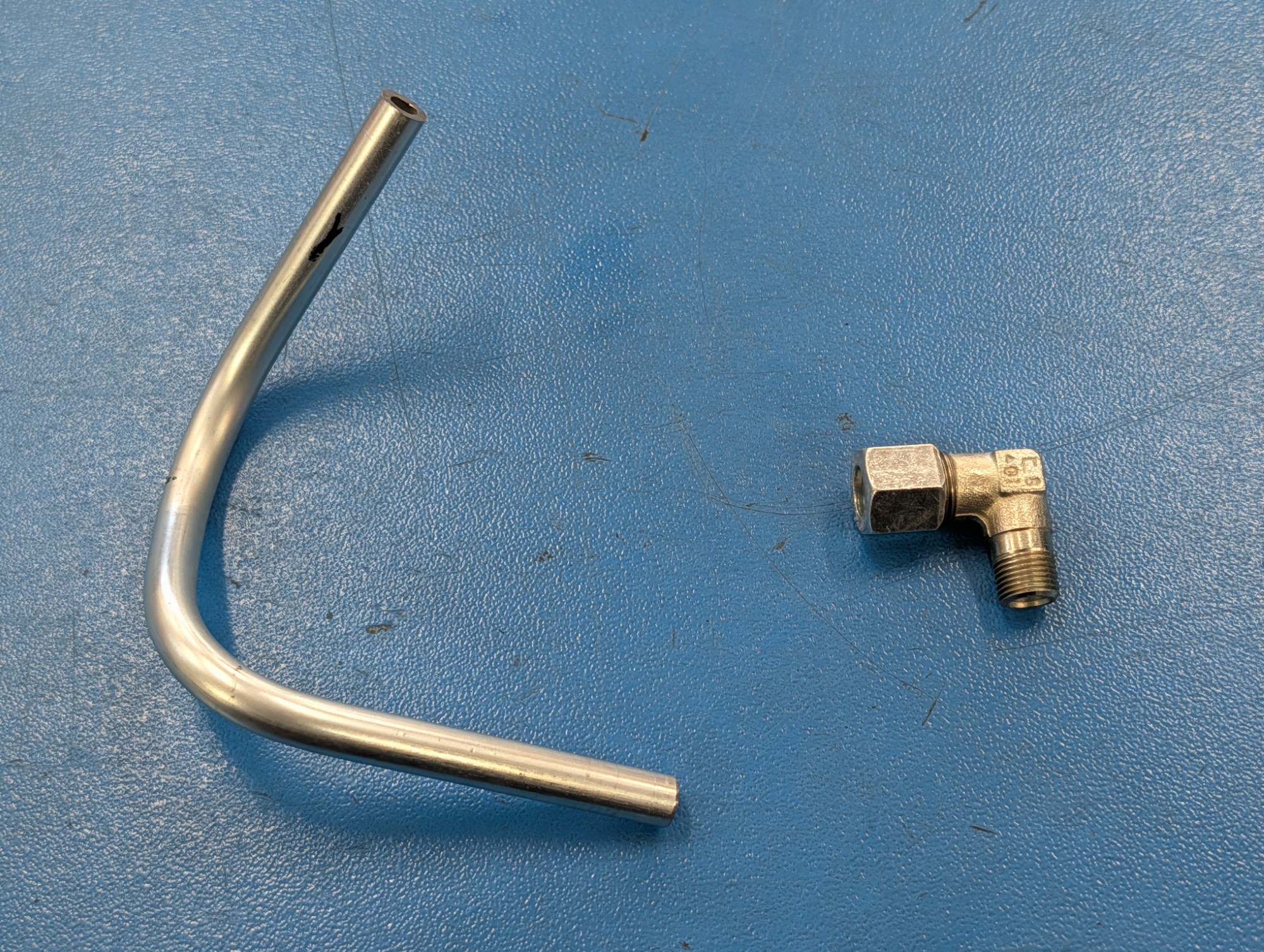
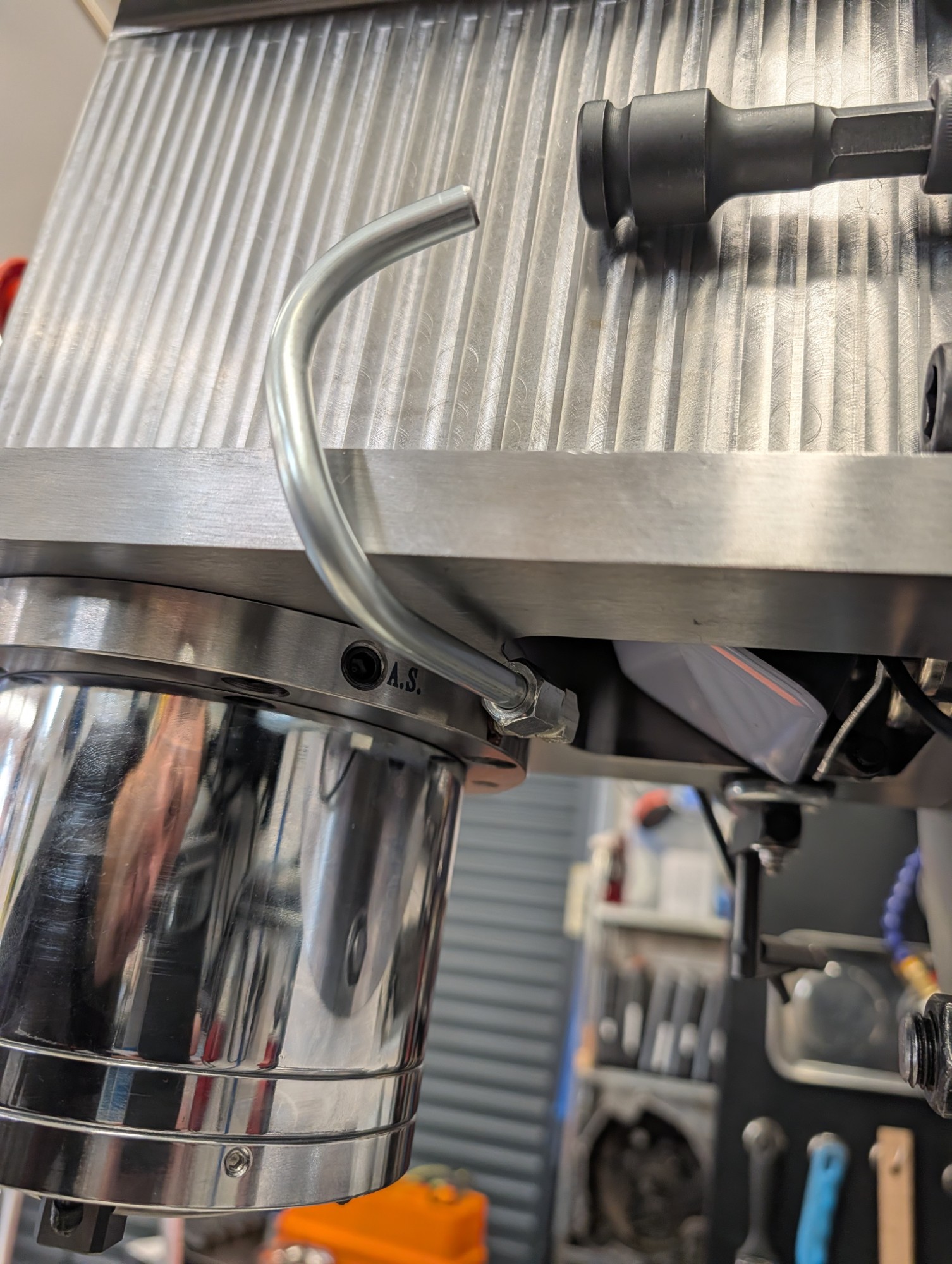
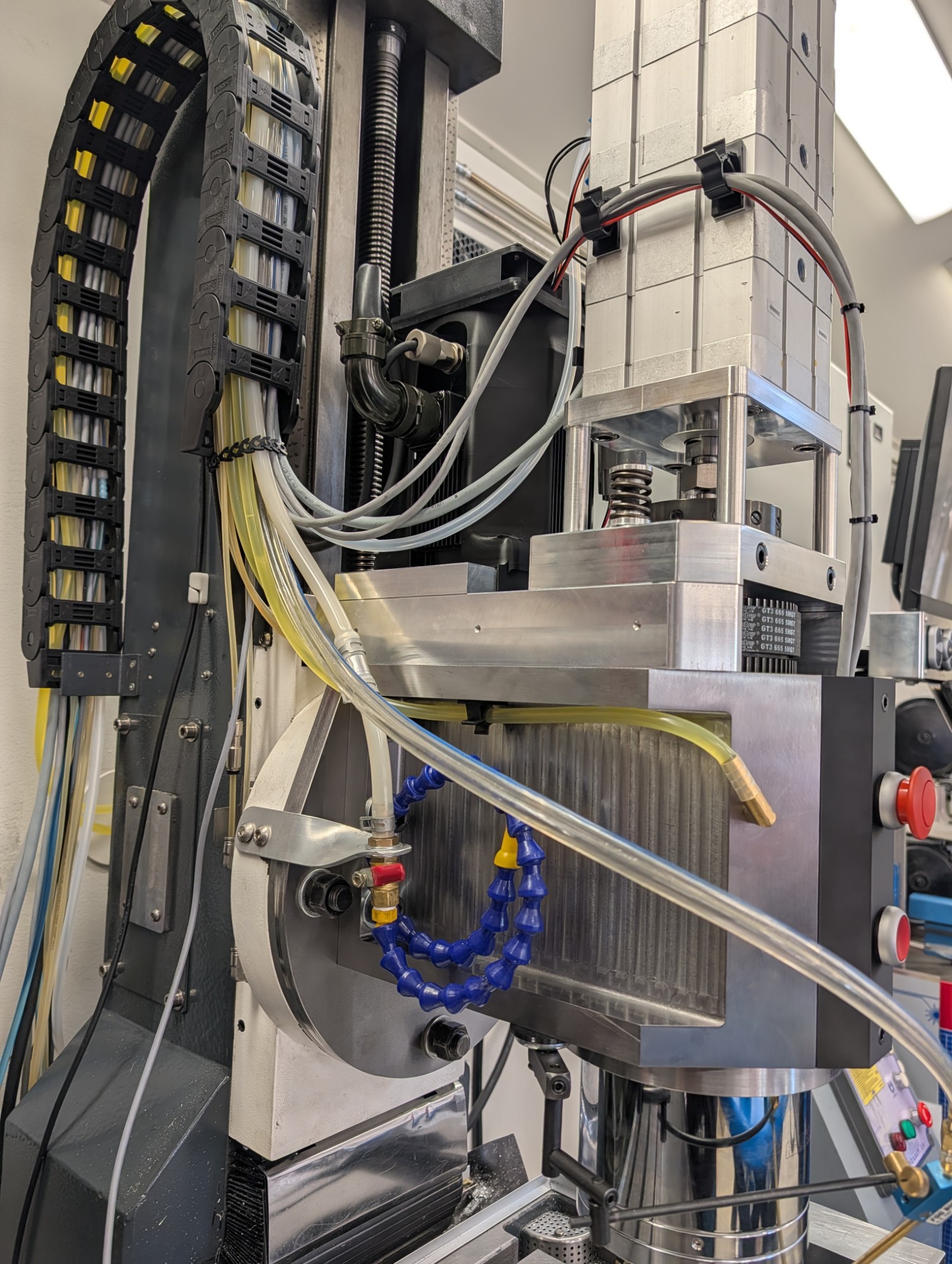
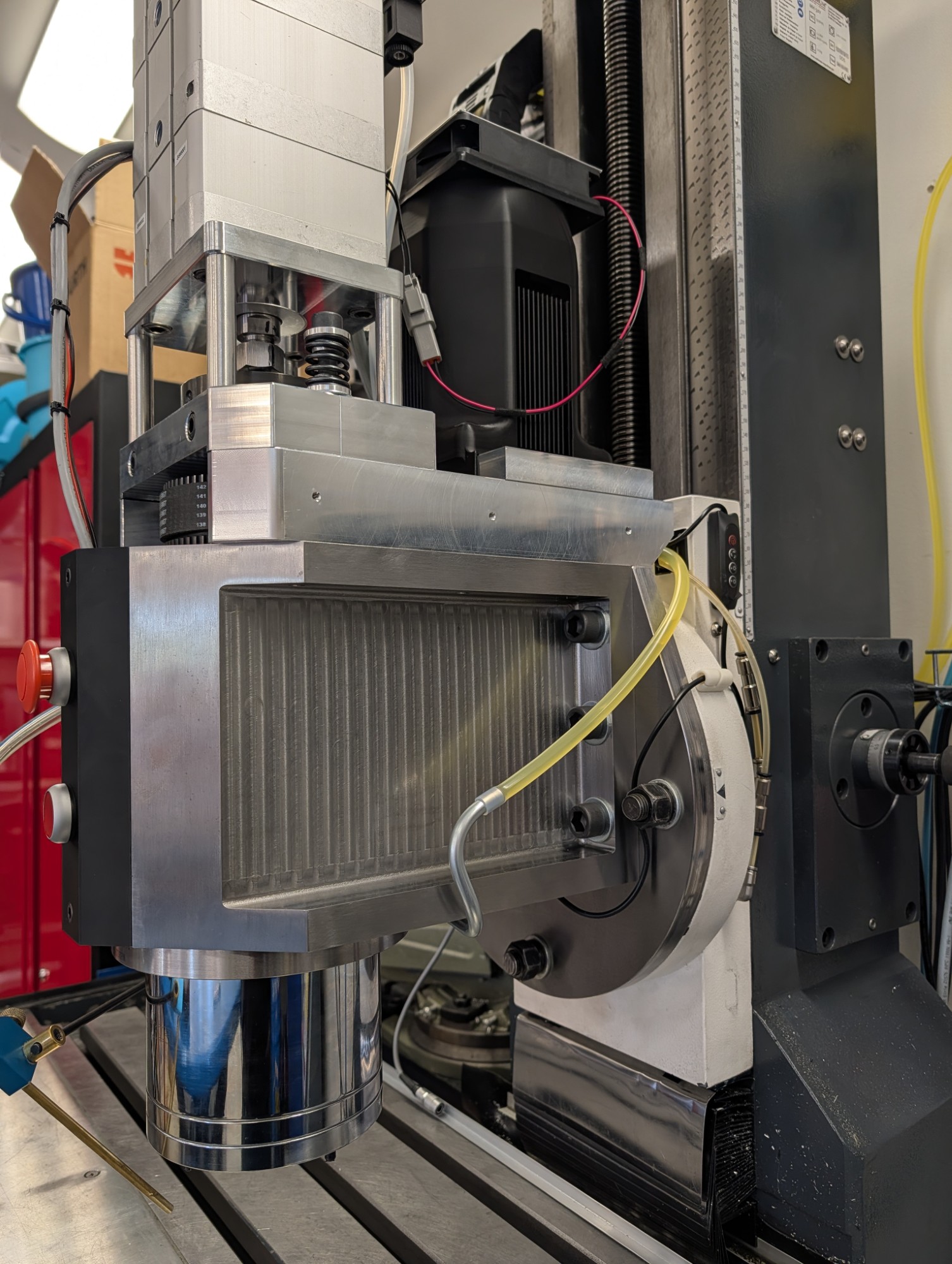
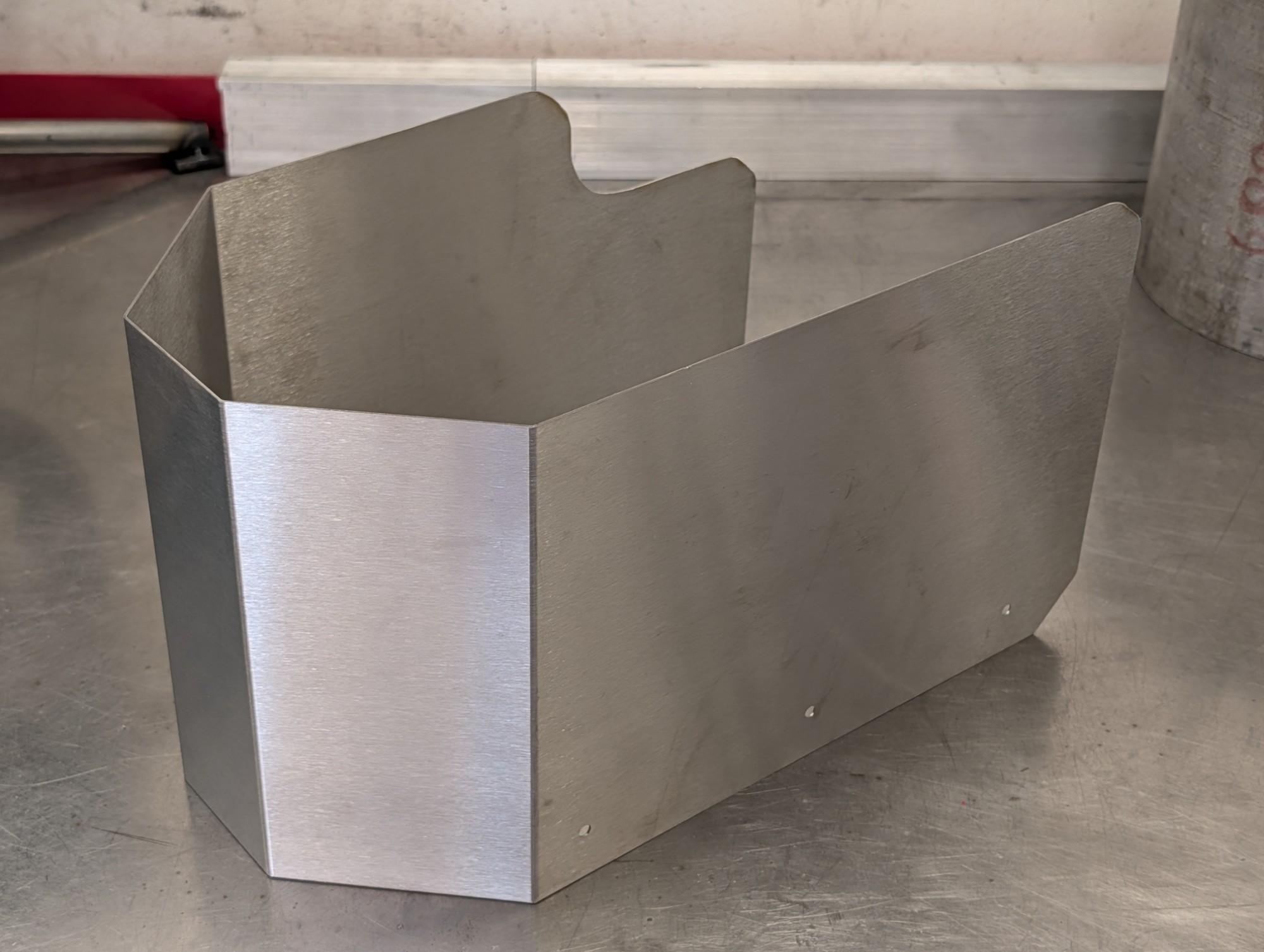
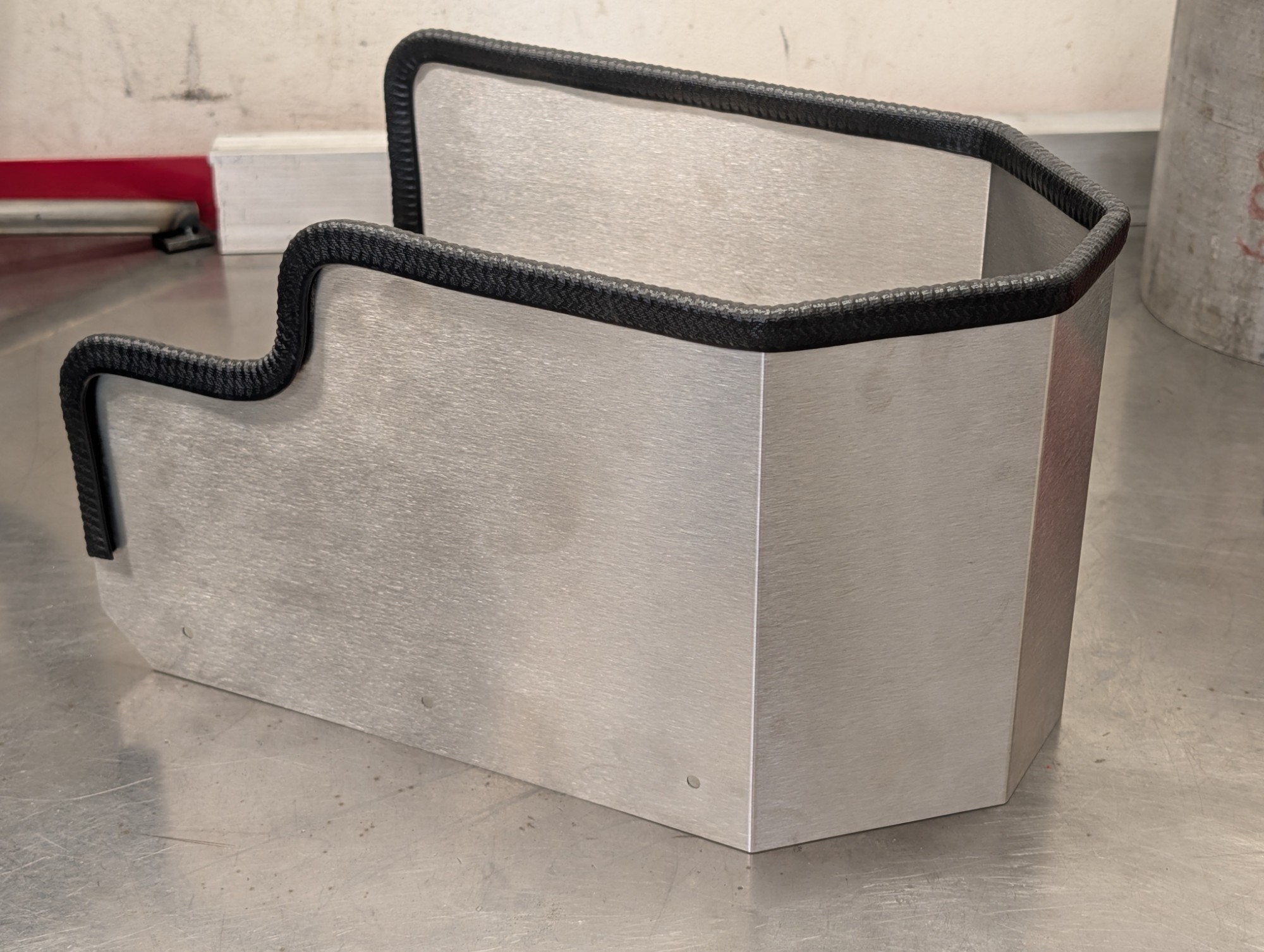
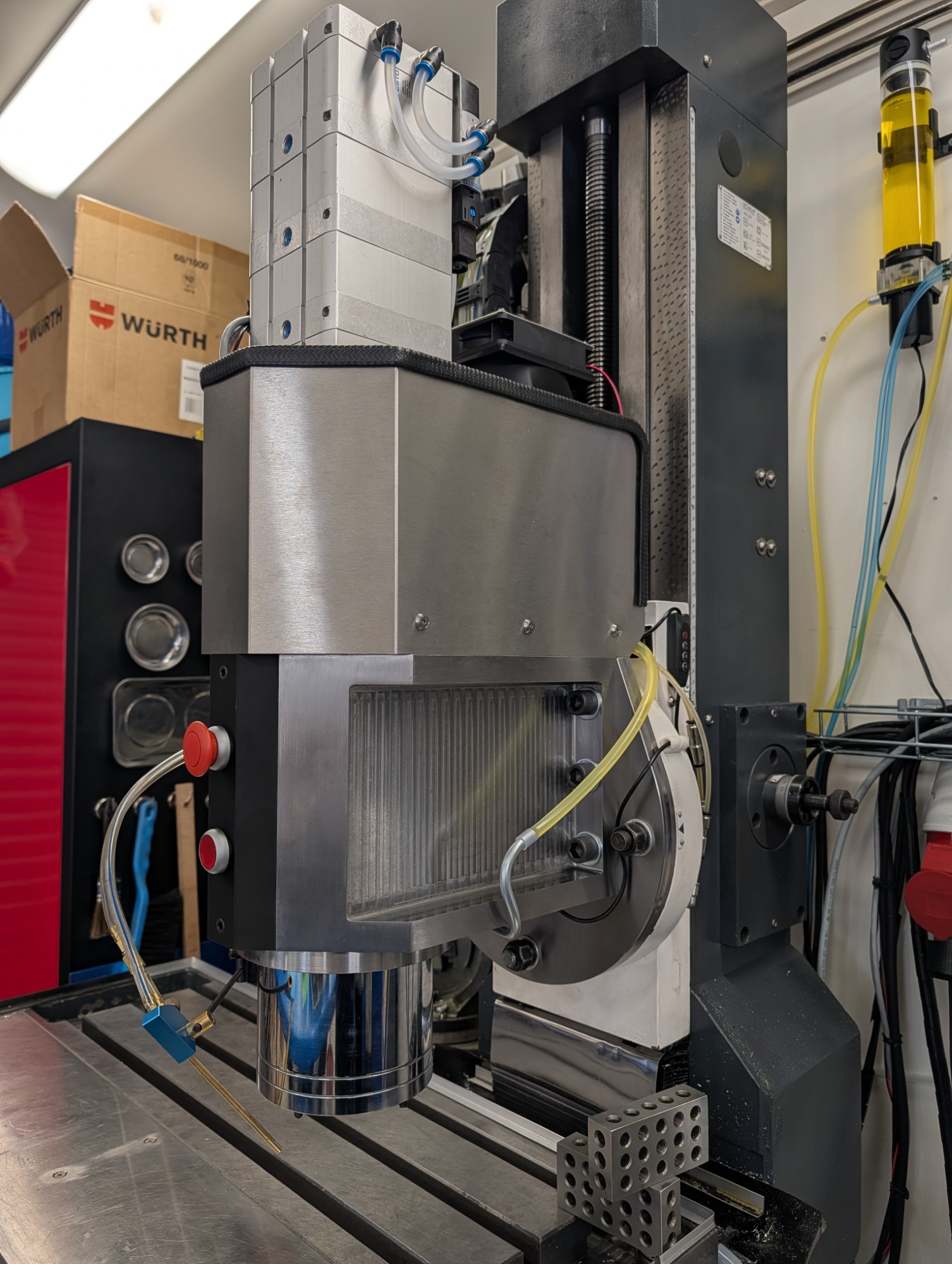
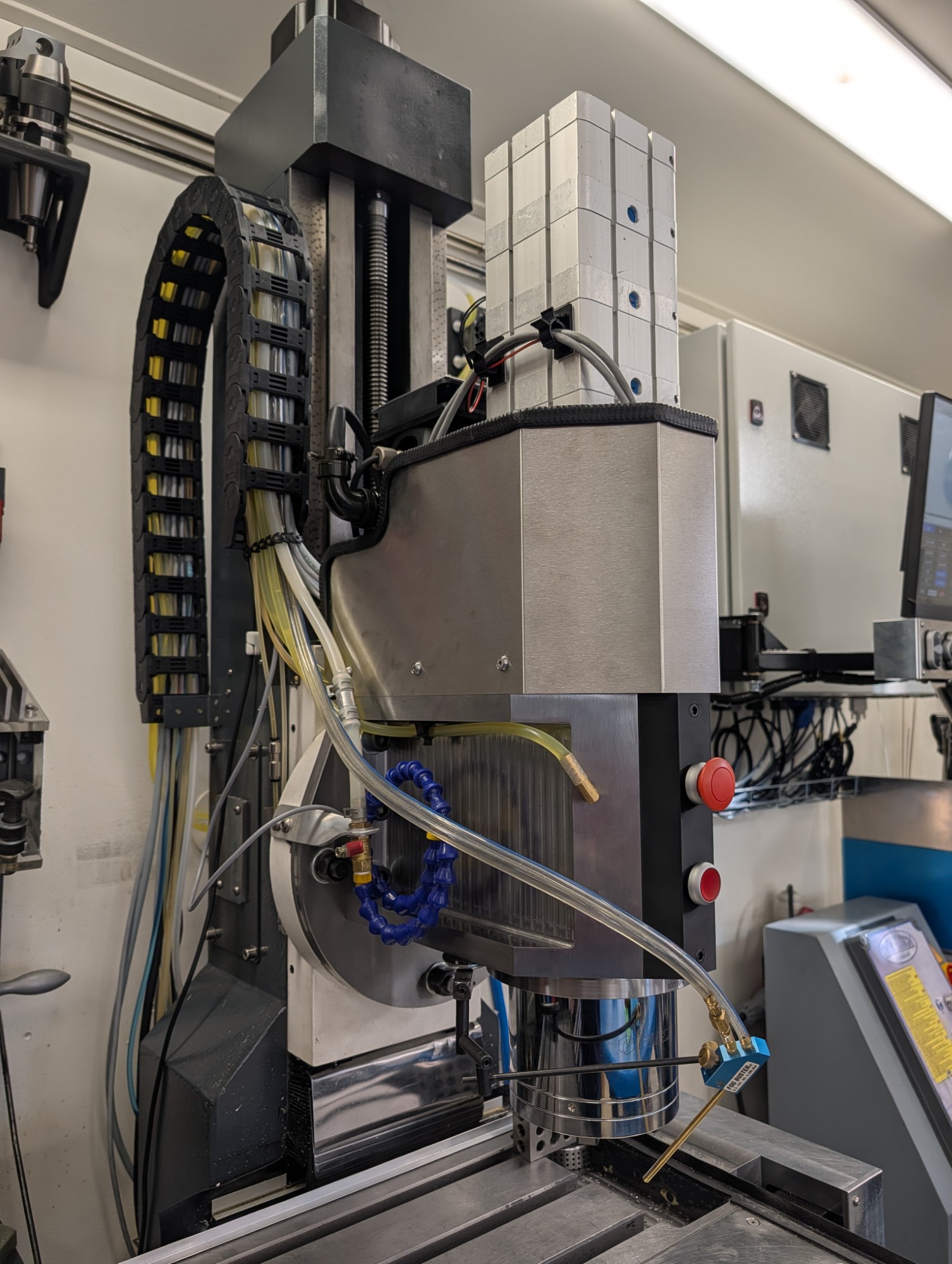
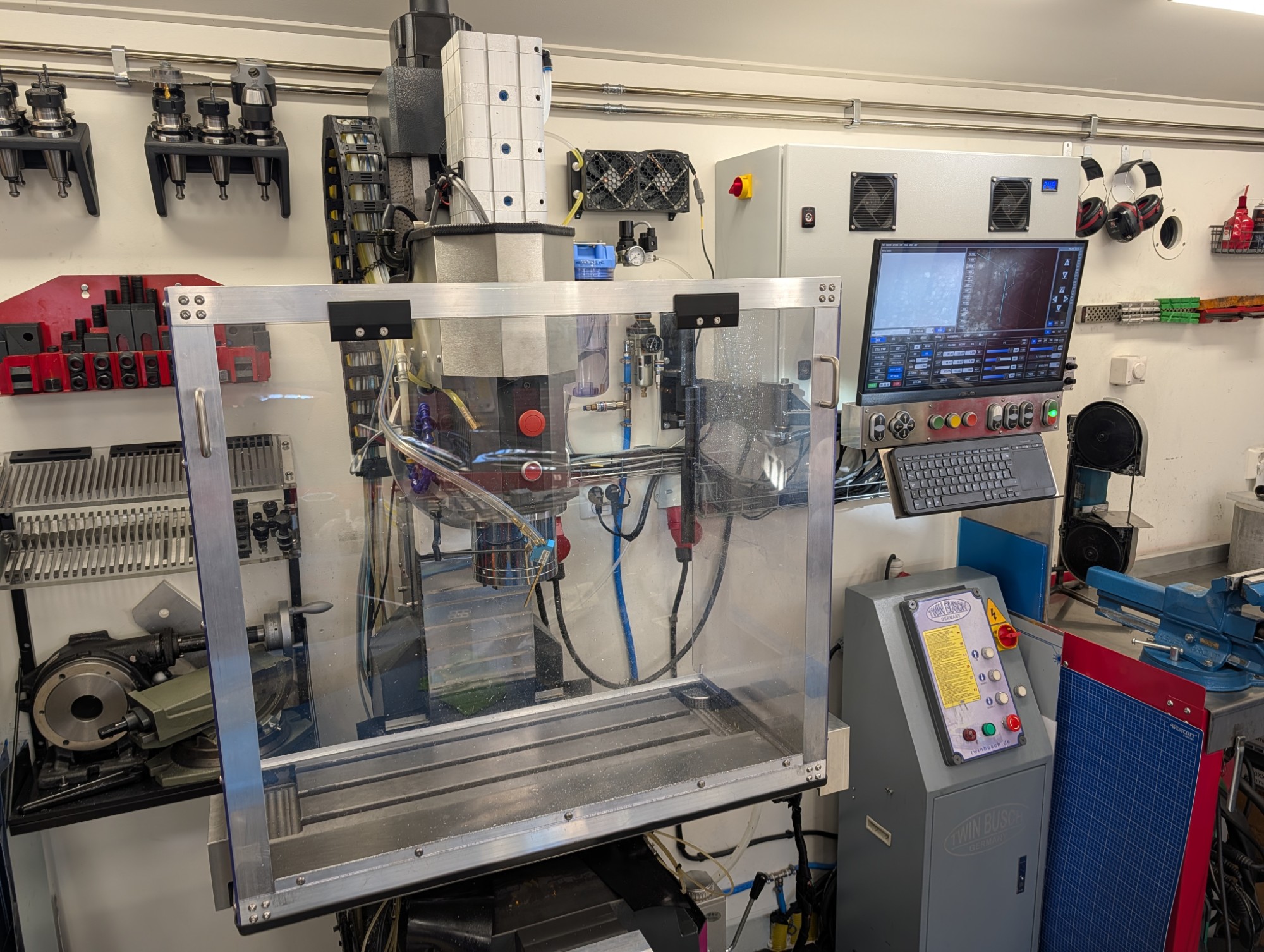
And here is how it looks with the enclosure mounted on the table.
With all the mechanical bits in place I wrote a short spindle run-in program that increased the spindle rpm in increments of 500 up to 6000 and ran for 10 minutes at each increment.
Everything worked well until I reached 5000 rpm when the spindle servo threw a fault. Turned out I had the max allowed rpm set to 4500 in the servo drive since my old spindle couldn't go that high.
Fixed that and immediately ran into the next issue, the default rpm limit for the encoder speed in the servo drive also had to be increased. In the end I had to bump up quite a few parameters including tweaking the inertia to get the full 6000 rpm range enabled in the drive.
The next issue I ran into was that the rpm would not go above 5610 when commanded from LinuxCNC. Turned out that I had to adjust the settings in LinuxCNC regarding how many steps (pulses) per seconds that could be sent to the spindle. Just as with the drive I had set these value quite low for my old spindle when I did the configuration years ago.
With all that sorted I could finally finish the run-in program. But when the program stopped after running the final increment at 6000 rpm I ran into the next issue. The drive threw a fault regarding an overheated regenerative braking resistor.
Going from 3500 to 6000 rpm along with the increased the inertia from the larger spindle overwhelmed the built in regenerative braking resistor in the spindle drive when coming to a full stop from 6000 rpm. I managed to get it somewhat working for now by increasing the time for the spindle ramp down by a few seconds.
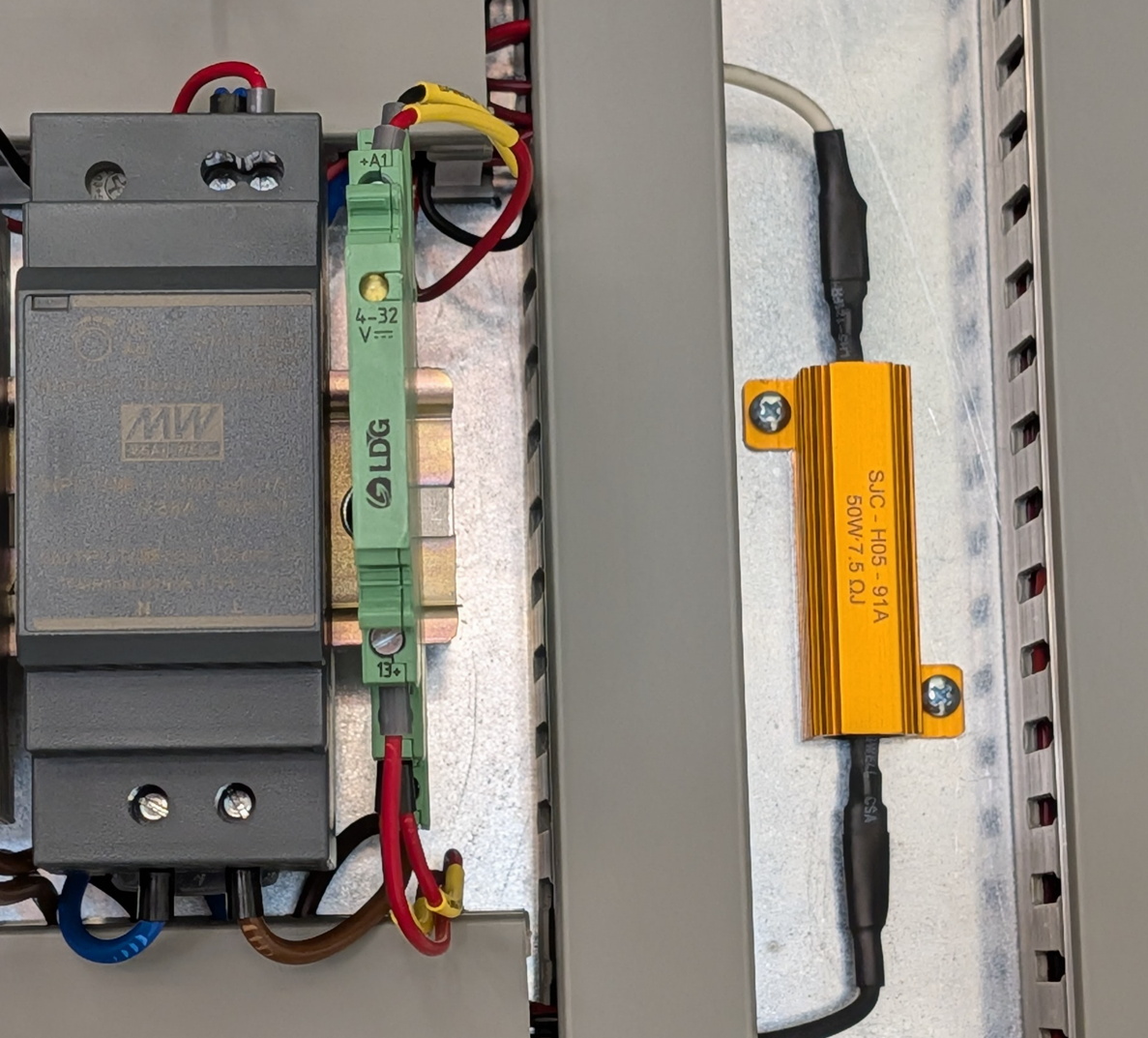
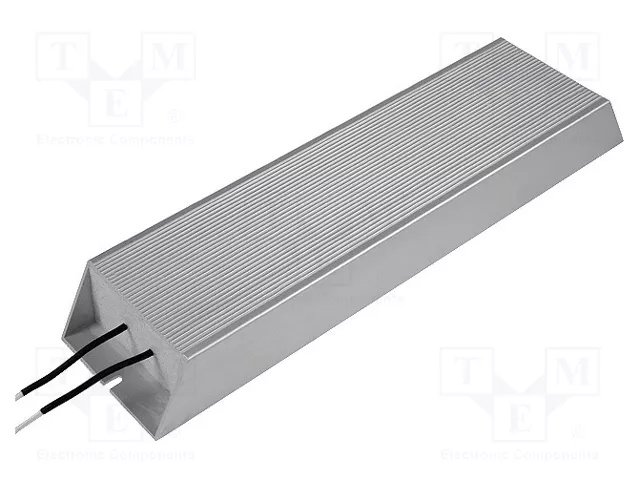
But if I stop the spindle a few times in successions from full rpm I still get the fault. So I ended up ordering an external 800W braking resistor which should be here early next week.
If I managed to follow the formulas in the Delta B3 manual correctly a 550W resistor should be enough for my setup. So hopefully 800W will give me plenty of headroom.
However after all the troubleshooting I was still very satisfied at the end of the day when I removed the BT40 tool holder which had been in the spindle all day running at various rpm's. It was essentially the same temperature as when I had picked it up from the tool shelf in the morning.
The new spindle is running significantly cooler compared to the old one. This can also be seen on the idle load.
With the old spindle I would have an idle load of 17-20% on the 2kw spindle servo just running idle at 3500 rpm. The new spindle sits between 1-6% depending on rpm, at 6000 the load is just 1-2% which is very promising.